
Pulp Fiction, 1865 · page 167 of 400
The Argosy — page 167: what you’re looking at
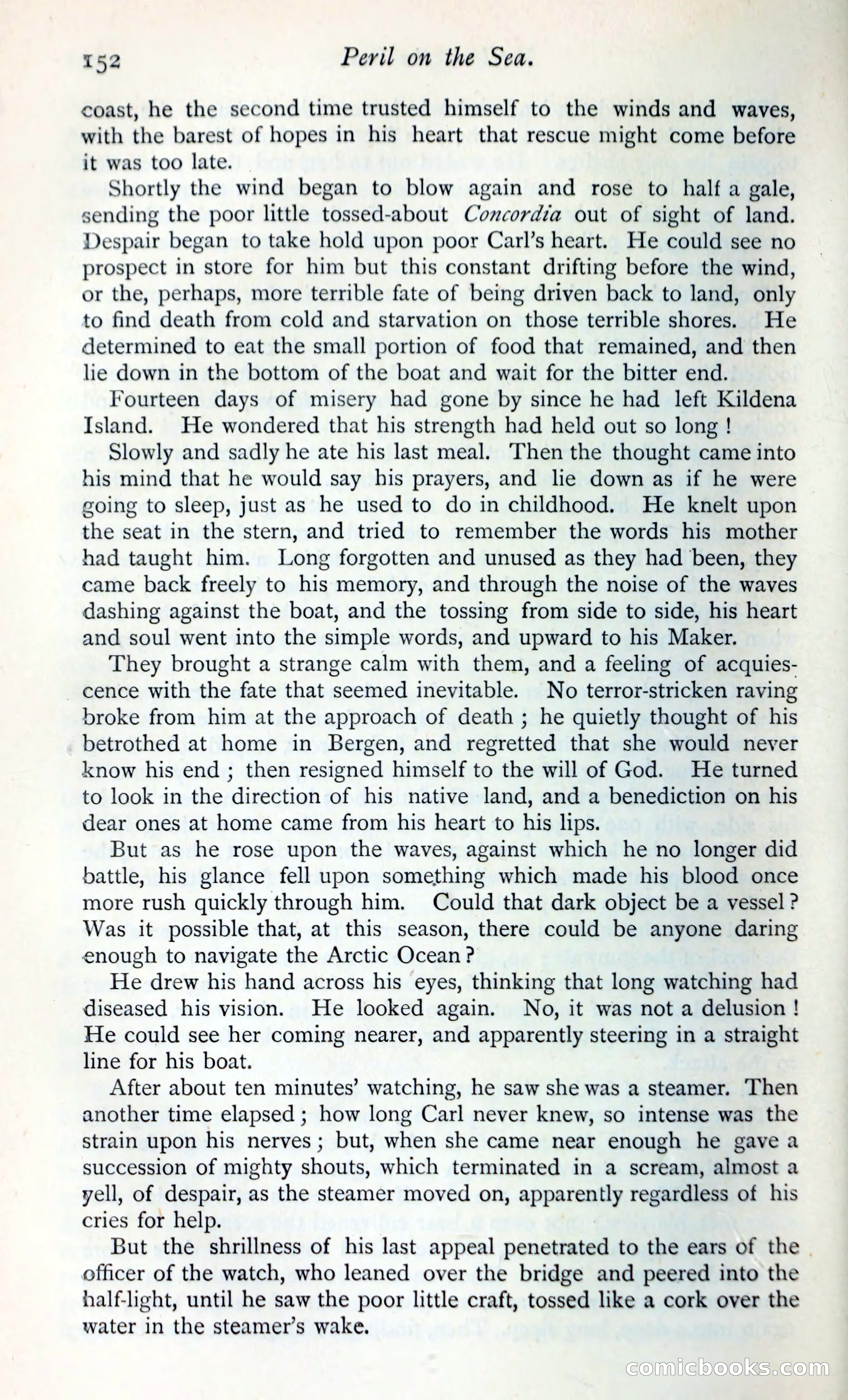
A restored page from Pulp Fiction, 1865. Page through the whole issue in the reader above.
📄 Transcribed text from this page (OCR, searchable)
Machine-transcribed from the original scan — historical spelling and the odd misread are preserved.
152 Peril on the Sea. coast, he the second time trusted himself to the winds and waves, with the barest of hopes in his heart that rescue might come before it was too late. Shortly the wind began to blow again and rose to half a gale, sending the poor little tossed-about Concordia out of sight of land. Despair began to take hold upon poor Carl’s heart. He could see no prospect in store for him but this constant drifting before the wind, or the, perhaps, more terrible fate of being driven back to land, only to find death from cold and starvation on those terrible shores. He determined to eat the small portion of food that remained, and then lie down in the bottom of the boat and wait for the bitter end. Fourteen days of misery had gone by since he had left Kildena Island. He wondered that his strength had held out so long! Slowly and sadly he ate his last meal. Then the thought came into his mind that he would say his prayers, and lie down as if he were eoing to sleep, just as he used to do in childhood. He knelt upon the seat in the stern, and tried to remember the words his mother had taught him. Long forgotten and unused as they had been, they came back freely to his memory, and through the noise of the waves dashing against the boat, and the tossing from side to side, his heart and soul went into the simple words, and upward to his Maker. They brought a strange calm with them, and a feeling of acquies- cence with the fate that seemed inevitable. No terror-stricken raving broke from him at the approach of death ; he quietly thought of his betrothed at home in Bergen, and regretted that she would never know his end ; then resigned himself to the will of God. He turned to look in the direction of his native land, and a benediction on his dear ones at home came from his heart to his lips. But as he rose upon the waves, against which he no longer did battle, his glance fell upon something which made his blood once more rush quickly through him. Could that dark object be a vessel ? Was it possible that, at this season, there could be anyone daring enough to navigate the Arctic Ocean? He drew his hand across his eyes, thinking that long watching had diseased his vision. He looked again. No, it was not a delusion! He could see her coming nearer, and apparently steering in a straight line for his boat. After about ten minutes’ watching, he saw she was a steamer. Then another time elapsed ; how long Carl never knew, so intense was the strain upon his nerves; but, when she came near enough he gave a succession of mighty shouts, which terminated in a scream, almost a yell, of despair, as the steamer moved on, apparently regardless of his cries for help. But the shrillness of his last appeal penetrated to the ears of the officer of the watch, who leaned over the bridge and peered into the half-light, until he saw the poor little craft, tossed like a cork over the water in the steamer’s wake. COMIC OOKS.<o©