
Pulp Fiction, 1865 · page 283 of 400
The Argosy — page 283: what you’re looking at
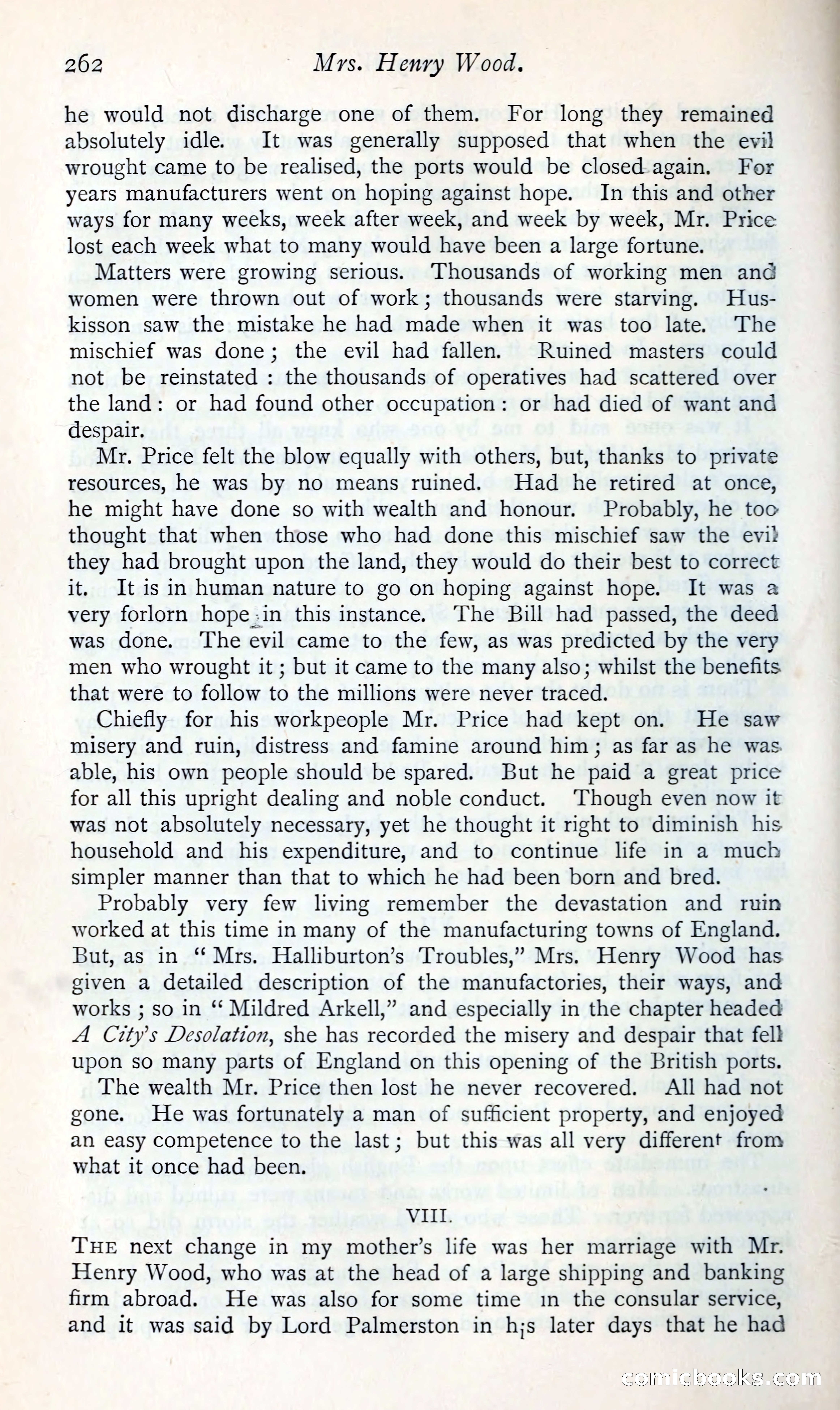
A restored page from Pulp Fiction, 1865. Page through the whole issue in the reader above.
📄 Transcribed text from this page (OCR, searchable)
Machine-transcribed from the original scan — historical spelling and the odd misread are preserved.
262 Mrs. Henry Wood. he would not discharge one of them. For long they remained absolutely idle. It was generally supposed that when the evil wrought came to be realised, the ports would be closed again. For years manufacturers went on hoping against hope. In this and other ways for many weeks, week after week, and week by week, Mr. Price lost each week what to many would have been a large fortune. Matters were growing serious. ‘Thousands of working men and women were thrown out of work; thousands were starving. Hus- kisson saw the mistake he had made when it was too late. The mischief was done; the evil had fallen. Ruined masters could not be reinstated : the thousands of operatives had scattered over the land: or had found other occupation: or had died of want and despair. Mr. Price felt the blow equally with others, but, thanks to private resources, he was by no means ruined. MHad he retired at once, he might have done so with wealth and honour. Probably, he too thought that when those who had done this mischief saw the evi? they had brought upon the land, they would do their best to correct it. It is in human nature to go on hoping against hope. It was a very forlorn hope:in this instance. The Bill had passed, the deed was done. The evil came to the few, as was predicted by the very men who wrought it ; but it came to the many also; whilst the benefits that were to follow to the millions were never traced. Chiefly for his workpeople Mr. Price had kept on. He saw misery and ruin, distress and famine around him; as far as he was. able, his own people should be spared. But he paid a great price for all this upright dealing and noble conduct. ‘Though even now it was not absolutely necessary, yet he thought it right to diminish his household and his expenditure, and to continue life in a much simpler manner than that to which he had been born and bred. Probably very few living remember the devastation and ruin worked at this time in many of the manufacturing towns of England. But, as in ‘f Mrs. Halliburton’s Troubles,” Mrs. Henry Wood has given a detailed description of the manufactories, their ways, and works ; so in *‘ Mildred Arkell,” and especially in the chapter headed A City’s Desolation, she has recorded the misery and despair that fell upon so many parts of England on this opening of the British ports. The wealth Mr. Price then lost he never recovered. All had not gone. He was fortunately a man of sufficient property, and enjoyed an easy competence to the last; but this was all very different from what it once had been. VIII. THE next change in my mother’s life was her marriage with Mr. Henry Wood, who was at the head of a large shipping and banking firm abroad. He was also for some time in the consular service, and it was said by Lord Palmerston in hjs later days that he had COMMIECOIOO KS, (Eo) << Jali eel