
Pulp Fiction, 1865 · page 230 of 400
The Argosy — page 230: what you’re looking at
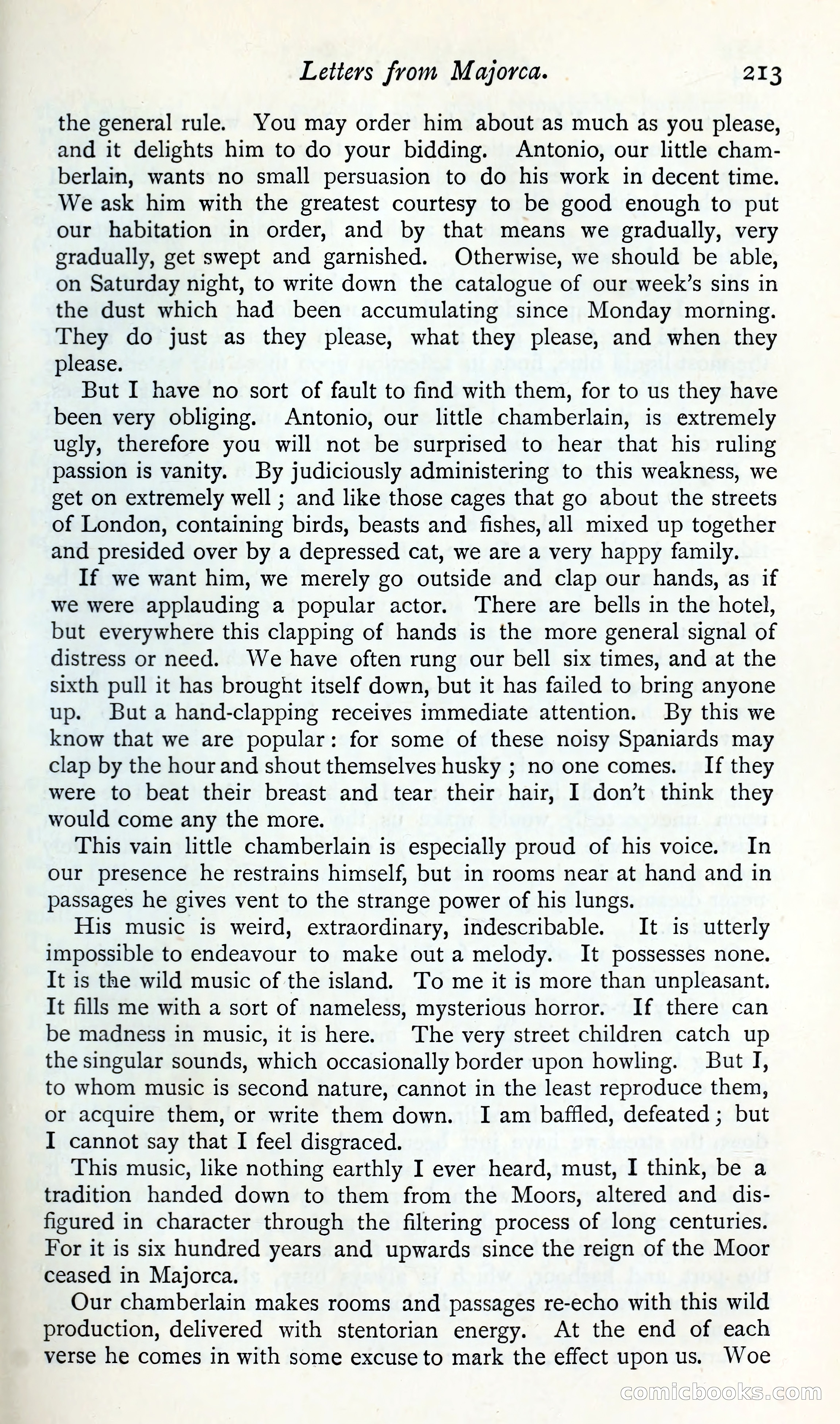
A restored page from Pulp Fiction, 1865. Page through the whole issue in the reader above.
📄 Transcribed text from this page (OCR, searchable)
Machine-transcribed from the original scan — historical spelling and the odd misread are preserved.
Letters from Majorca. 213 the general rule. You may order him about as much as you please, and it delights him to do your bidding. Antonio, our little cham- berlain, wants no small persuasion to do his work in decent time. We ask him with the greatest courtesy to be good enough to put our habitation in order, and by that means we gradually, very gradually, get swept and garnished. Otherwise, we should be able, on Saturday night, to write down the catalogue of our week’s sins in the dust which had been accumulating since Monday morning. They do just as they please, what they please, and when they please. But I have no sort of fault to find with them, for to us they have been very obliging. Antonio, our little chamberlain, is extremely ugly, therefore you will not be surprised to hear that his ruling passion is vanity. By judiciously administering to this weakness, we get on extremely well ; and like those cages that go about the streets of London, containing birds, beasts and fishes, all mixed up together and presided over by a depressed cat, we are a very happy family. If we want him, we merely go outside and clap our hands, as if we were applauding a popular actor. ‘There are bells in the hotel, but everywhere this clapping of hands is the more general signal of distress or need. We have often rung our bell six times, and at the sixth pull it has brought itself down, but it has failed to bring anyone up. Buta hand-clapping receives immediate attention. By this we know that we are popular: for some of these noisy Spaniards may clap by the hour and shout themselves husky ; no one comes. If they were to beat their breast and tear their hair, I don’t think they would come any the more. This vain little chamberlain is especially proud of his voice. In our presence he restrains himself, but in rooms near at hand and in passages he gives vent to the strange power of his lungs. His music is weird, extraordinary, indescribable. It is utterly impossible to endeavour to make out a melody. It possesses none. It is the wild music of the island. To me it is more than unpleasant. It fills me with a sort of nameless, mysterious horror. If there can be madness in music, it is here. The very street children catch up the singular sounds, which occasionally border upon howling. But J, to whom music is second nature, cannot in the least reproduce them, or acquire them, or write them down. Iam baffled, defeated; but I cannot say that I feel disgraced. This music, like nothing earthly I ever heard, must, I think, be a tradition handed down to them from the Moors, altered and dis- figured in character through the filtering process of long centuries. For it is six hundred years and upwards since the reign of the Moor ceased in Majorca. Our chamberlain makes rooms and passages re-echo with this wild production, delivered with stentorian energy. At the end of each verse he comes in with some excuse to mark the effect upon us. Woe conmiclooolks (CO)