
Pulp Fiction, 1865 · page 229 of 400
The Argosy — page 229: what you’re looking at
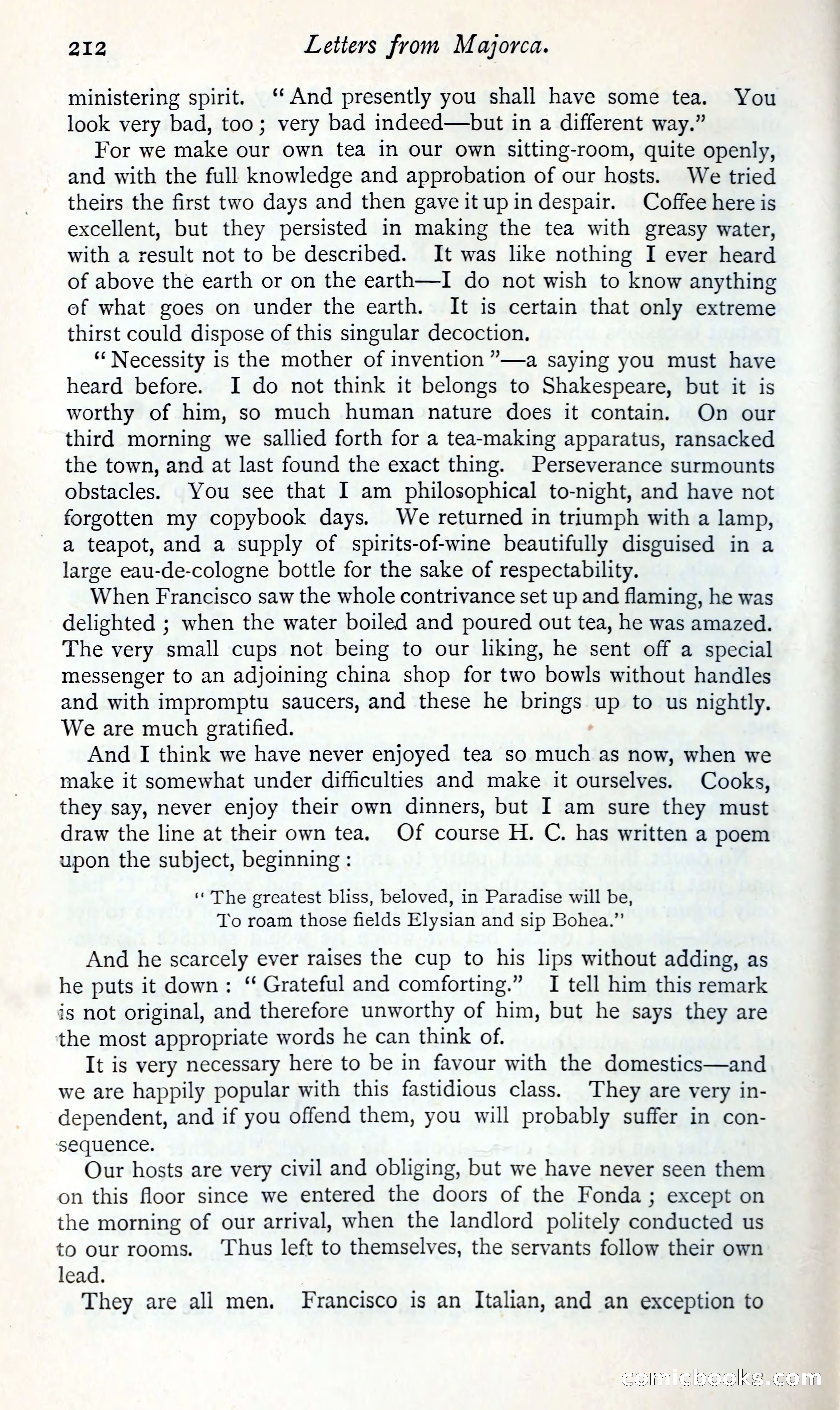
A restored page from Pulp Fiction, 1865. Page through the whole issue in the reader above.
📄 Transcribed text from this page (OCR, searchable)
Machine-transcribed from the original scan — historical spelling and the odd misread are preserved.
212 Letters from Majorca. ministering spirit. ‘‘ And presently you shall have some tea. You look very bad, too; very bad indeed—but in a different way.” For we make our own tea in our own sitting-room, quite openly, and with the full knowledge and approbation of our hosts. We tried theirs the first two days and then gaveitupindespair. Coffee here is excellent, but they persisted in making the tea with greasy water, with a result not to be described. It was like nothing I ever heard of above the earth or on the earth—I do not wish to know anything of what goes on under the earth. It is certain that only extreme thirst could dispose of this singular decoction. “ Necessity is the mother of invention ””—a saying you must have heard before. I do not think it belongs to Shakespeare, but it is worthy of him, so much human nature does it contain. On our third morning we sallied forth for a tea-making apparatus, ransacked the town, and at last found the exact thing. Perseverance surmounts obstacles. You see that I am philosophical to-night, and have not forgotten my copybook days. We returned in triumph with a lamp, a teapot, and a supply of spirits-of-wine beautifully disguised in a large eau-de-cologne bottle for the sake of respectability. When Francisco saw the whole contrivance set up and flaming, he was delighted ; when the water boiled and poured out tea, he was amazed. The very small cups not being to our liking, he sent off a special messenger to an adjoining china shop for two bowls without handles and with impromptu saucers, and these he brings 6. to us nightly. We are much gratified. And I think we have never enjoyed tea so pe Fi as now, when we make it somewhat under difficulties and make it ourselves. Cooks, they say, never enjoy their own dinners, but I am sure they must draw the line at their own tea. Of course H. C. has written a poem upon the subject, beginning : ‘« The greatest bliss, beloved, in Paradise will be, To roam those fields Elysian and sip Bohea.”’ And he scarcely ever raises the cup to his lips without adding, as he puts it down: ‘‘ Grateful and comforting.” I tell him this remark is not original, and therefore unworthy of him, but he says they are the most appropriate words he can think of. It is very necessary here to be in favour with the domestics—and we are happily popular with this fastidious class. They are very in- dependent, and if you offend them, you will probably suffer in con- sequence. Our hosts are very civil and obliging, but we have never seen them on this floor since we entered the doors of the Fonda; except on the morning of our arrival, when the landlord politely conducted us to our rooms. ‘Thus left to themselves, the servants follow their own lead. | They are ali men. Francisco is an Italian, and an exception to CORNICE OOOKS (E) m