
Pulp Fiction, 1865 · page 217 of 400
The Argosy — page 217: what you’re looking at
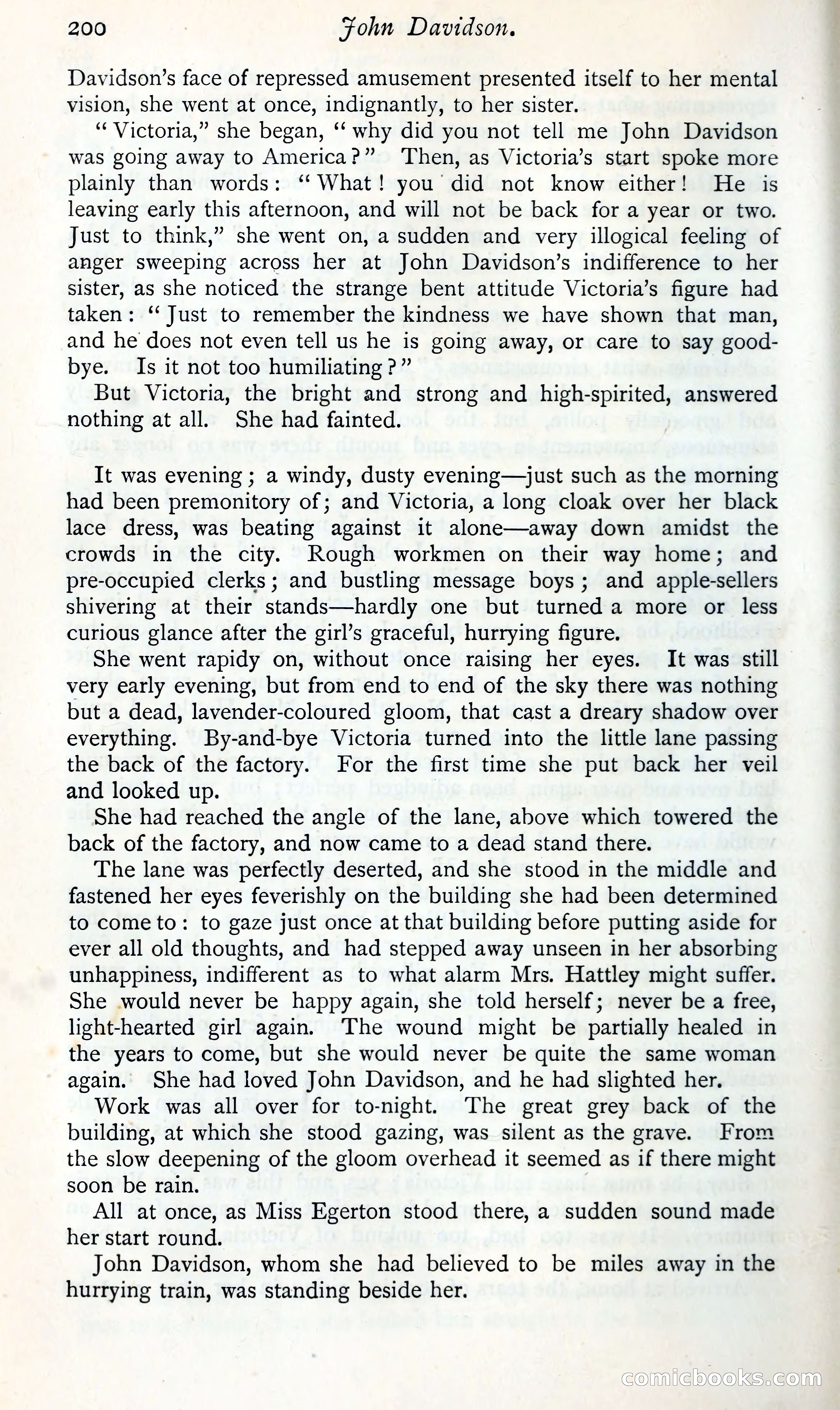
A restored page from Pulp Fiction, 1865. Page through the whole issue in the reader above.
📄 Transcribed text from this page (OCR, searchable)
Machine-transcribed from the original scan — historical spelling and the odd misread are preserved.
200 Fohn Davidson. Davidson’s face of repressed amusement presented itself to her mental vision, she went at once, indignantly, to her sister. ‘“‘Victoria,” she began, ‘‘ why did you not tell me John Davidson was going away to America?” ‘Then, as Victoria’s start spoke more plainly than words: ‘‘ What! you did not know either! He is leaving early this afternoon, and will not be back for a year or two. Just to think,” she went on, a sudden and very illogical feeling of anger sweeping across her at John Davidson’s indifference to her sister, as she noticed the strange bent attitude Victoria’s figure had taken: ‘‘ Just to remember the kindness we have shown that man, and he does not even tell us he is going away, or care to say good- bye. Is it not too humiliating ?”’ But Victoria, the bright and strong and high-spirited, answered nothing at all. She had fainted. It was evening ; a windy, dusty evening—just such as the morning had been premonitory of; and Victoria, a long cloak over her black lace dress, was beating against it alone—away down amidst the crowds in the city. Rough workmen on their way home; and pre-occupied clerks; and bustling message boys; and apple-sellers shivering at their stands—hardly one but turned a more or less curious glance after the girl’s graceful, hurrying figure. She went rapidy on, without once raising her eyes. It was still very early evening, but from end to end of the sky there was nothing but a dead, lavender-coloured gloom, that cast a dreary shadow over everything. By-and-bye Victoria turned into the little lane passing the back of the factory. or the first time she put back her veil and looked up. She had reached the angle of the lane, above which towered the back of the factory, and now came to a dead stand there. The lane was perfectly deserted, and she stood in the middle and fastened her eyes feverishly on the building she had been determined to come to: to gaze just once at that building before putting aside for ever all old thoughts, and had stepped away unseen in her absorbing unhappiness, indifferent as to what alarm Mrs. Hattley might suffer. She would never be happy again, she told herself; never be a free, light-hearted girl again. The wound might be partially healed in the years to come, but she would never be quite the same woman again. She had loved John Davidson, and he had slighted her. Work was all over for to-night. ‘The great grey back of the building, at which she stood gazing, was silent as the grave. From the slow deepening of the gloom overhead it seemed as if there might soon be rain. All at once, as Miss Egerton stood there, a sudden sound made her start round. John Davidson, whom she had believed to be miles away in the hurrying train, was standing beside her. CONNIELOOKS.E@)