
Pulp Fiction, 1865 · page 399 of 400
The Argosy — page 399: what you’re looking at
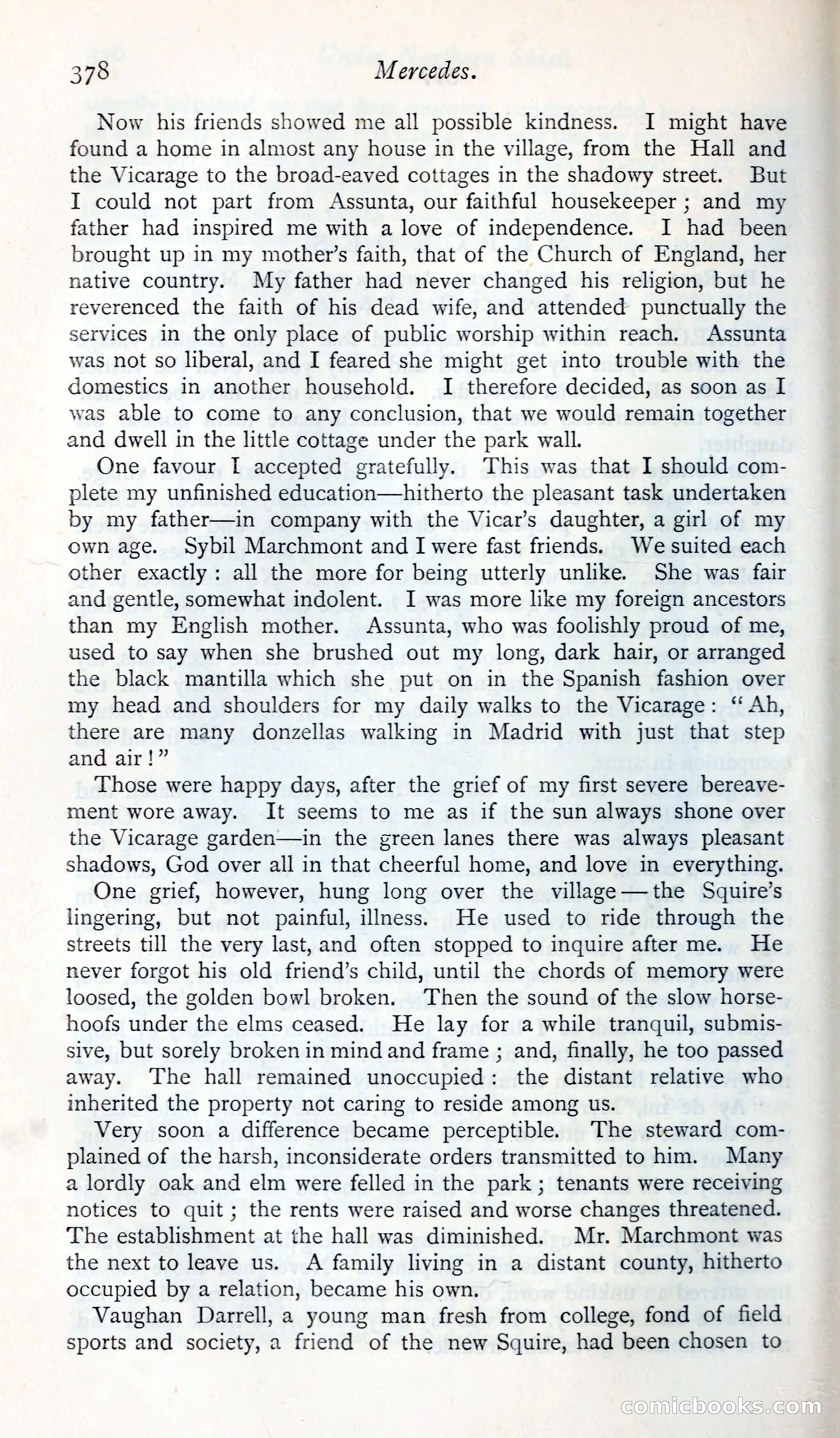
A restored page from Pulp Fiction, 1865. Page through the whole issue in the reader above.
📄 Transcribed text from this page (OCR, searchable)
Machine-transcribed from the original scan — historical spelling and the odd misread are preserved.
378 Mercedes. Now his friends showed me all possible kindness. I might have found a home in almost any house in the village, from the Hall and the Vicarage to the broad-eaved cottages in the shadowy street. But I could not part from Assunta, our faithful housekeeper ; and my father had inspired me with a love of independence. I had been brought up in my mother’s faith, that of the Church of England, her native country. My father had never changed his religion, but he reverenced the faith of his dead wife, and attended punctually the services in the only place of public worship within reach. Assunta was not so liberal, and I feared she might get into trouble with the domestics in another household. I therefore decided, as soon as I was able to come to any conclusion, that we would remain together and dwell in the little cottage under the park wall. One favour I accepted gratefully. ‘This was that I should com- plete my unfinished education—hitherto the pleasant task undertaken by my father—in company with the Vicar’s daughter, a girl of my own age. Sybil Marchmont and I were fast friends. We suited each other exactly: all the more for being utterly unlike. She was fair and gentle, somewhat indolent. I was more like my foreign ancestors than my English mother. Assunta, who was foolishly proud of me, used to say when she brushed out my long, dark hair, or arranged the black mantilla which she put on in the Spanish fashion over my head and shoulders for my daily walks to the Vicarage: “ Ah, there are many donzellas walking in Madrid with just that step and air!” Those were happy days, after the grief of my first severe bereave- ment wore away. It seems to me as if the sun always shone over the Vicarage garden—in the green lanes there was always pleasant shadows, God over all in that cheerful home, and love in everything. One grief, however, hung long over the village—the Squire’s lingering, but not painful, illness. He used to ride through the streets till the very last, and often stopped to inquire afterme. He never forgot his old friend’s child, until the chords of memory were loosed, the golden bowl broken. Then the sound of the slow horse- hoofs under the elms ceased. He lay for a while tranquil, submis- sive, but sorely broken in mind and frame ; and, finally, he too passed away. The hall remained unoccupied: the distant relative who inherited the property not caring to reside among us. Very soon a difference became perceptible. The steward com- plained of the harsh, inconsiderate orders transmitted to him. Many a lordly oak and elm were felled in the park ; tenants were receiving notices to quit ; the rents were raised and worse changes threatened. The establishment at the hall was diminished. Mr. Marchmont was the next to leave us. A family living in a distant county, hitherto occupied by a relation, became his own. Vaughan Darrell, a young man fresh from college, fond of field sports and society, a friend of the new Squire, had been chosen to ECOMMICLOOKSaECO©