
Pulp Fiction, 1865 · page 240 of 400
The Argosy — page 240: what you’re looking at
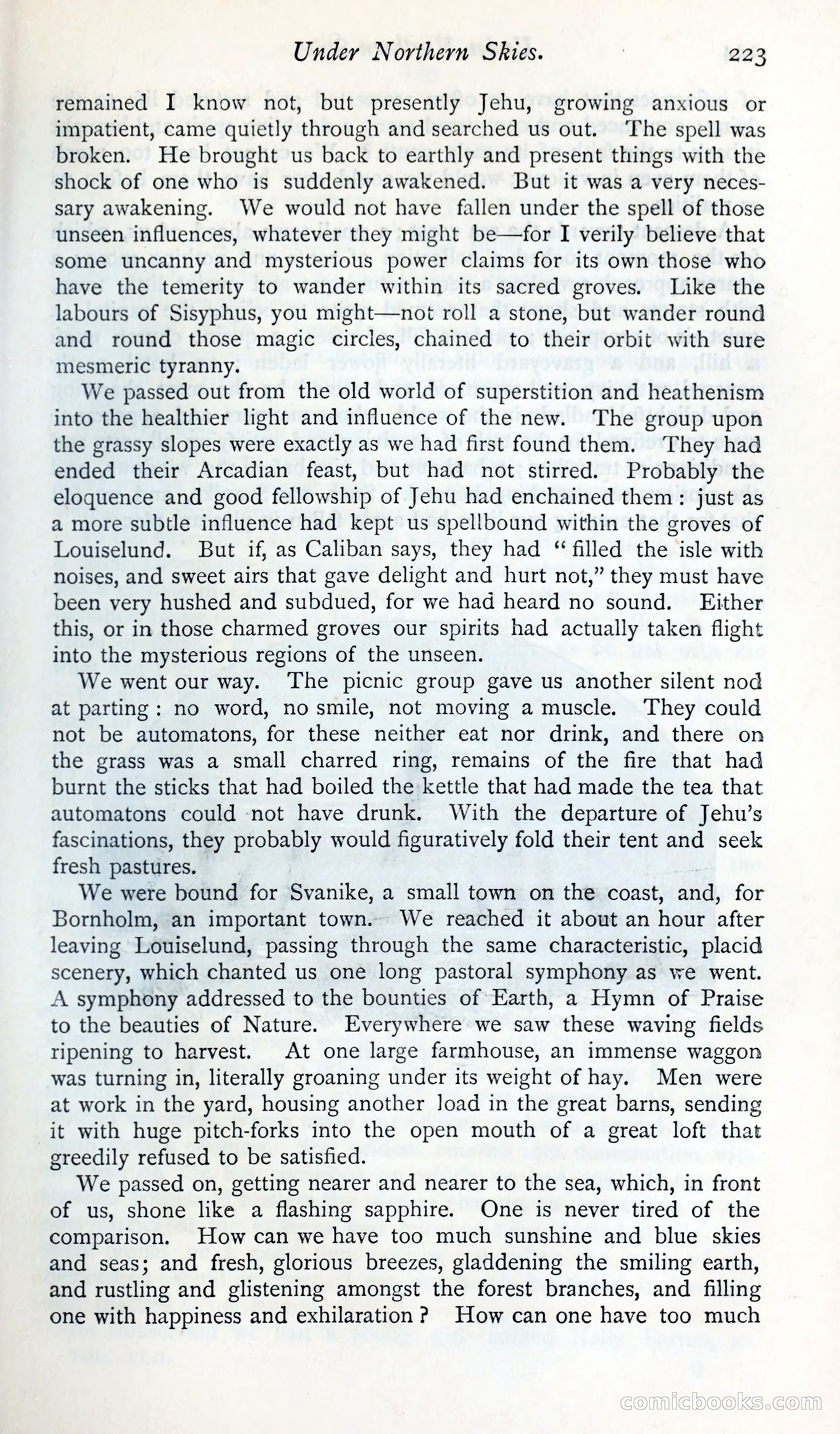
A restored page from Pulp Fiction, 1865. Page through the whole issue in the reader above.
📄 Transcribed text from this page (OCR, searchable)
Machine-transcribed from the original scan — historical spelling and the odd misread are preserved.
Under Northern Skies. | 223 remained I know not, but presently Jehu, growing anxious or impatient, came quietly through and searched us out. ‘The spell was broken. He brought us back to earthly and present things with the shock of one who is suddenly awakened. But it was a very neces- sary awakening. We would not have fallen under the spell of those unseen influences, whatever they might be—for I verily believe that some uncanny and mysterious power claims for its own those who have the temerity to wander within its sacred groves. Like the labours of Sisyphus, you might—not roll a stone, but wander round and round those magic circles, chained to their orbit with sure mesmeric tyranny. We passed out from the old world of superstition and heathenism into the healthier light and influence of the new. The group upon the grassy slopes were exactly as we had first found them. They had ended their Arcadian feast, but had not stirred. Probably the eloquence and good fellowship of Jehu had enchained them: just as a more subtle influence had kept us spellbound within the groves of Louiselund. But if, as Caliban says, they had “ filled the isle with noises, and sweet airs that gave delight and hurt not,” they must have been very hushed and subdued, for we had heard no sound. Either this, or in those charmed groves our spirits had actually taken flight into the mysterious regions of the unseen. We went our way. The picnic group gave us another silent nod at parting: no word, no smile, not moving a muscle. They could not be automatons, for these neither eat nor drink, and there on the grass was a small charred ring, remains of the fire that had burnt the sticks that had boiled the kettle that had made the tea that automatons could not have drunk. With the departure of Jehu’s fascinations, they probably would figuratively fold their tent and seek fresh pastures. We were bound for Svanike, a small town on the coast, and, for Bornholm, an important town. We reached it about an hour after leaving Louiselund, passing through the same characteristic, placid scenery, which chanted us one long pastoral symphony as we went. A symphony addressed to the bounties of Earth, a Hymn of Praise to the beauties of Nature. Everywhere we saw these waving fields ripening to harvest. At one large farmhouse, an immense waggon was turning in, literally groaning under its weight of hay. Men were at work in the yard, housing another load in the great barns, sending it with huge pitch-forks into the open mouth of a great loft that greedily refused to be satisfied. We passed on, getting nearer and nearer to the sea, which, in front of us, shone like a flashing sapphire. One is never tired of the comparison. How can we have too much sunshine and blue skies and seas; and fresh, glorious breezes, gladdening the smiling earth, and rustling and glistening amongst the forest branches, and filling one with happiness and exhilaration? How can one have too much Connicoooks im