
Pulp Fiction, 1865 · page 395 of 400
The Argosy — page 395: what you’re looking at
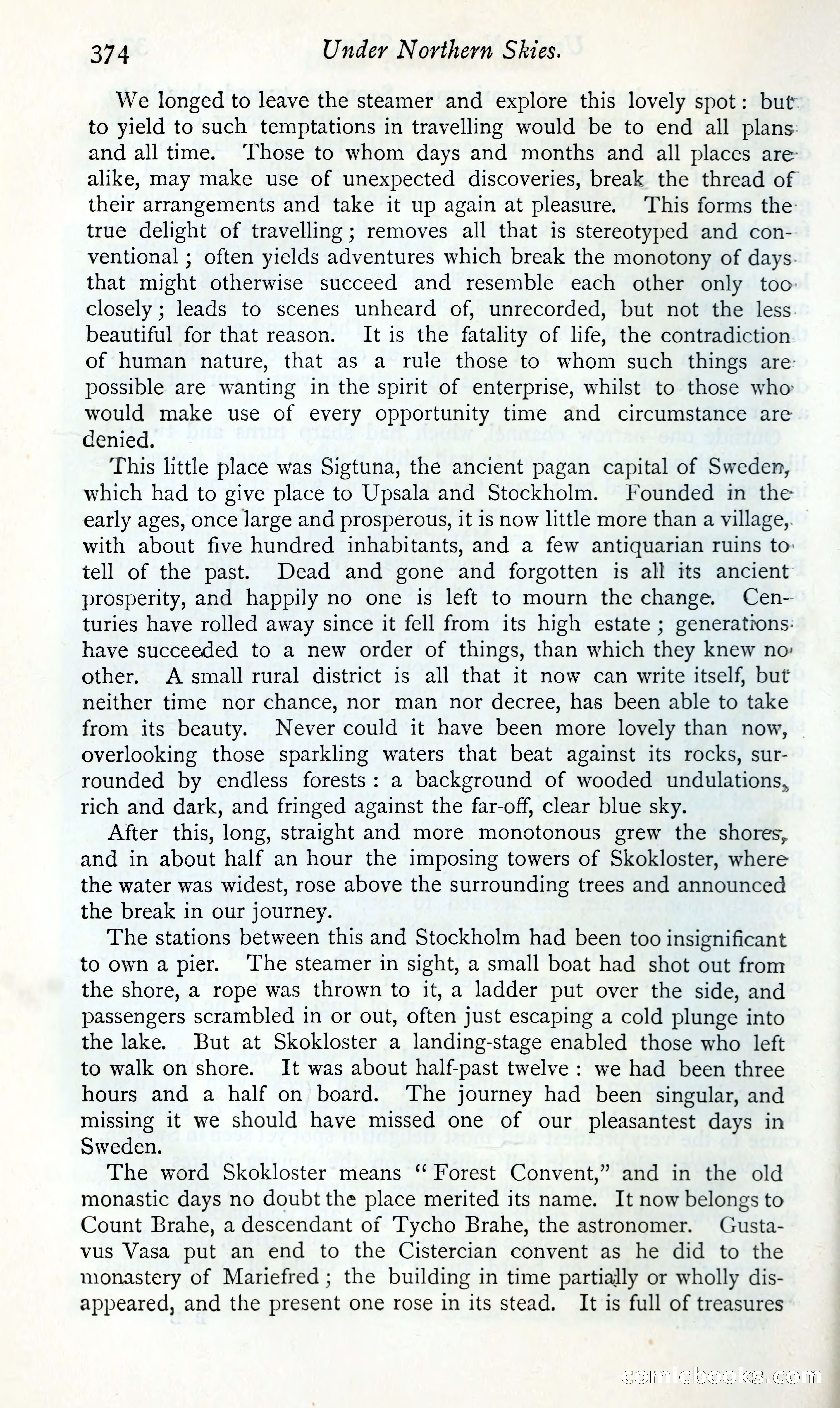
A restored page from Pulp Fiction, 1865. Page through the whole issue in the reader above.
📄 Transcribed text from this page (OCR, searchable)
Machine-transcribed from the original scan — historical spelling and the odd misread are preserved.
374 Under Northern Skies. We longed to leave the steamer and explore this lovely spot: but: to yield to such temptations in travelling would be to end all plans. and all time. Those to whom days and months and all places are alike, may make use of unexpected discoveries, break the thread of their arrangements and take it up again at pleasure. This forms the: true delight of travelling ; removes all that 1s stereotyped and con-. ventional ; often yields adventures which break the monotony of days. that might otherwise succeed and resemble each other only too closely ; leads to scenes unheard of, unrecorded, but not the less. beautiful for that reason. It is the fatality of life, the contradiction of human nature, that as a rule those to whom such things are: possible are wanting in the spirit of enterprise, whilst to those who would make use of every opportunity time and circumstance are denied. This little place was Sigtuna, the ancient pagan capital of Sweden, which had to give place to Upsala and Stockholm. Founded in the early ages, once large and prosperous, it is now little more than a village,. with about five hundred inhabitants, and a few antiquarian ruins to: tell of the past. Dead and gone and forgotten is all its ancient prosperity, and happily no one is left to mourn the change. Cen- turies have rolled away since it fell from its high estate ; generations: have succeeded to a new order of things, than which they knew no: other. A small rural district is all that it now can write itself, but neither time nor chance, nor man nor decree, has been able to take from its beauty. Never could it have been more lovely than now, | overlooking those sparkling waters that beat against its rocks, sur- rounded by endless forests: a background of wooded undulations, rich and dark, and fringed against the far-off, clear blue sky. After this, long, straight and more monotonous grew the shores, and in about half an hour the imposing towers of Skokloster, where the water was widest, rose above the surrounding trees and announced the break in our journey. The stations between this and Stockholm had been too insignificant to own a pier. ‘The steamer in sight, a small boat had shot out from the shore, a rope was thrown to it, a ladder put over the side, and passengers scrambled in or out, often just escaping a cold plunge into the lake. But at Skokloster a landing-stage enabled those who left to walk on shore. It was about half-past twelve: we had been three hours and a half on board. ‘The journey had been singular, and missing it we should have missed one of our pleasantest days in Sweden. The word Skokloster means ‘ Forest Convent,” and in the old monastic days no doubt the place merited its name. It now belongs to Count Brahe, a descendant of Tycho Brahe, the astronomer. Gusta- vus Vasa put an end to the Cistercian convent as he did to the monastery of Mariefred ; the building in time partially or wholly dis- appeared, and the present one rose in its stead. It is full of treasures COMMICOOOKS.E@