
Pulp Fiction, 1865 · page 375 of 400
The Argosy — page 375: what you’re looking at
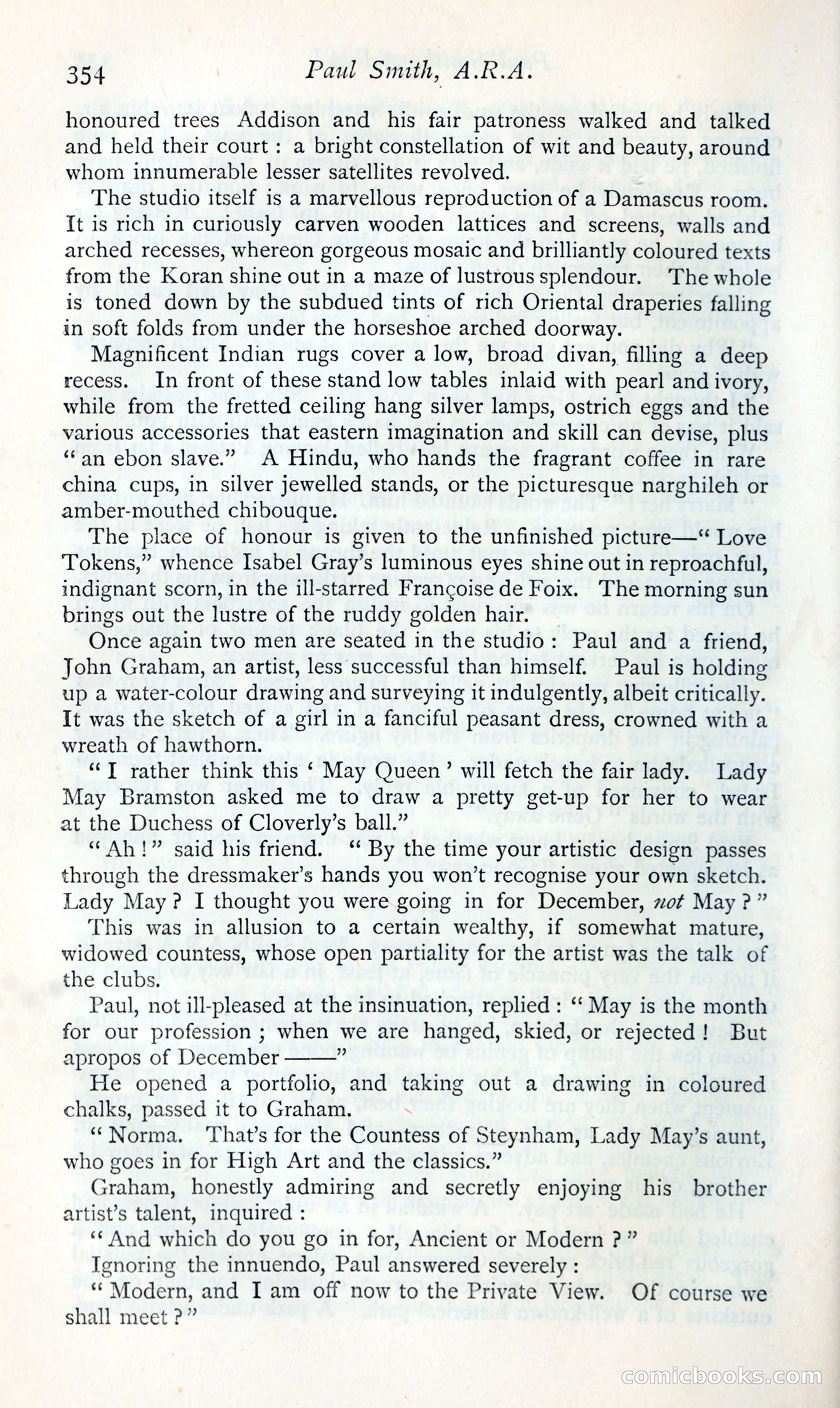
A restored page from Pulp Fiction, 1865. Page through the whole issue in the reader above.
📄 Transcribed text from this page (OCR, searchable)
Machine-transcribed from the original scan — historical spelling and the odd misread are preserved.
354 Paul Smith, A.R.A. honoured trees Addison and his fair patroness walked and talked and held their court: a bright constellation of wit and beauty, around whom innumerable lesser satellites revolved. The studio itself 1s a marvellous reproduction of a Damascus room. {t is rich in curiously carven wooden lattices and screens, walls and arched recesses, whereon gorgeous mosaic and brilliantly coloured texts from the Koran shine out in a maze of lustrous splendour. The whole is toned down by the subdued tints of rich Oriental draperies falling in soft folds from under the horseshoe arched doorway. Magnificent Indian rugs cover a low, broad divan, filling a deep recess. In front of these stand low tables inlaid with pearl and ivory, while from the fretted ceiling hang silver lamps, ostrich eggs and the various accessories that eastern imagination and skill can devise, plus “an ebon slave.” A Hindu, who hands the fragrant coffee in rare china cups, in silver jewelled stands, or the picturesque narghileh or amber-mouthed chibouque. The place of honour is given to the unfinished picture—‘“ Love Tokens,” whence Isabel Gray’s luminous eyes shine out in reproachful, indignant scorn, in the ill-starred Francoise de Foix. The morning sun brings out the lustre of the ruddy golden hair. Once again two men are seated in the studio: Paul and a friend, John Graham, an artist, less successful than himself. Paul is holding up a water-colour drawing and surveying it indulgently, albeit critically. It was the sketch of a girl in a fanciful peasant dress, crowned with a wreath of hawthorn. “JT rather think this ‘ May Queen’ will fetch the fair lady. Lady May Bramston asked me to draw a pretty get-up for her to wear at the Duchess of Cloverly’s ball.” “Ah!” said his friend. ‘* By the time your artistic design passes through the dressmaker’s hands you won’t recognise your own sketch. Lady May? I thought you were going in for December, zot May ?” This was in allusion to a certain wealthy, if somewhat mature, widowed countess, whose open partiality for the artist was the talk of the clubs. Paul, not ill-pleased at the insinuation, replied: ‘“‘ May is the month for our profession ; when we are hanged, skied, or rejected! But apropos of December ——” He opened a portfolio, and taking out a drawing in coloured chalks, passed it to Graham. “Norma. That’s for the Countess of Steynham, Lady May’s aunt, who goes in for High Art and the classics.” Graham, honestly admiring and secretly enjoying his brother artist’s talent, inquired : ‘¢ And which do you go in for, Ancient or Modern ?” Ignoring the innnendo, Paul answered severely : “Modern, and I am off now to the Private View. Of course we shall meet ?” CORnnICLOOKS (E©) im