
Pulp Fiction, 1865 · page 374 of 400
The Argosy — page 374: what you’re looking at
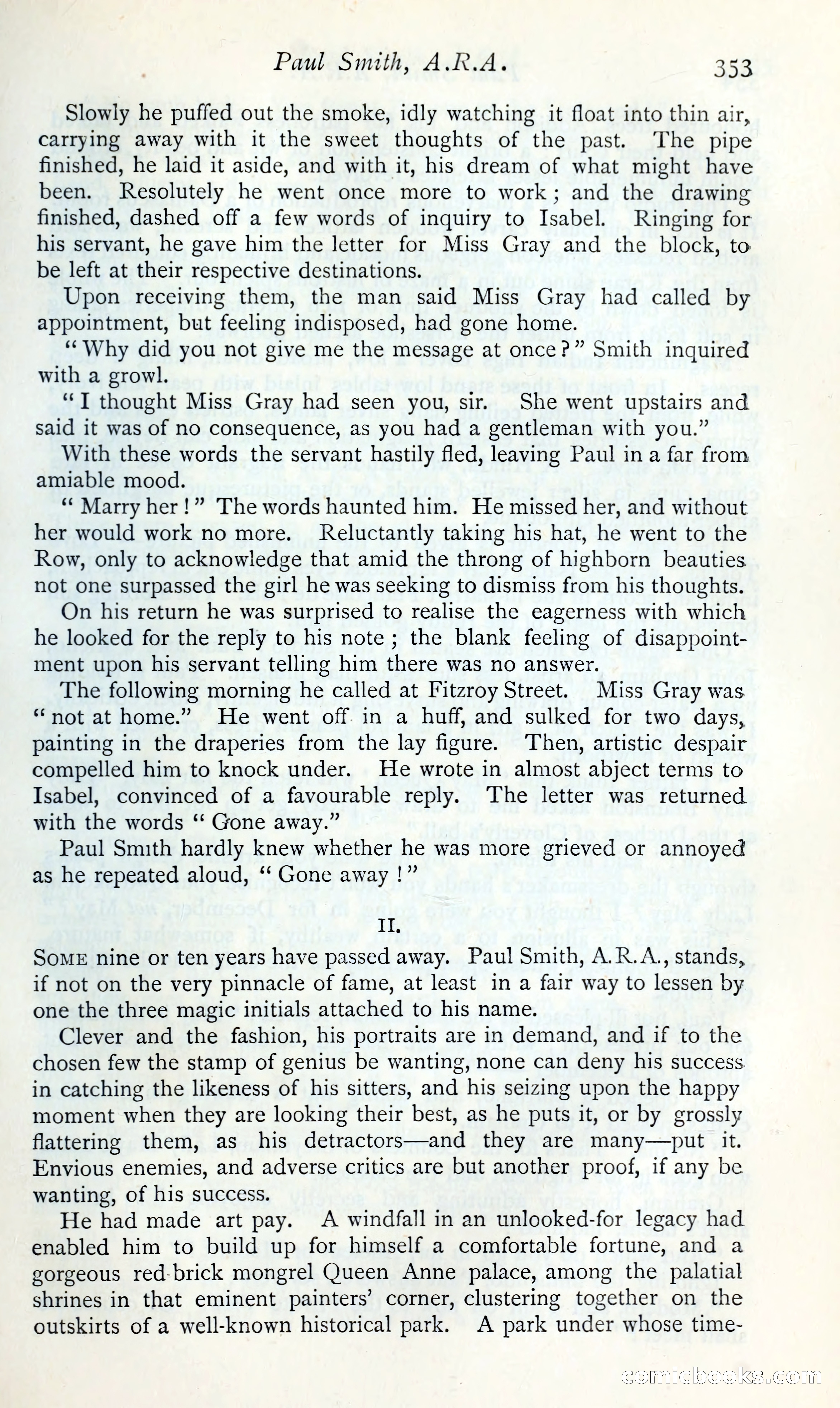
A restored page from Pulp Fiction, 1865. Page through the whole issue in the reader above.
📄 Transcribed text from this page (OCR, searchable)
Machine-transcribed from the original scan — historical spelling and the odd misread are preserved.
Paul Smith, A.R.A. 353 Slowly he puffed out the smoke, idly watching it float into thin air, carrying away with it the sweet thoughts of the past. The pipe finished, he laid it aside, and with it, his dream of what might have been. KResolutely he went once more to work; and the drawing finished, dashed off a few words of inquiry to Isabel. Ringing for his servant, he gave him the letter for Miss Gray and the block, to be left at their respective destinations. Upon receiving them, the man said Miss Gray had called by appointment, but feeling indisposed, had gone home. “Why did you not give me the message at once?” Smith inquired with a growl. ‘“T thought Miss Gray had seen you, sir. She went upstairs and said it was of no consequence, as you had a gentleman with you.” With these words the servant hastily fled, leaving Paul in a far from amiable mood. ** Marry her!” The words haunted him. He missed her, and without her would work no more. Reluctantly taking his hat, he went to the Row, only to acknowledge that amid the throng of highborn beauties not one surpassed the girl he was seeking to dismiss from his thoughts. On his return he was surprised to realise the eagerness with which he looked for the reply to his note; the blank feeling of disappoint- ment upon his servant telling him there was no answer. The following morning he called at Fitzroy Street. Miss Gray was “not at home.” He went off. in a huff, and sulked for two days, painting in the draperies from the lay figure. Then, artistic despair compelled him to knock under. He wrote in almost abject terms to Isabel, convinced of a favourable reply. ‘The letter was returned with the words ‘‘ Gone away.” Paul Smith hardly knew whether he was more grieved or annoyed as he repeated aloud, ‘‘ Gone away !” II, SOME nine or ten years have passed away. Paul Smith, A.R.A., stands, if not on the very pinnacle of fame, at least in a fair way to lessen by one the three magic initials attached to his name. Clever and the fashion, his portraits are in demand, and if to the chosen few the stamp of genius be wanting, none can deny his success. in catching the likeness of his sitters, and his seizing upon the happy moment when they are looking their best, as he puts it, or by grossly flattering them, as his detractors—and they are many—put it. Envious enemies, and adverse critics are but another proof, if any be wanting, of his success. He had made art pay. A windfall in an unlooked-for legacy had enabled him to build up for himself a comfortable fortune, and a gorgeous red-brick mongrel Queen Anne palace, among the palatial shrines in that eminent painters’ corner, clustering together on the outskirts of a well-known historical park. A park under whose time- COMIC OOO (S©@) im