
Pulp Fiction, 1865 · page 159 of 400
The Argosy — page 159: what you’re looking at
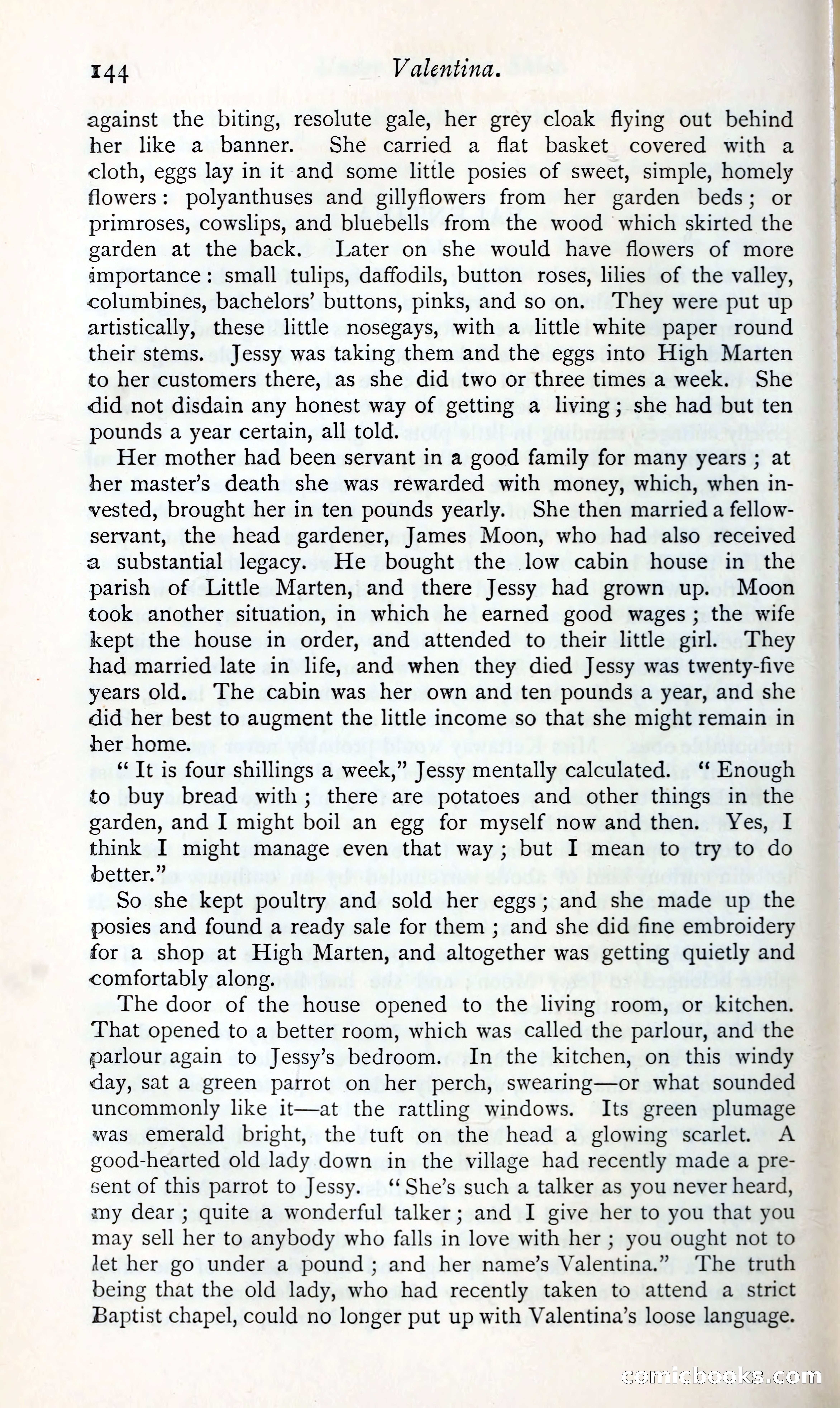
A restored page from Pulp Fiction, 1865. Page through the whole issue in the reader above.
📄 Transcribed text from this page (OCR, searchable)
Machine-transcribed from the original scan — historical spelling and the odd misread are preserved.
144 Valentina. against the biting, resolute gale, her grey cloak flying out behind her like a banner. She carried a flat basket covered with a cloth, eggs lay in it and some little posies of sweet, simple, homely flowers: polyanthuses and gillyflowers from her garden beds; or primroses, cowslips, and bluebells from the wood which skirted the garden at the back. Later on she would have flowers of more importance: small tulips, daffodils, button roses, lilies of the valley, columbines, bachelors’ buttons, pinks, and so on. ‘They were put up artistically, these little nosegays, with a little white paper round their stems. Jessy was taking them and the eggs into High Marten to her customers there, as she did two or three times a week. She did not disdain any honest way of getting a living; she had but ten pounds a year certain, all told. Her mother had been servant in a good family for many years ; at her master’s death she was rewarded with money, which, when in- vested, brought her in ten pounds yearly. She then married a fellow- servant, the head gardener, James Moon, who had also received a substantial legacy. He bought the low cabin house in the parish of Little Marten, and there Jessy had grown up. Moon took another situation, in which he earned good wages; the wife kept the house in order, and attended to their little girlk They had married late in life, and when they died Jessy was twenty-five years old. The cabin was her own and ten pounds a year, and she did her best to augment the little income so that she might remain in her home. “Tt is four shillings a week,” Jessy mentally calculated. ‘‘ Enough to buy bread with; there are potatoes and other things in the garden, and I might boil an egg for myself now and then. Yes, I think I might manage even that way; but I mean to try to do better.” So she kept poultry and sold her eggs; and she made up the posies and found a ready sale for them ; and she did fine embroidery for a shop at High Marten, and altogether was getting quietly and comfortably along. The door of the house opened to the living room, or kitchen. ‘That opened to a better room, which was called the parlour, and the parlour again to Jessy’s bedroom. In the kitchen, on this windy day, sat a green parrot on her perch, swearing—or what sounded uncommonly like it—at the rattling windows. Its green plumage was emerald bright, the tuft on the head a glowing scarlet. A good-hearted old lady down in the village had recently made a pre- sent of this parrot to Jessy. ‘‘She’s such a talker as you never heard, my dear; quite a wonderful talker; and I give her to you that you may sell her to anybody who falls in love with her ; you ought not to Jet her go under a pound; and her name’s Valentina.” The truth being that the old lady, who had recently taken to attend a strict Baptist chapel, could no longer put up with Valentina’s loose language. ECORNICLOOOKS (EC) m