
Pulp Fiction, 1865 · page 158 of 400
The Argosy — page 158: what you’re looking at
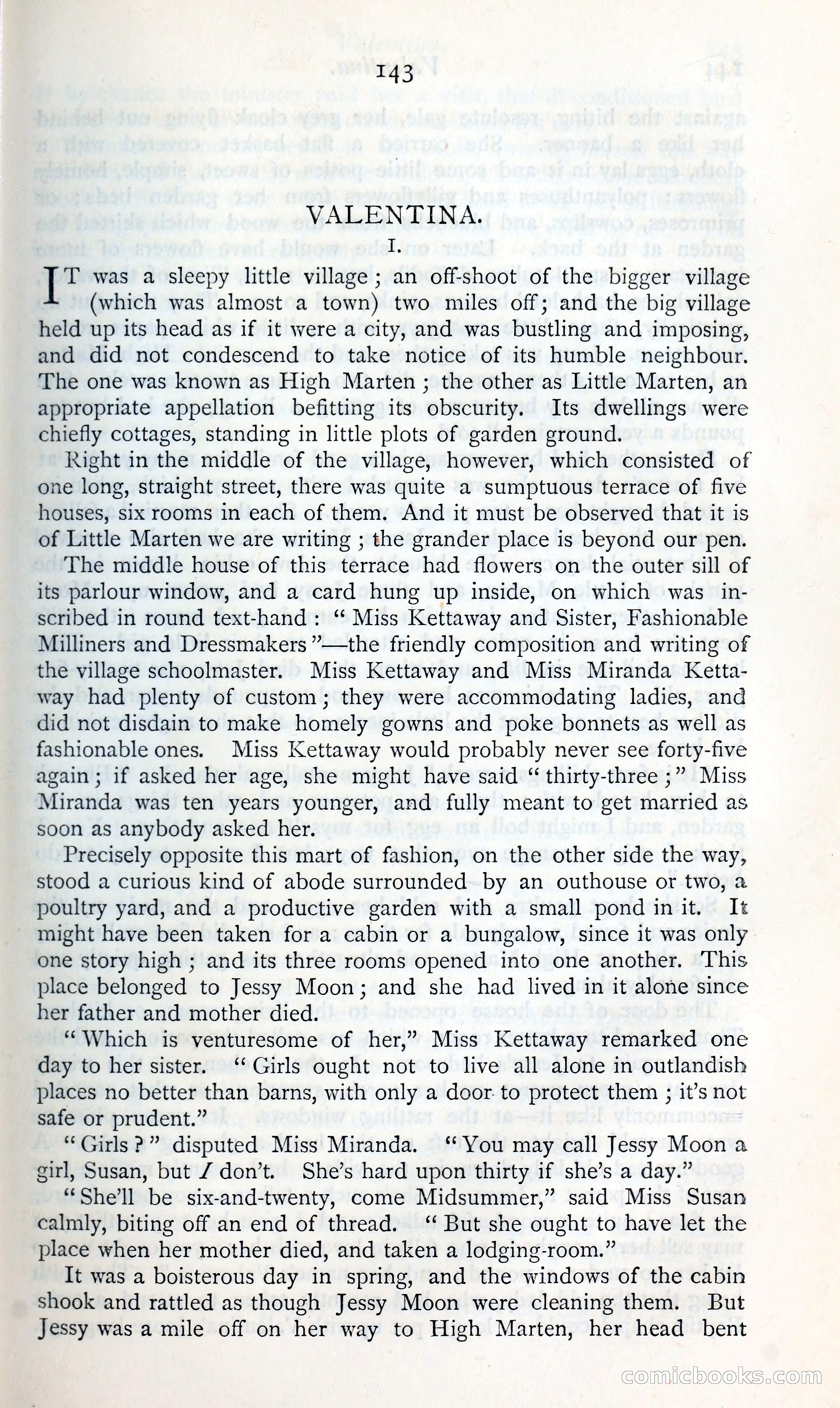
A restored page from Pulp Fiction, 1865. Page through the whole issue in the reader above.
📄 Transcribed text from this page (OCR, searchable)
Machine-transcribed from the original scan — historical spelling and the odd misread are preserved.
ras VALENTINA. I. ae was a sleepy little village; an off-shoot of the bigger village (which was almost a town) two miles off; and the big village held up its head as if it were a city, and was bustling and imposing, and did not condescend to take notice of its humble neighbour. The one was known as High Marten ; the other as Little Marten, an appropriate appellation befitting its obscurity. Its dwellings were chiefly cottages, standing in little plots of garden ground. Right in the middle of the village, however, which consisted of one long, straight street, there was quite a sumptuous terrace of five houses, six rooms in each of them. And it must be observed that it is of Little Marten we are writing ; the grander place is beyond our pen. The middle house of this terrace had flowers on the outer sill of its parlour window, and a card hung up inside, on which was in- scribed in round text-hand: ‘ Miss Kettaway and Sister, Fashionable Milliners and Dressmakers ”—the friendly composition and writing of the village schoolmaster. Miss Kettaway and Miss Miranda Ketta- way had plenty of custom; they were accommodating ladies, and did not disdain to make homely gowns and poke bonnets as well as fashionable ones. Miss Kettaway would probably never see forty-five again; if asked her age, she might have said ‘ thirty-three ;” Miss Miranda was ten years younger, and fully meant to get married as soon as anybody asked her. Precisely opposite this mart of fashion, on the other side the way, stood a curious kind of abode surrounded by an outhouse or two, a poultry yard, and a productive garden with a small pondinit. It might have been taken for a cabin or a bungalow, since it was only one story high ; and its three rooms opened into one another. This place belonged to Jessy Moon; and she had lived in it alone since her father and mother died. “Which is venturesome of her,” Miss Kettaway remarked one day to her sister. ‘‘ Girls ought not to live all alone in outlandish places no better than barns, with only a door. to protect them ; it’s not safe or prudent.” “Girls?” disputed Miss Miranda. ‘‘ You may call Jessy Moon a girl, Susan, but 7 don’t. She’s hard upon thirty if she’s a day.” “She'll be six-and-twenty, come Midsummer,” said Miss Susan calmly, biting off an end of thread. ‘‘ But she ought to have let the place when her mother died, and taken a lodging-room.” It was a boisterous day in spring, and the windows of the cabin shook and rattled as though Jessy Moon were cleaning them. But Jessy was a mile off on her way to High Marten, her head bent COMmMicaooks (C©@) im