
Pulp Fiction, 1865 · page 108 of 400
The Argosy — page 108: what you’re looking at
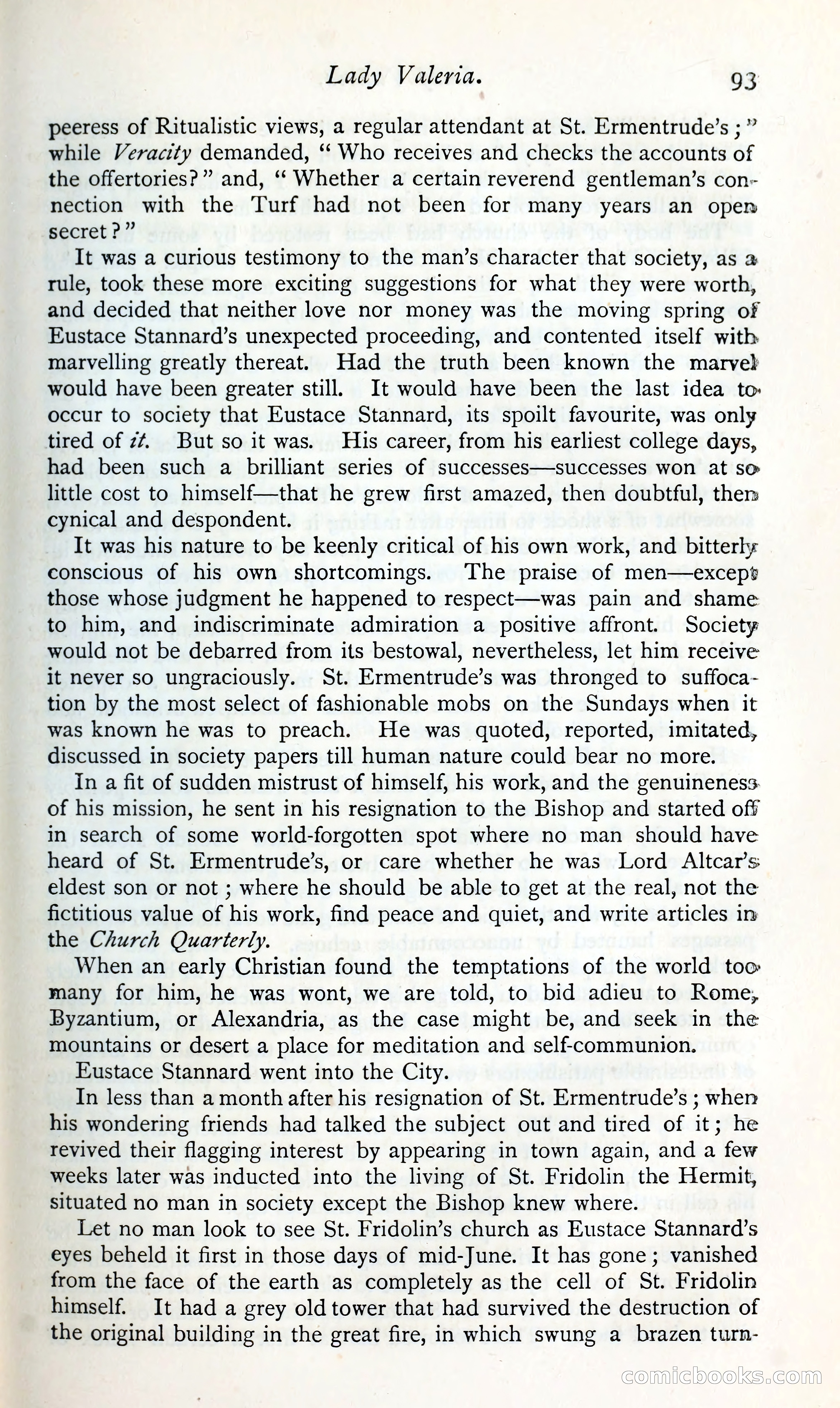
A restored page from Pulp Fiction, 1865. Page through the whole issue in the reader above.
📄 Transcribed text from this page (OCR, searchable)
Machine-transcribed from the original scan — historical spelling and the odd misread are preserved.
Lady Valeria. 93 peeress of Ritualistic views, a regular attendant at St. Ermentrude’s ; ” while Veracity demanded, ‘‘ Who receives and checks the accounts of the offertories?” and, ‘‘ Whether a certain reverend gentleman’s con- nection with the Turf had not been for many years an open secret ?” It was a curious testimony to the man’s character that society, as a rule, took these more exciting suggestions for what they were worth, and decided that neither love nor money was the moving spring of Eustace Stannard’s unexpected proceeding, and contented itself with marvelling greatly thereat. Had the truth been known the marvel would have been greater still. It would have been the last idea to occur to society that Eustace Stannard, its spoilt favourite, was only tired of z7. Butso it was. Huis career, from his earliest college days, had been such a brilliant series of successes—successes won at so little cost to himself—that he grew first amazed, then doubtful, them cynical and despondent. It was his nature to be keenly critical of his own work, and bitterly conscious of his own shortcomings. The praise of men—except those whose judgment he happened to respect—was pain and shame to him, and indiscriminate admiration a positive affront. Society would not be debarred from its bestowal, nevertheless, let him receive it never so ungraciously. St. Ermentrude’s was thronged to suffoca- tion by the most select of fashionable mobs on the Sundays when it was known he was to preach. He was quoted, reported, imitated, discussed in society papers till human nature could bear no more. in a fit of sudden mistrust of himself, his work, and the genuineness. of his mission, he sent in his resignation to the Bishop and started off in search of some world-forgotten spot where no man should have heard of St. Ermentrude’s, or care whether he was Lord Altcar’s eldest son or not ; where he should be able to get at the real, not the fictitious value of his work, find peace and quiet, and write articles in the Church Quarterly. When an early Christian found the temptations of the world too many for him, he was wont, we are told, to bid adieu to Rome, Byzantium, or Alexandria, as the case might be, and seek in the mountains or desert a place for meditation and self-communion. Eustace Stannard went into the City. In less than a month after his resignation of St. Ermentrude’s ; when his wondering friends had talked the subject out and tired of it; he revived their flagging interest by appearing in town again, and a few weeks later was inducted into the living of St. Fridolin the Hermit, situated no man in society except the Bishop knew where. Let no man look to see St. Fridolin’s church as Eustace Stannard’s eyes beheld it first in those days of mid-June. It has gone; vanished from the face of the earth as completely as the cell of St. Fridolin himself. It had a grey old tower that had survived the destruction of the original building in the great fire, in which swung a_ brazen turn- CoOnniclboooks (CO)