
Pulp Fiction, 1865 · page 394 of 400
The Argosy — page 394: what you’re looking at
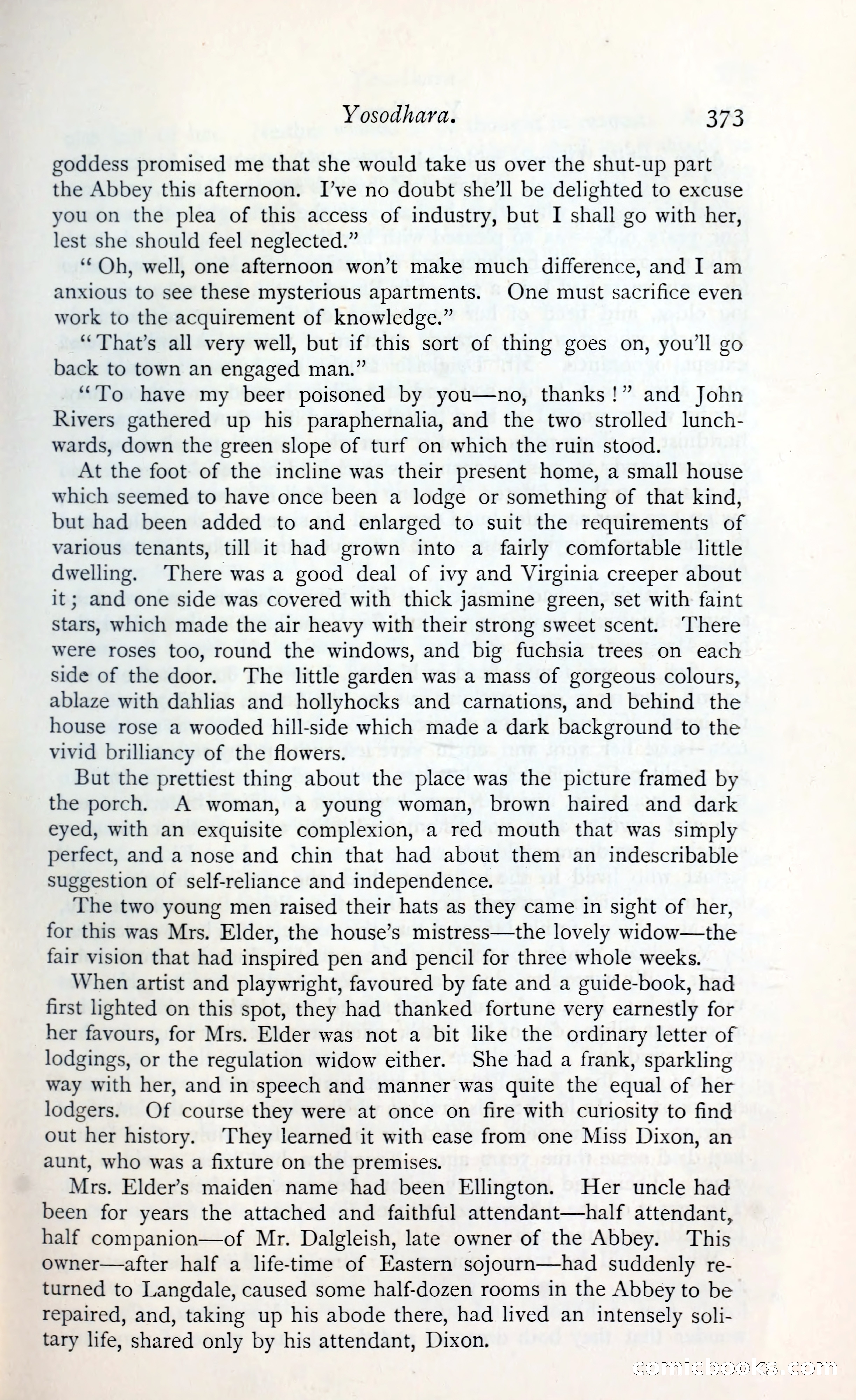
A restored page from Pulp Fiction, 1865. Page through the whole issue in the reader above.
📄 Transcribed text from this page (OCR, searchable)
Machine-transcribed from the original scan — historical spelling and the odd misread are preserved.
Yosodhara. 373 goddess promised me that she would take us over the shut-up part the Abbey this afternoon. I’ve no doubt she'll be delighted to excuse you on the plea of this access of industry, but I shall go with her, lest she should feel neglected.” ‘© Oh, well, one afternoon won’t make much difference, and I am anxious to see these mysterious apartments. One must sacrifice even work to the acquirement of knowledge.” “"That’s all very well, but if this sort of thing goes on, you'll go back to town an engaged man.” ‘To have my beer poisoned by you—no, thanks!” and John Rivers gathered up his paraphernalia, and the two strolled lunch- wards, down the green slope of turf on which the ruin stood. At the foot of the incline was their present home, a small house which seemed to have once been a lodge or something of that kind, but had been added to and enlarged to suit the requirements of various tenants, till it had grown into a fairly comfortable little dwelling. There was a good deal of ivy and Virginia creeper about it; and one side was covered with thick jasmine green, set with faint stars, which made the air heavy with their strong sweet scent. There were roses too, round the windows, and big fuchsia trees on each side of the door. The little garden was a mass of gorgeous colours, ablaze with dahlias and hollyhocks and carnations, and behind the house rose a wooded hill-side which made a dark background to the vivid brilliancy of the flowers. But the prettiest thing about the place was the picture framed by the porch. A woman, a young woman, brown haired and dark eyed, with an exquisite complexion, a red mouth that was simply perfect, and a nose and chin that had about them an indescribable suggestion of self-reliance and independence. The two young men raised their hats as they came in sight of her, for this was Mrs. Elder, the house’s mistress—the lovely widow—the fair vision that had inspired pen and pencil for three whole weeks. When artist and playwright, favoured by fate and a guide-book, had first lighted on this spot, they had thanked fortune very earnestly for her favours, for Mrs. Elder was not a bit like the ordinary letter of lodgings, or the regulation widow either. She had a frank, sparkling way with her, and in speech and manner was quite the equal of her lodgers. Of course they were at once on fire with curiosity to find out her history. They learned it with ease from one Miss Dixon, an aunt, who was a fixture on the premises. Mrs. Elder’s maiden name had been Ellington. Her uncle had been for years the attached and faithful attendant—half attendant, half companion—of Mr. Dalgleish, late owner of the Abbey. This owner—after half a life-time of Eastern sojourn—had suddenly re- turned to Langdale, caused some half-dozen rooms in the Abbey to be repaired, and, taking up his abode there, had lived an intensely soli- tary life, shared only by his attendant, Dixon. CONNIE OOO SS) CO im