
Pulp Fiction, 1865 · page 381 of 400
The Argosy — page 381: what you’re looking at
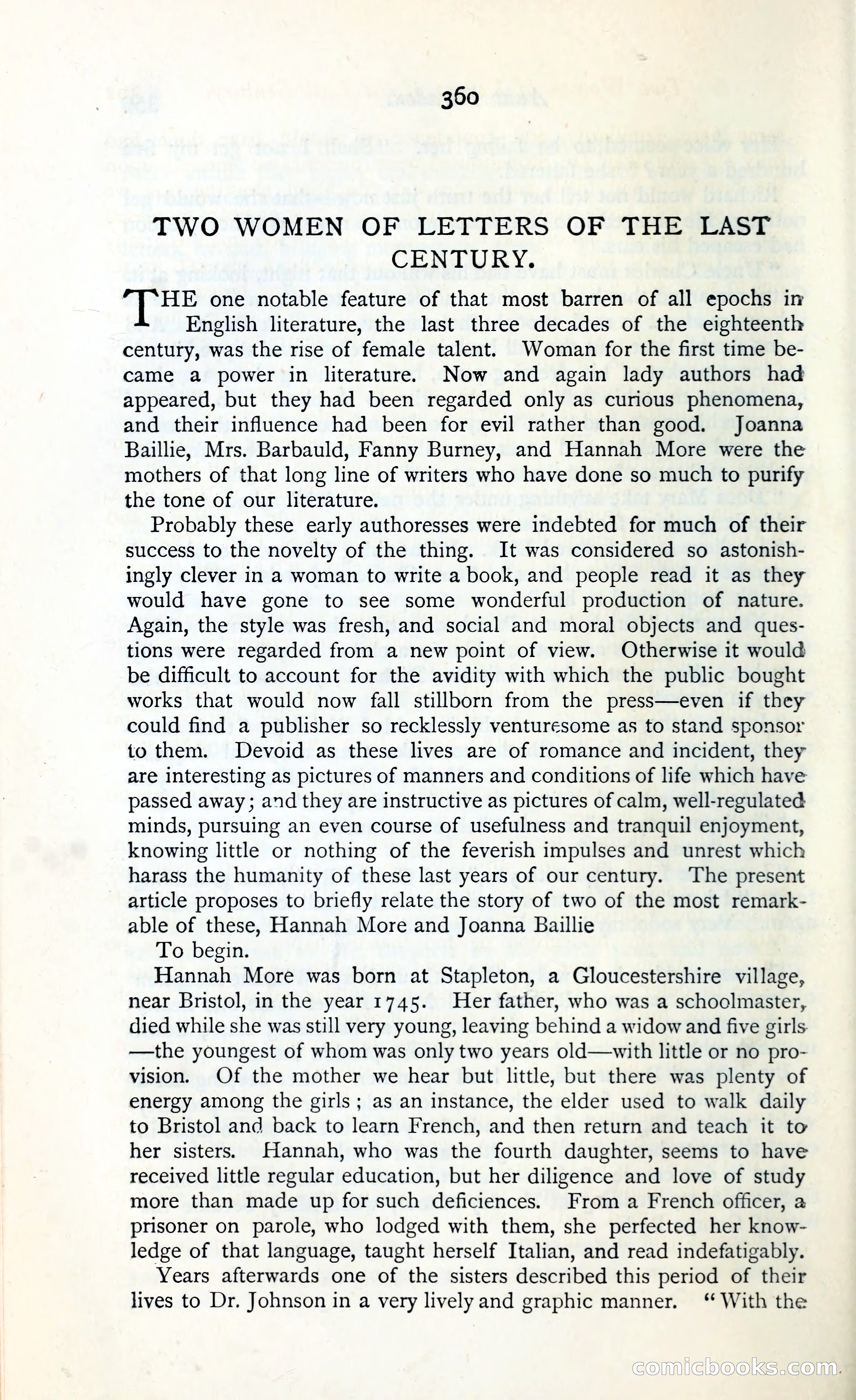
A restored page from Pulp Fiction, 1865. Page through the whole issue in the reader above.
📄 Transcribed text from this page (OCR, searchable)
Machine-transcribed from the original scan — historical spelling and the odd misread are preserved.
360 TWO WOMEN OF LETTERS OF THE LAST CENTURY. per one notable feature of that most barren of all epochs in English literature, the last three decades of the eighteenth century, was the rise of female talent. Woman for the first time be- came a power in literature. Now and again lady authors had appeared, but they had been regarded only as curious phenomena, and their influence had been for evil rather than good. Joanna Baillie, Mrs. Barbauld, Fanny Burney, and Hannah More were the mothers of that long line of writers who have done so much to purify the tone of our literature. Probably these early authoresses were indebted for much of their success to the novelty of the thing. It was considered so astonish- ingly clever in a woman to write a book, and people read it as they would have gone to see some wonderful production of nature. Again, the style was fresh, and social and moral objects and ques- tions were regarded from a new point of view. Otherwise it would be difficult to account for the avidity with which the public bought works that would now fall stillborn from the press—even if they could find a publisher so recklessly venturesome as to stand sponsor to them. Devoid as these lives are of romance and incident, they are interesting as pictures of manners and conditions of life which have passed away; and they are instructive as pictures of calm, well-regulated: minds, pursuing an even course of usefulness and tranquil enjoyment, knowing little or nothing of the feverish impulses and unrest which harass the humanity of these last years of our century. ‘The present article proposes to briefly relate the story of two of the most remark- able of these, Hannah More and Joanna Baillie To begin. Hannah More was born at Stapleton, a Gloucestershire village, near Bristol, in the year 1745. Her father, who was a schoolmaster, died while she was still very young, leaving behind a widow and five girls —the youngest of whom was only two years old—with little or no pro- vision. Of the mother we hear but little, but there was plenty of energy among the girls; as an instance, the elder used to walk daily to Bristol and back to learn French, and then return and teach it to her sisters. Hannah, who was the fourth daughter, seems to have received little regular education, but her diligence and love of study more than made up for such deficiences. From a French officer, a prisoner on parole, who lodged with them, she perfected her know- ledge of that language, taught herself Italian, and read indefatigably. Years afterwards one of the sisters described this period of their lives to Dr. Johnson in a very lively and graphic manner. ‘ With the ECORNICLOOKS nO