
Pulp Fiction, 1865 · page 331 of 400
The Argosy — page 331: what you’re looking at
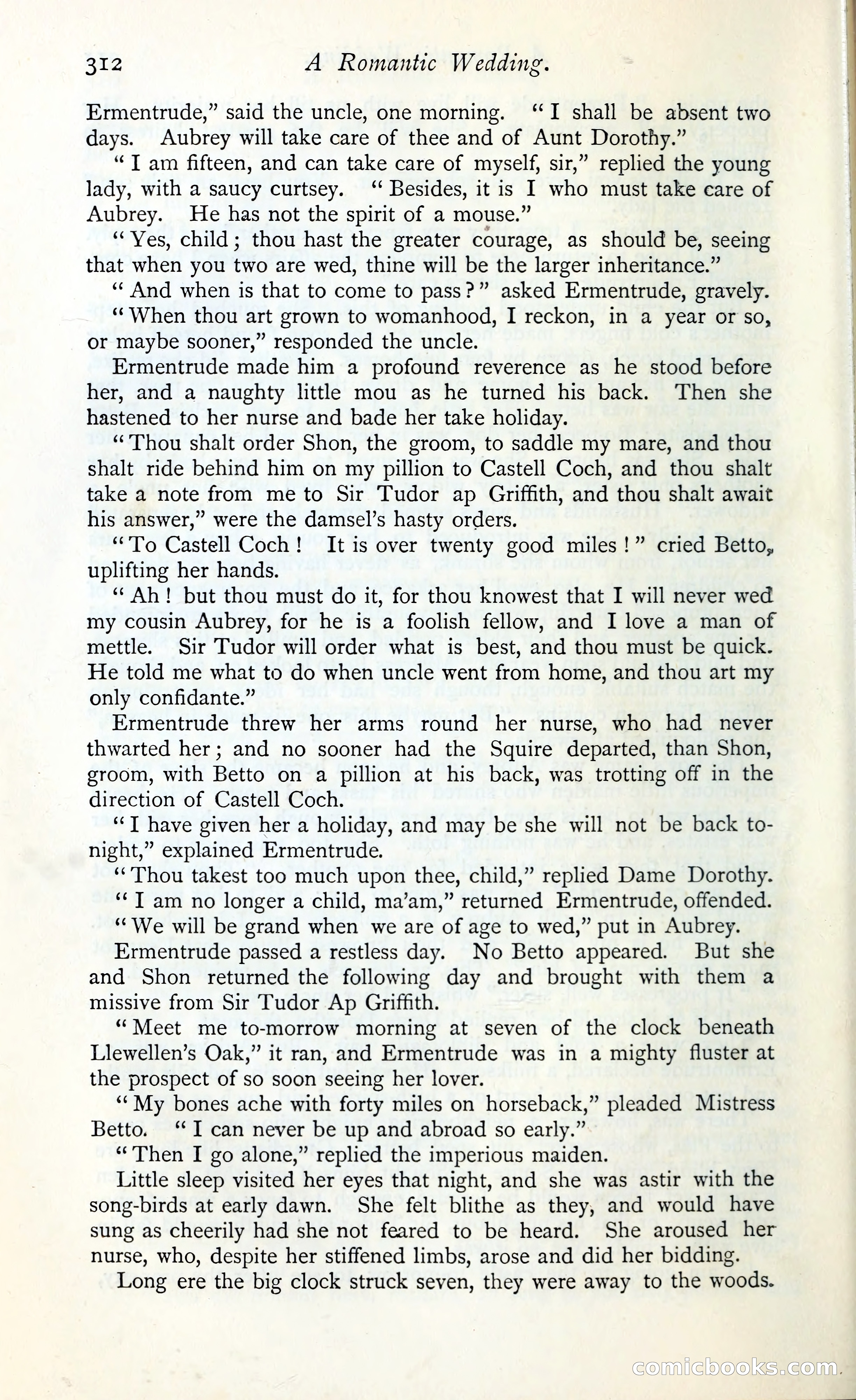
A restored page from Pulp Fiction, 1865. Page through the whole issue in the reader above.
📄 Transcribed text from this page (OCR, searchable)
Machine-transcribed from the original scan — historical spelling and the odd misread are preserved.
312 A Romantic Wedding. Ermentrude,” said the uncle, one morning. ‘‘I shall be absent two days. Aubrey will take care of thee and of Aunt Dorothy.” “Tam fifteen, and can take care of myself, sir,” replied the young lady, with a saucy curtsey. ‘‘ Besides, itis I who must take care of Aubrey. He has not the spirit of a mouse.” ‘Yes, child; thou hast the greater courage, as should be, seeing that when you two are wed, thine will be the larger inheritance.” ‘And when is that to come to pass?” asked Ermentrude, gravely. ‘When thou art grown to womanhood, I reckon, in a year or so, or maybe sooner,” responded the uncle. Ermentrude made him a profound reverence as he stood before her, and a naughty little mou as he turned his back. Then she hastened to her nurse and bade her take holiday. “Thou shalt order Shon, the groom, to saddle my mare, and thou shalt ride behind him on my pillion to Castell Coch, and thou shalt take a note from meto Sir Tudor ap Griffith, and thou shalt await his answer,” were the damsel’s hasty orders. “To Castell Coch! It is over twenty good miles!” cried Betto, uplifting her hands. “Ah! but thou must do it, for thou knowest that I will never wed my cousin Aubrey, for he is a foolish fellow, and I love a man of mettle. Sir Tudor will order what is best, and thou must be quick. He told me what to do when uncle went from home, and thou art my only confidante.” Ermentrude threw her arms round her nurse, who had never thwarted her; and no sooner had the Squire departed, than Shon, groom, with Betto on a pillion at his back, was trotting off in the direction of Castell Coch. ‘‘T have given her a holiday, and may be she will not be back to- night,” explained Ermentrude. “Thou takest too much upon thee, child,” replied Dame Dorothy. ‘“T am no longer a child, ma’am,” returned Ermentrude, offended. ‘We will be grand when we are of age to wed,” put in Aubrey. Ermentrude passed a restless day. No Betto appeared. But she and Shon returned the following day and brought with them a missive from Sir Tudor Ap Griffith. “Meet me to-morrow morning at seven of the clock beneath Llewellen’s Oak,” it ran, and Ermentrude was in a mighty fluster at the prospect of so soon seeing her lover. ‘* My bones ache with forty miles on horseback,” pleaded Mistress Betto. ‘I can never be up and abroad so early.” ‘Then I go alone,” replied the imperious maiden. Little sleep visited her eyes that night, and she was astir with the song-birds at early dawn. She felt blithe as they, and would have sung as cheerily had she not feared to be heard. She aroused her nurse, who, despite her stiffened limbs, arose and did her bidding. Long ere the big clock struck seven, they were away to the woods. Gomiilecbookss