
Pulp Fiction, 1865 · page 306 of 400
The Argosy — page 306: what you’re looking at
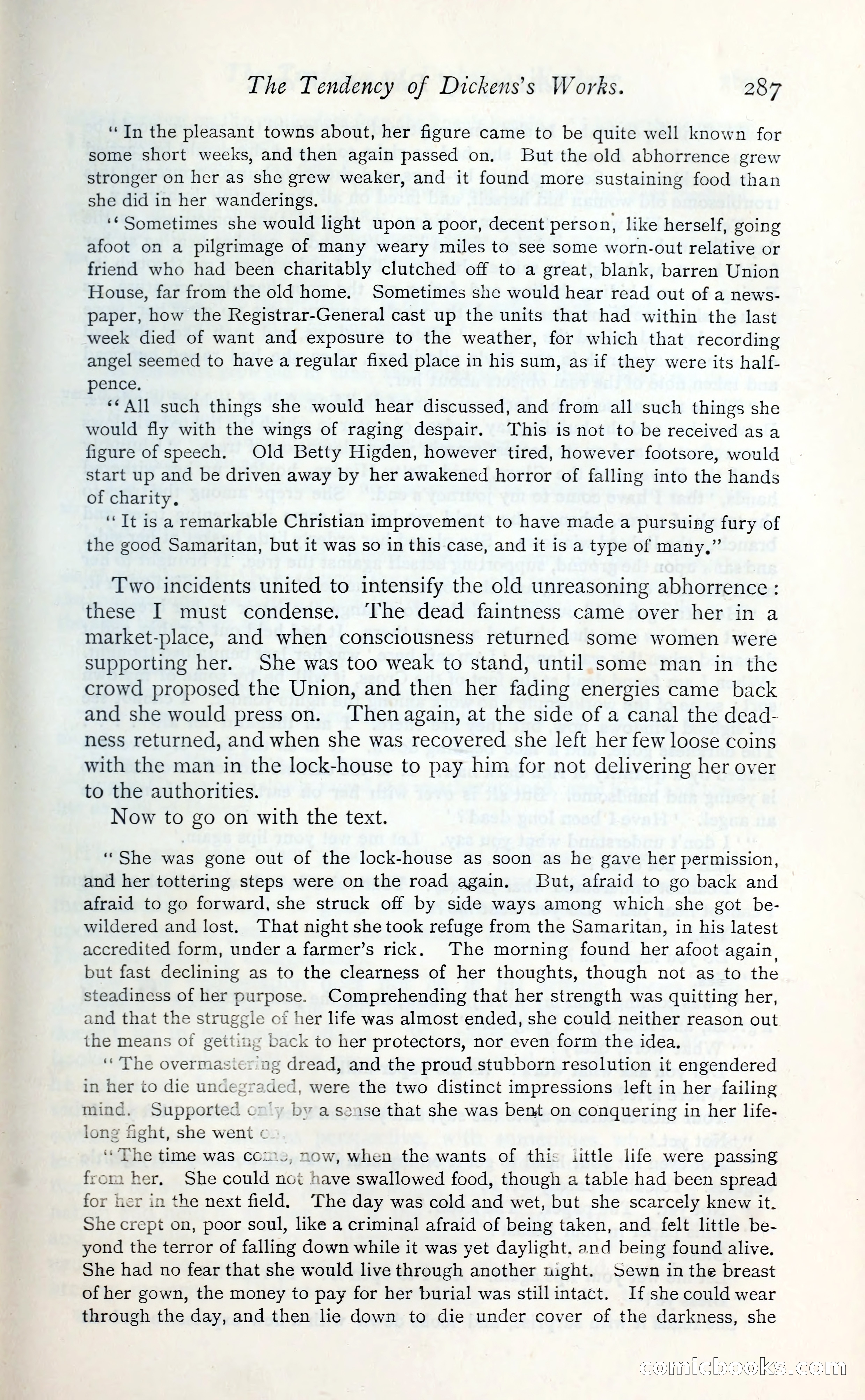
A restored page from Pulp Fiction, 1865. Page through the whole issue in the reader above.
📄 Transcribed text from this page (OCR, searchable)
Machine-transcribed from the original scan — historical spelling and the odd misread are preserved.
The Tendency of Dickens’s Works. 287 ‘In the pleasant towns about, her figure came to be quite well known for some short weeks, and then again passed on. But the old abhorrence grew stronger on her as she grew weaker, and it found more sustaining food than she did in her wanderings. ‘‘Sometimes she would light upon a poor, decent person, like herself, going afoot on a pilgrimage of many weary miles to see some worn-out relative or friend who had been charitably clutched off to a great, blank, barren Union House, far from the old home. Sometimes she would hear read out of a news- paper, how the Registrar-General cast up the units that had within the last week died of want and exposure to the weather, for which that recording angel seemed to have a regular fixed place in his sum, as if they were its half- pence. ** All such things she would hear discussed, and from all such things she would fly with the wings of raging despair. This is not to be received asa figure of speech. Old Betty Higden, however tired, however footsore, would start up and be driven away by her awakened horror of falling into the hands of charity. ‘It is a remarkable Christian improvement to have made a pursuing fury of the good Samaritan, but it was so in this case, and it is a type of many,” Two incidents united to intensify the old unreasoning abhorrence : these I must condense. The dead faintness came over her in a market-place, and when consciousness returned some women were supporting her. She was too weak to stand, until some man in the crowd proposed the Union, and then her fading energies came back and she would press on. ‘Then again, at the side of a canal the dead- ness returned, and when she was recovered she left her few loose coins with the man in the lock-house to pay him for not delivering her over to the authorities. Now to go on with the text. ‘““She was gone out of the lock-house as soon as he gave her permission, and her tottering steps were on the road again. JBut, afraid to go back and afraid to go forward, she struck off by side ways among which she got be- wildered and lost. That night she took refuge from the Samaritan, in his latest accredited form, under a farmer’s rick, The morning found her afoot again, but fast declining as to the clearness of her thoughts, though not as to the steadiness of her purpose. Comprehending that her strength was quitting her, and that the struggle of her life was almost ended, she could neither reason out the means of getting back to her protectors, nor even form the idea. ‘The overmasic: ng dread, and the proud stubborn resolution it engendered in her to die uncegraded, were the two distinct impressions left in her failing mind. Supported ony by a sense that she was bent on conquering in her life- long fight, she went « ‘The time was comms, now, when the wants of this iittle life were passing from her. She could not have swallowed food, though a table had been spread for her in the next field. ‘The day was cold and wet, but she scarcely knew it. She crept on, poor soul, like a criminal afraid of being taken, and felt little be- yond the terror of falling down while it was yet daylight. and being found alive. She had no fear that she would live through another night. Sewn in the breast of her gown, the money to pay for her burial was stillintact. If she could wear through the day, and then lie down to die under cover of the darkness, she COnniclooolkks (CO)