
Pulp Fiction, 1865 · page 305 of 400
The Argosy — page 305: what you’re looking at
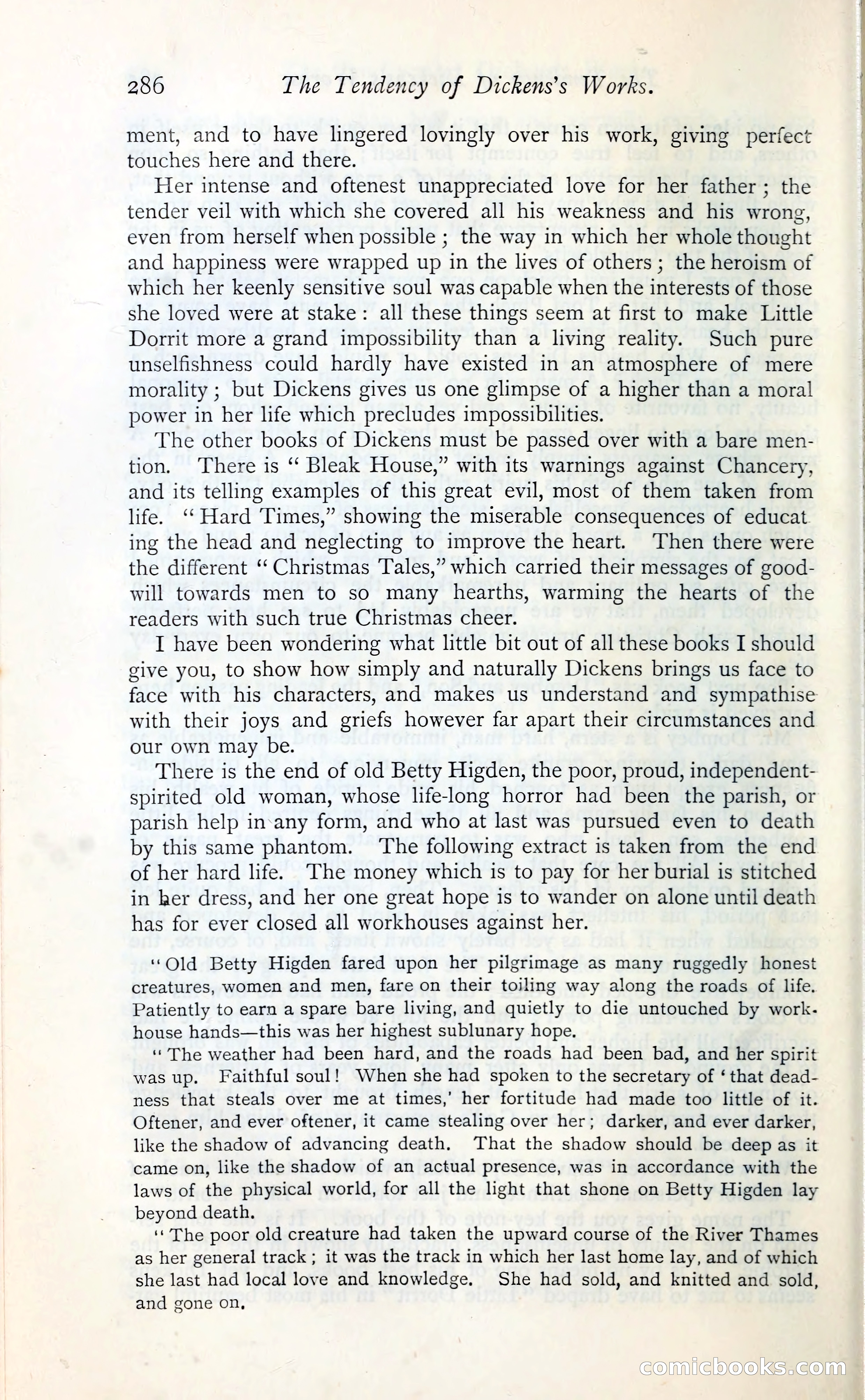
A restored page from Pulp Fiction, 1865. Page through the whole issue in the reader above.
📄 Transcribed text from this page (OCR, searchable)
Machine-transcribed from the original scan — historical spelling and the odd misread are preserved.
286 The Tendency of Dickens’s Works. ment, and to have lingered lovingly over his work, giving perfect touches here and there. Her intense and oftenest unappreciated love for her father; the tender veil with which she covered all his weakness and his wrong, even from herself when possible ; the way in which her whole thought and happiness were wrapped up in the lives of others; the heroism of which her keenly sensitive soul was capable when the interests of those she loved were at stake: all these things seem at first to make Little Dorrit more a grand impossibility than a living reality. Such pure unselfishness could hardly have existed in an atmosphere of mere morality ; but Dickens gives us one glimpse of a higher than a moral power in her life which precludes impossibilities. The other books of Dickens must be passed over with a bare men- tion. There is “‘ Bleak House,” with its warnings against Chancery, and its telling examples of this great evil, most of them taken from life. ‘‘ Hard Times,” showing the miserable consequences of educat ing the head and neglecting to improve the heart. ‘Then there were the different ‘‘ Christmas Tales,” which carried their messages of good- will towards men to so many hearths, warming the hearts of the readers with such true Christmas cheer. I have been wondering what little bit out of all these books I should give you, to show how simply and naturally Dickens brings us face to face with his characters, and makes us understand and sympathise with their joys and griefs however far apart their circumstances and our own may be. There is the end of old Betty Higden, the poor, proud, independent- spirited old woman, whose life-long horror had been the parish, or parish help inany form, and who at last was pursued even to death by this same phantom. The following extract is taken from the end of her hard life. ‘The money which is to pay for her burial is stitched in her dress, and her one great hope is to wander on alone until death has for ever closed all workhouses against her. “Old Betty Higden fared upon her pilgrimage as many ruggedly honest creatures, women and men, fare on their toiling way along the roads of life. Patiently to earn a spare bare living, and quietly to die untouched by work- house hands—this was her highest sublunary hope. “The weather had been hard, and the roads had been bad, and her spirit was up. Faithful soul! When she had spoken to the secretary of ‘ that dead- ness that steals over me at times,’ her fortitude had made too little of it. Oftener, and ever oftener, it came stealing over her; darker, and ever darker, like the shadow of advancing death. That the shadow should be deep as it came on, like the shadow of an actual presence, was in accordance with the laws of the physical world, for all the light that shone on Betty Higden lay beyond death. ‘The poor old creature had taken the upward course of the River Thames as her general track ; it was the track in which her last home lay, and of which she last had local love and knowledge. She had sold, and knitted and sold, and gone on, CORNICE LIOO KS, (E00)