
Pulp Fiction, 1865 · page 318 of 400
The Argosy — page 318: what you’re looking at
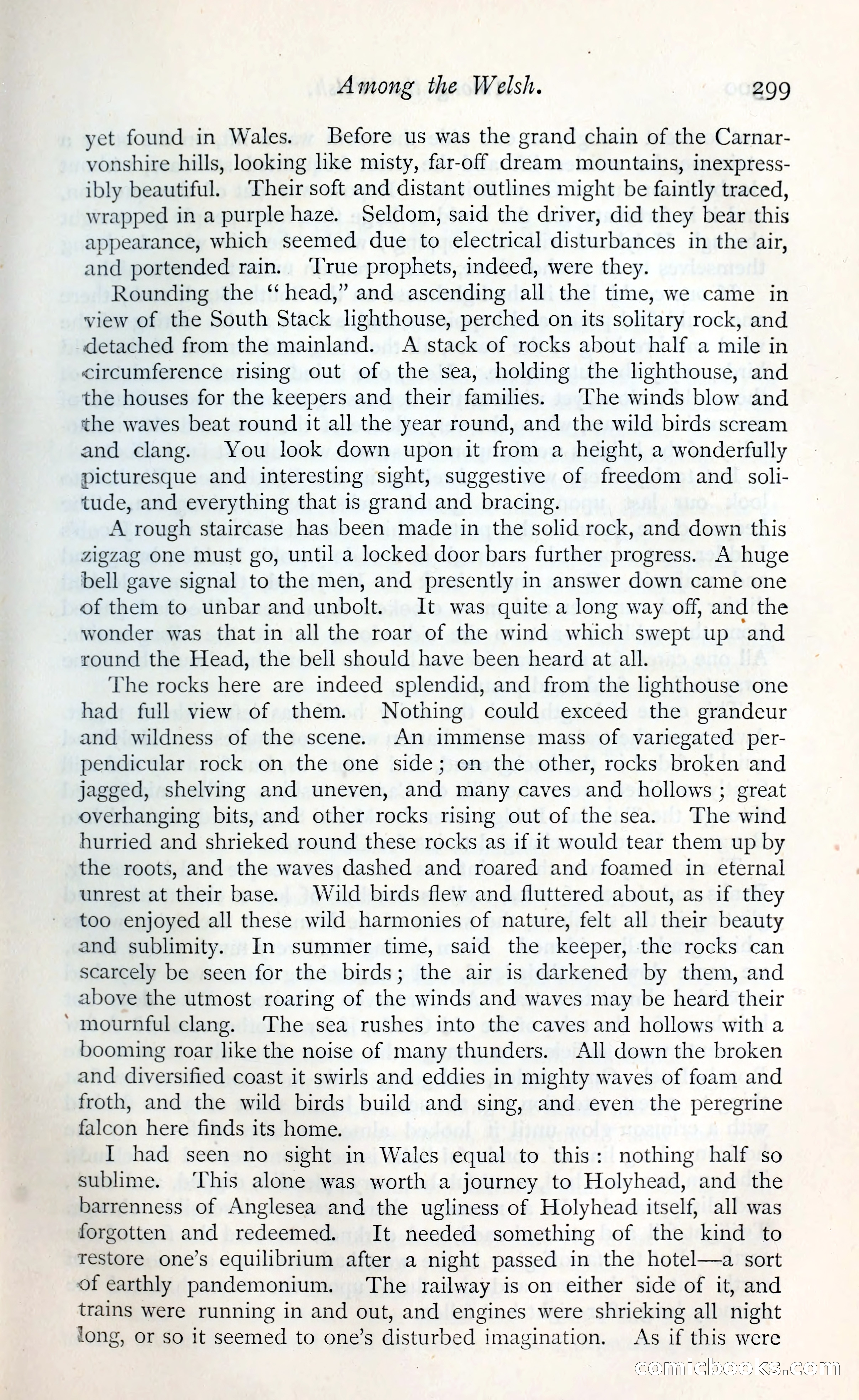
A restored page from Pulp Fiction, 1865. Page through the whole issue in the reader above.
📄 Transcribed text from this page (OCR, searchable)
Machine-transcribed from the original scan — historical spelling and the odd misread are preserved.
Among the Welsh. | 299 yet found in Wales. SBefore us was the grand chain of the Carnar- vonshire hills, looking like misty, far-off dream mountains, inexpress- ibly beautiful. Their soft and distant outlines might be faintly traced, wrapped in a purple haze. Seldom, said the driver, did they bear this appearance, which seemed due to electrical disturbances in the arr, and portended rain. ‘True prophets, indeed, were they. Rounding the “head,” and ascending all the time, we came in view of the South Stack lighthouse, perched on its solitary rock, and detached from the mainland. A stack of rocks about half a mile in circumference rising out of the sea, holding the hghthouse, and the houses for the keepers and their families. The winds blow and the waves beat round it all the year round, and the wild birds scream and clang. You look down upon it from a height, a wonderfully picturesque and interesting sight, suggestive of freedom and soli- tude, and everything that is grand and bracing. A rough staircase has been made in the solid rock, and down this zigzag one must go, until a locked door bars further progress. A huge bell gave signal to the men, and presently in answer down came one of them to unbar and unbolt. It was quite a long way off, and the wonder was that in all the roar of the wind which swept up and round the Head, the bell should have been heard at all. The rocks here are indeed splendid, and from the lighthouse one had full view of them. Nothing could exceed the grandeur and wildness of the scene. An immense mass of variegated per- pendicular rock on the one side; on the other, rocks broken and jagged, shelving and uneven, and many caves and hollows ; great overhanging bits, and other rocks rising out of the sea. The wind hurried and shrieked round these rocks as if it would tear them up by the roots, and the waves dashed and roared and foamed in eternal unrest at their base. Wild birds flew and fluttered about, as if they too enjoyed all these wild harmonies of nature, felt all their beauty and sublimity. In summer time, said the keeper, the rocks can scarcely be seen for the birds; the air is darkened by them, and above the utmost roaring of the winds and waves may be heard their ' mournful clang. The sea rushes into the caves and hollows with a booming roar like the noise of many thunders. All down the broken and diversified coast it swirls and eddies in mighty waves of foam and froth, and the wild birds build and sing, and even the peregrine falcon here finds its home. I had seen no sight in Wales equal to this: nothing half so sublime. ‘This alone was worth a journey to Holyhead, and the barrenness of Anglesea and the ugliness of Holyhead itself, all was forgotten and redeemed. It needed something of the kind to restore one’s equilibrium after a night passed in the hotel—a sort of earthly pandemonium. The railway is on either side of it, and trains were running in and out, and engines were shrieking all night long, or so it seemed to one’s disturbed imagination. As if this were CoOnnicloooks (SO) am