
Pulp Fiction, 1865 · page 291 of 400
The Argosy — page 291: what you’re looking at
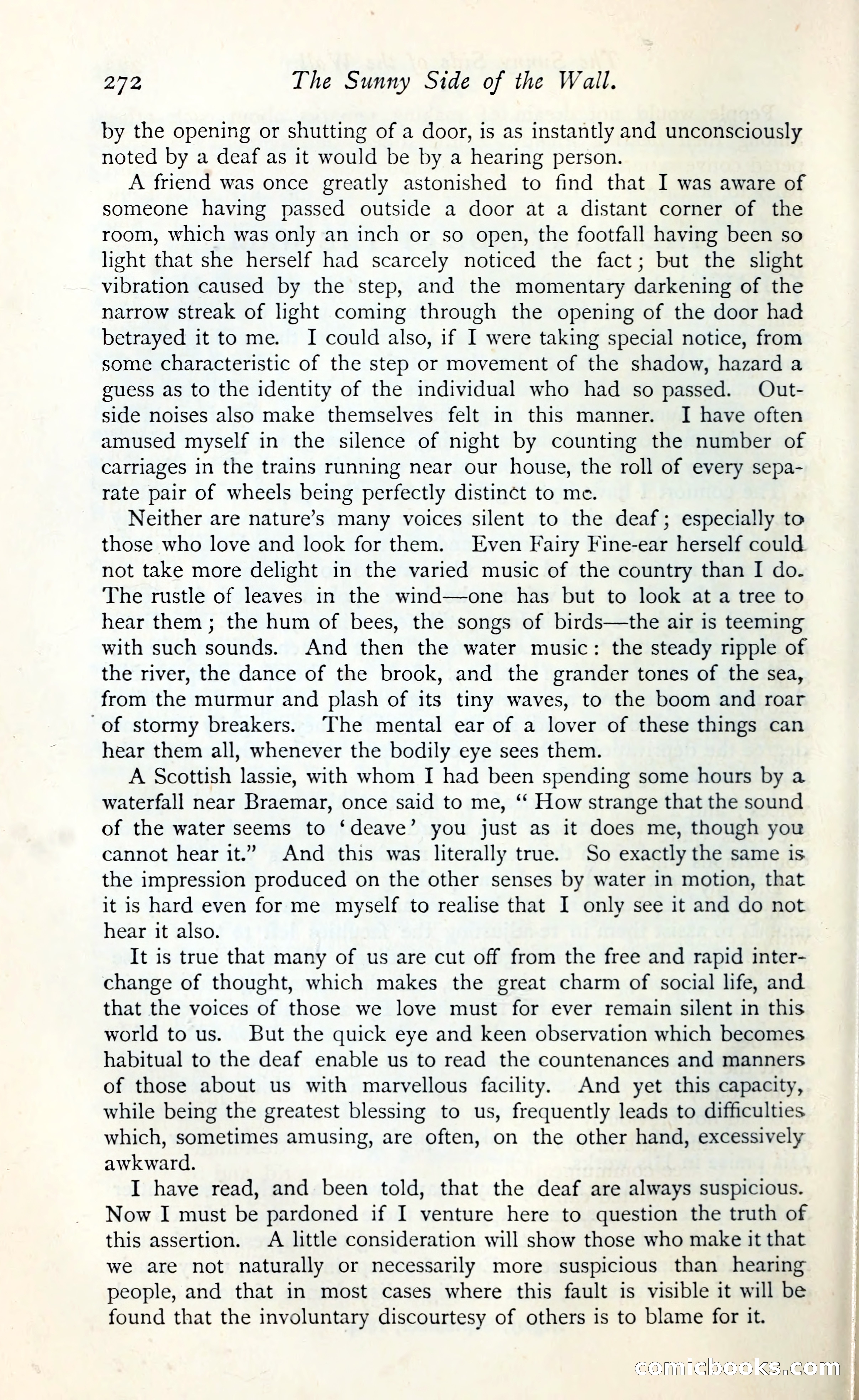
A restored page from Pulp Fiction, 1865. Page through the whole issue in the reader above.
📄 Transcribed text from this page (OCR, searchable)
Machine-transcribed from the original scan — historical spelling and the odd misread are preserved.
272 The Sunny Side of the Wall. by the opening or shutting of a door, is as instantly and unconsciously noted by a deaf as it would be by a hearing person. A friend was once greatly astonished to find that I was aware of someone having passed outside a door at a distant corner of the room, which was only an inch or so open, the footfall having been so light that she herself had scarcely noticed the fact; but the slight vibration caused by the step, and the momentary darkening of the narrow streak of light coming through the opening of the door had betrayed it tome. I could also, if I were taking special notice, from some characteristic of the step or movement of the shadow, hazard a guess as to the identity of the individual who had so passed. Out- side noises also make themselves felt in this manner. I have often amused myself in the silence of night by counting the number of carriages in the trains running near our house, the roll of every sepa- rate pair of wheels being perfectly distinct to me. Neither are nature’s many voices silent to the deaf; especially to those who love and look for them. Even Fairy Fine-ear herself could not take more delight in the varied music of the country than I do. The rustle of leaves in the wind—one has but to look at a tree to hear them; the hum of bees, the songs of birds—the air is teeming with such sounds. And then the water music: the steady ripple of the river, the dance of the brook, and the grander tones of the sea, from the murmur and plash of its tiny waves, to the boom and roar of stormy breakers. The mental ear of a lover of these things can hear them all, whenever the bodily eye sees them. A Scottish lassie, with whom I had been spending some hours by a waterfall near Braemar, once said to me, ‘‘ How strange that the sound of the water seems to ‘deave’ you just as it does me, though you cannot hear it.” And this was literally true. So exactly the same is the impression produced on the other senses by water in motion, that it is hard even for me myself to realise that I only see it and do not hear it also. It is true that many of us are cut off from the free and rapid inter- change of thought, which makes the great charm of social life, and that the voices of those we love must for ever remain silent in this world to us. But the quick eye and keen observation which becomes habitual to the deaf enable us to read the countenances and manners of those about us with marvellous facility. And yet this capacity, while being the greatest blessing to us, frequently leads to difficulties which, sometimes amusing, are often, on the other hand, excessively awkward. I have read, and been told, that the deaf are always suspicious. Now I must be pardoned if I venture here to question the truth of this assertion. A little consideration will show those who make it that we are not naturally or necessarily more suspicious than hearing people, and that in most cases where this fault is visible it will be found that the involuntary discourtesy of others is to blame for it. CORMICOOOKS EC)