
Pulp Fiction, 1865 · page 50 of 399
The Argosy — page 50: what you’re looking at
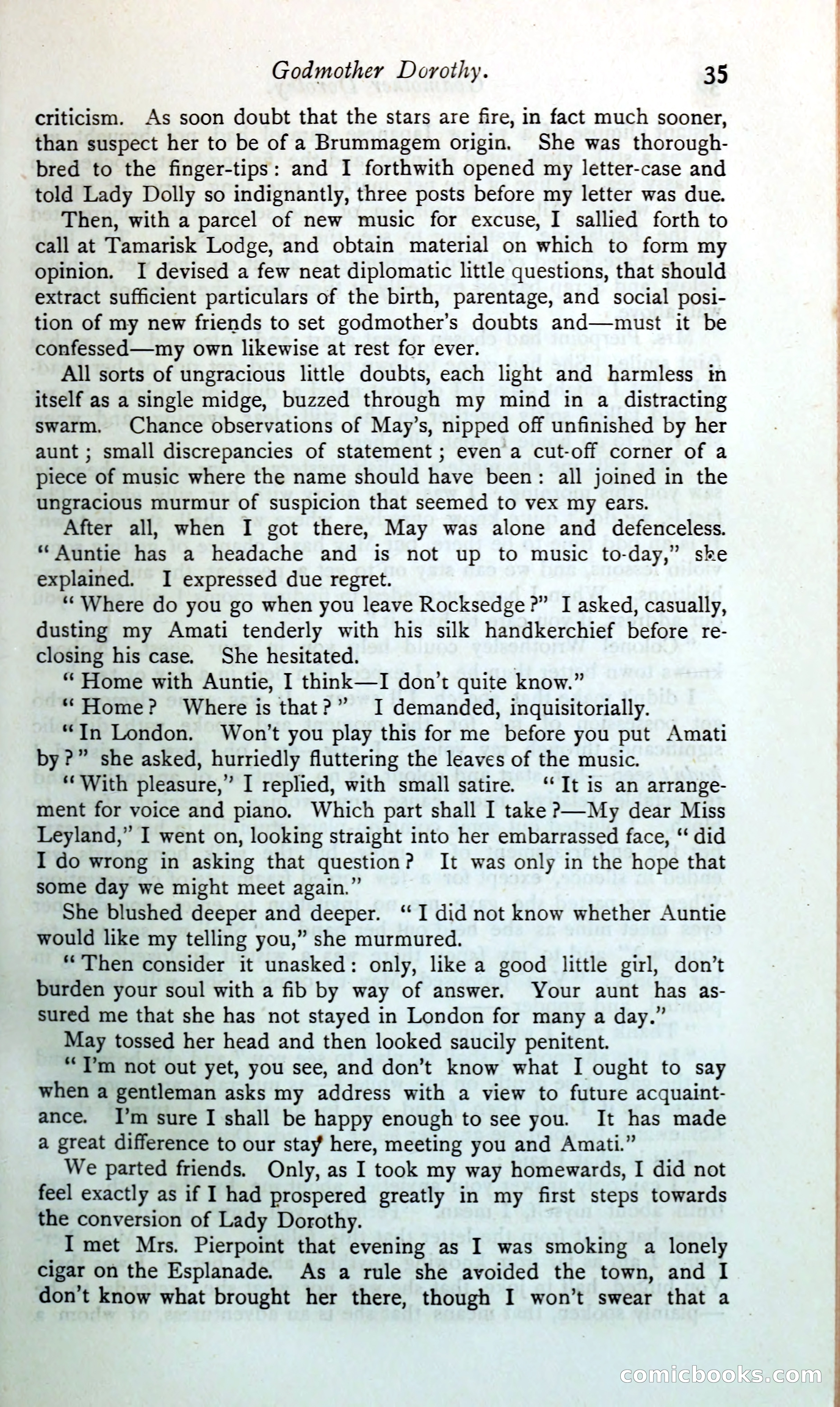
A restored page from Pulp Fiction, 1865. Page through the whole issue in the reader above.
📄 Transcribed text from this page (OCR, searchable)
Machine-transcribed from the original scan — historical spelling and the odd misread are preserved.
Godmother Dorothy. 35 criticism. As soon doubt that the stars are fire, in fact much sooner, than suspect her to be of a Brummagem origin. She was thorough- bred to the finger-tips: and I forthwith opened my letter-case and told Lady Dolly so indignantly, three posts before my letter was due. Then, with a parcel of new music for excuse, I sallied forth to call at Tamarisk Lodge, and obtain material on which to form my opinion. I devised a few neat diplomatic little questions, that should extract sufficient particulars of the birth, parentage, and social posi- tion of my new friends to set godmother’s doubts and—must it be confessed—my own likewise at rest for ever. All sorts of ungracious little doubts, each light and harmless in itself as a single midge, buzzed through my mind in a distracting swarm. Chance observations of May’s, nipped off unfinished by her aunt ; small discrepancies of statement; even a cut-off corner of a piece of music where the name should have been: all joined in the ungracious murmur of suspicion that seemed to vex my ears. After all, when I got there, May was alone and defenceless. “Auntie has a headache and is not up to music to-day,” ske explained. I expressed due regret. “Where do you go when you leave Rocksedge ?” I asked, casually, dusting my Amati tenderly with his silk handkerchief before re- closing his case. She hesitated. | “Home with Auntie, I think—I don’t quite know.” “Home? Where is that?” I demanded, inquisitorially. “In London. Won't you play this forme before you put Amati by ?” she asked, hurriedly fluttering the leaves of the music. “With pleasure,’ I replied, with small satire. ‘It is an arrange- ment for voice and piano. Which part shall I take P—My dear Miss Leyland,” I went on, looking straight into her embarrassed face, ‘ did I do wrong in asking that question? It was only in the hope that some day we might meet again.” She blushed deeper and deeper. “I did not know whether Auntie would like my telling you,” she murmured. “Then consider it unasked: only, like a good little girl, don’t burden your soul with a fib by way of answer. Your aunt has as- sured me that she has not stayed in London for many a day.” May tossed her head and then looked saucily penitent. “I’m not out yet, you see, and don’t know what I ought to say when a gentleman asks my address with a view to future acquaint- ance. I’m sure I shall be happy enough to see you. It has made a great difference to our stay here, meeting you and Amati.” We parted friends. Only, as I took my way homewards, I did not feel exactly as if I had prospered greatly in my first steps towards the conversion of Lady Dorothy. I met Mrs. Pierpoint that evening as I was smoking a lonely cigar on the Esplanade. As a rule she avoided the town, and I don't know what brought her there, though I won’t swear that a Gomichoo (E(©) m