
Pulp Fiction, 1865 · page 330 of 399
The Argosy — page 330: what you’re looking at
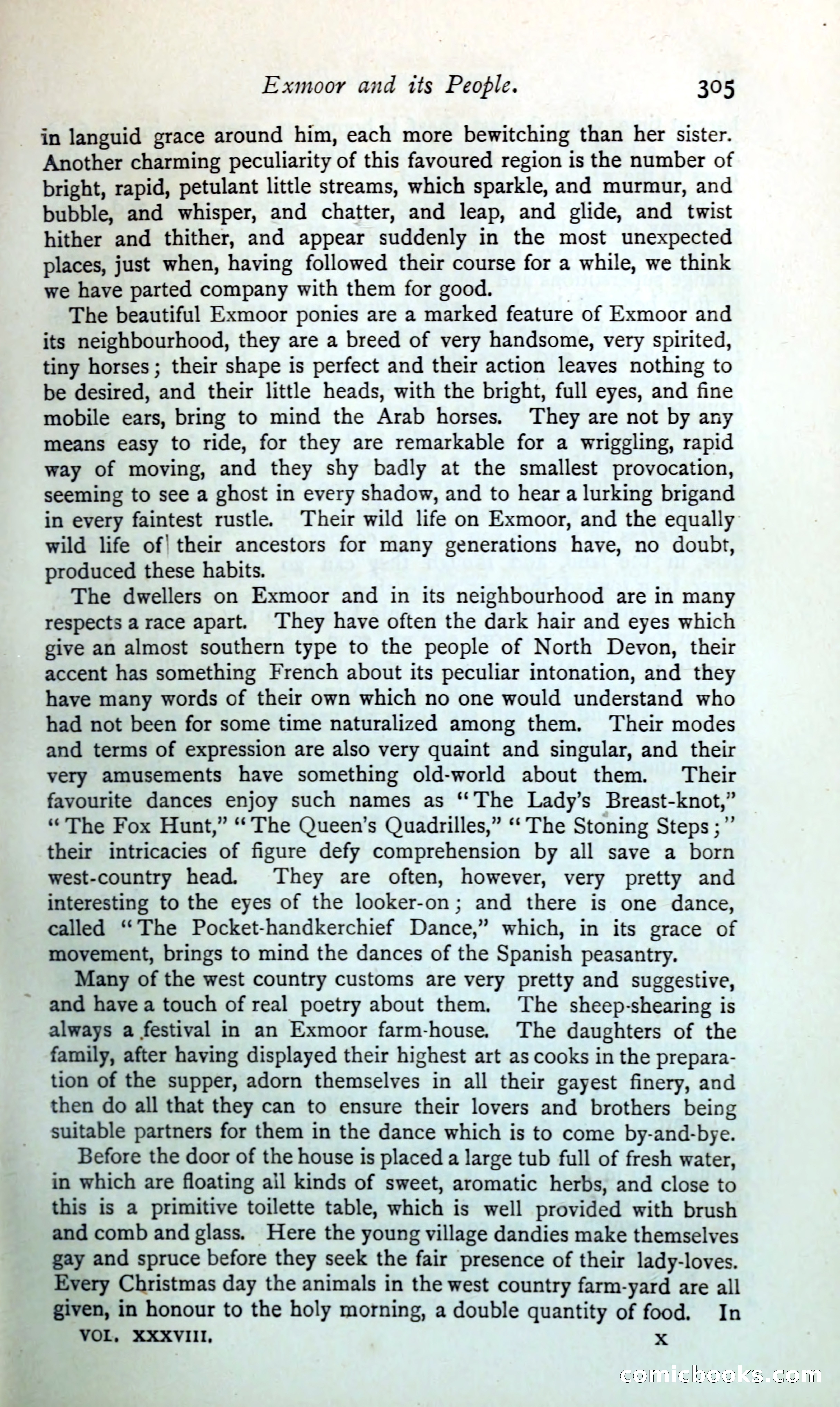
A restored page from Pulp Fiction, 1865. Page through the whole issue in the reader above.
📄 Transcribed text from this page (OCR, searchable)
Machine-transcribed from the original scan — historical spelling and the odd misread are preserved.
Exmoor and its People. 305 _ in languid grace around him, each more bewitching than her sister. Another charming peculiarity of this favoured region is the number of bright, rapid, petulant little streams, which sparkle, and murmur, and bubble, and whisper, and chatter, and leap, and glide, and twist hither and thither, and appear suddenly in the most unexpected places, just when, having followed their course for a while, we think we have parted company with them for good. The beautiful Exmoor ponies are a marked feature of Exmoor and its neighbourhood, they are a breed of very handsome, very spirited, tiny horses; their shape is perfect and their action leaves nothing to be desired, and their little heads, with the bright, full eyes, and fine mobile ears, bring to mind the Arab horses. They are not by any means easy to ride, for they are remarkable for a wriggling, rapid way of moving, and they shy badly at the smallest provocation, seeming to see a ghost in every shadow, and to hear a lurking brigand in every faintest rustle. Their wild life on Exmoor, and the equally wild life of! their ancestors for many generations have, no doubt, produced these habits. The dwellers on Exmoor and in its neighbourhood are in many respects arace apart. They have often the dark hair and eyes which give an almost southern type to the people of North Devon, their accent has something French about its peculiar intonation, and they have many words of their own which no one would understand who had not been for some time naturalized among them. Their modes and terms of expression are also very quaint and singular, and their very amusements have something old-world about them. Their favourite dances enjoy such names as “The Lady’s Breast-knot,” “The Fox Hunt,” ‘The Queen’s Quadrilles,” ‘‘ The Stoning Steps ;”’ their intricacies of figure defy comprehension by all save a born west-country head. They are often, however, very pretty and interesting to the eyes of the looker-on; and there is one dance, called “The Pocket-handkerchief Dance,” which, in its grace of movement, brings to mind the dances of the Spanish peasantry. Many of the west country customs are very pretty and suggestive, and have a touch of real poetry about them. The sheep-shearing is always a festival in an Exmoor farm-house. The daughters of the family, after having displayed their highest art as cooks in the prepara- tion of the supper, adorn themselves in all their gayest finery, and then do all that they can to ensure their lovers and brothers being suitable partners for them in the dance which is to come by-and-bye. Before the door of the house is placed a large tub full of fresh water, in which are floating ail kinds of sweet, aromatic herbs, and close to this is a primitive toilette table, which is well provided with brush and comb and glass. Here the young village dandies make themselves gay and spruce before they seek the fair presence of their lady-loves. Every Christmas day the animals in the west country farm-yard are all given, in honour to the holy morning, a double quantity of food. In VOL, XXXVIII. x Gomichboo (E@) m