
Pulp Fiction, 1865 · page 329 of 399
The Argosy — page 329: what you’re looking at
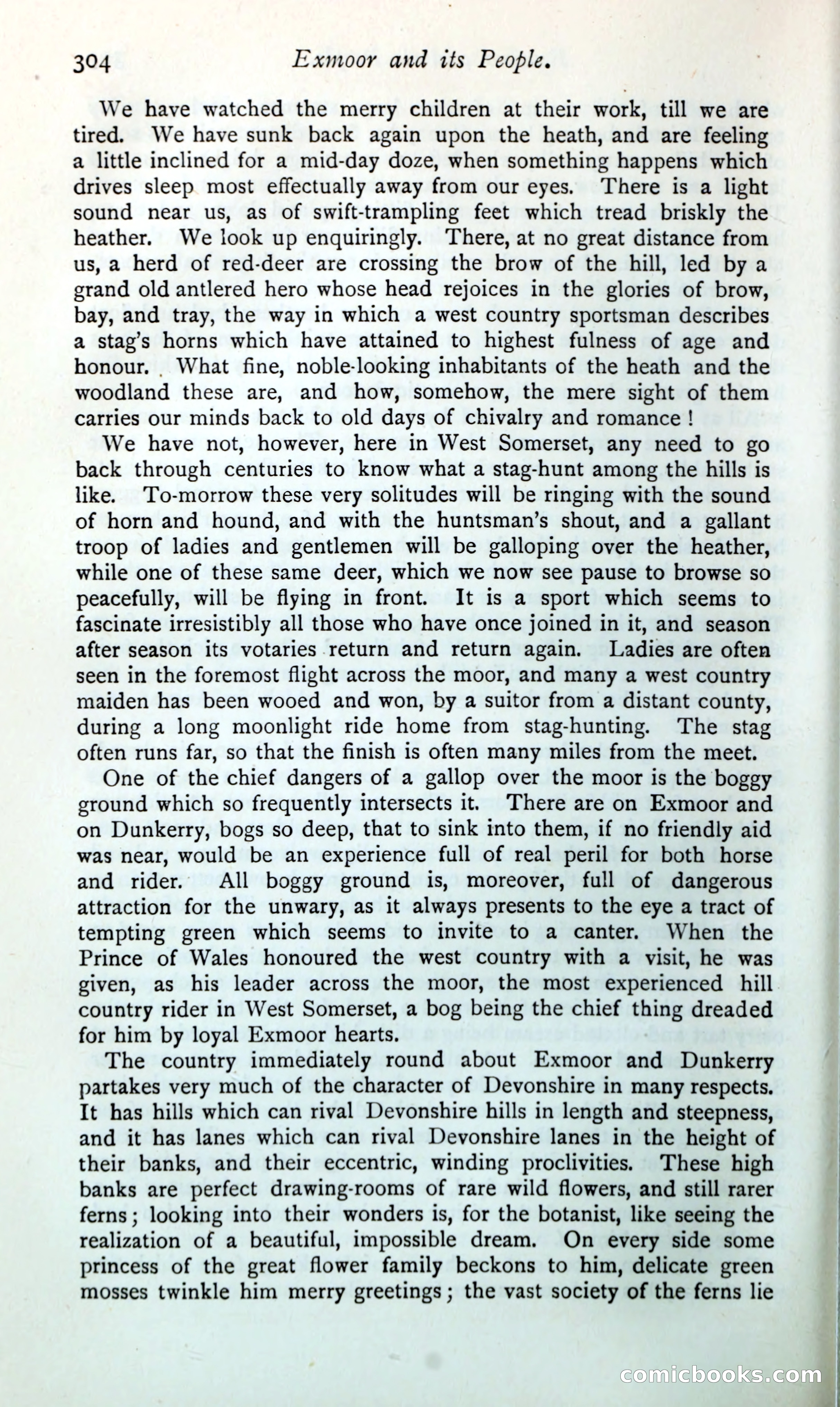
A restored page from Pulp Fiction, 1865. Page through the whole issue in the reader above.
📄 Transcribed text from this page (OCR, searchable)
Machine-transcribed from the original scan — historical spelling and the odd misread are preserved.
304 Exmoor and its People. We have watched the merry children at their work, till we are tired. We have sunk back again upon the heath, and are feeling a little inclined for a mid-day doze, when something happens which drives sleep most effectually away from our eyes. There is a light sound near us, as of swift-trampling feet which tread briskly the heather. We look up enquiringly. There, at no great distance from us, a herd of red-deer are crossing the brow of the hill, led by a grand old antlered hero whose head rejoices in the glories of brow, bay, and tray, the way in which a west country sportsman describes a stag’s horns which have attained to highest fulness of age and honour. . What fine, noble-looking inhabitants of the heath and the woodland these are, and how, somehow, the mere sight of them carries our minds back to old days of chivalry and romance! We have not, however, here in West Somerset, any need to go back through centuries to know what a stag-hunt among the hills is like. To-morrow these very solitudes will be ringing with the sound of horn and hound, and with the huntsman’s shout, and a gallant troop of ladies and gentlemen will be galloping over the heather, while one of these same deer, which we now see pause to browse so peacefully, will be flying in front. It is a sport which seems to fascinate irresistibly all those who have once joined in it, and season after season its votaries return and return again. Ladies are often seen in the foremost flight across the moor, and many a west country maiden has been wooed and won, by a suitor from a distant county, during a long moonlight ride home from stag-hunting. The stag often runs far, so that the finish is often many miles from the meet. One of the chief dangers of a gallop over the moor is the boggy ground which so frequently intersects it. ‘There are on Exmoor and on Dunkerry, bogs so deep, that to sink into them, if no friendly aid was near, would be an experience full of real peril for both horse and rider. All boggy ground is, moreover, full of dangerous attraction for the unwary, as it always presents to the eye a tract of tempting green which seems to invite to a canter. When the Prince of Wales honoured the west country with a visit, he was given, as his leader across the moor, the most experienced hill country rider in West Somerset, a bog being the chief thing dreaded for him by loyal Exmoor hearts. The country immediately round about Exmoor and Dunkerry partakes very much of the character of Devonshire in many respects. It has hills which can rival Devonshire hills in length and steepness, and it has lanes which can rival Devonshire lanes in the height of their banks, and their eccentric, winding proclivities. These high banks are perfect drawing-rooms of rare wild flowers, and still rarer ferns ; looking into their wonders is, for the botanist, like seeing the realization of a beautiful, impossible dream. On every side some princess of the great flower family beckons to him, delicate green mosses twinkle him merry greetings ; the vast society of the ferns lie Gomichboo