
Pulp Fiction, 1865 · page 130 of 399
The Argosy — page 130: what you’re looking at
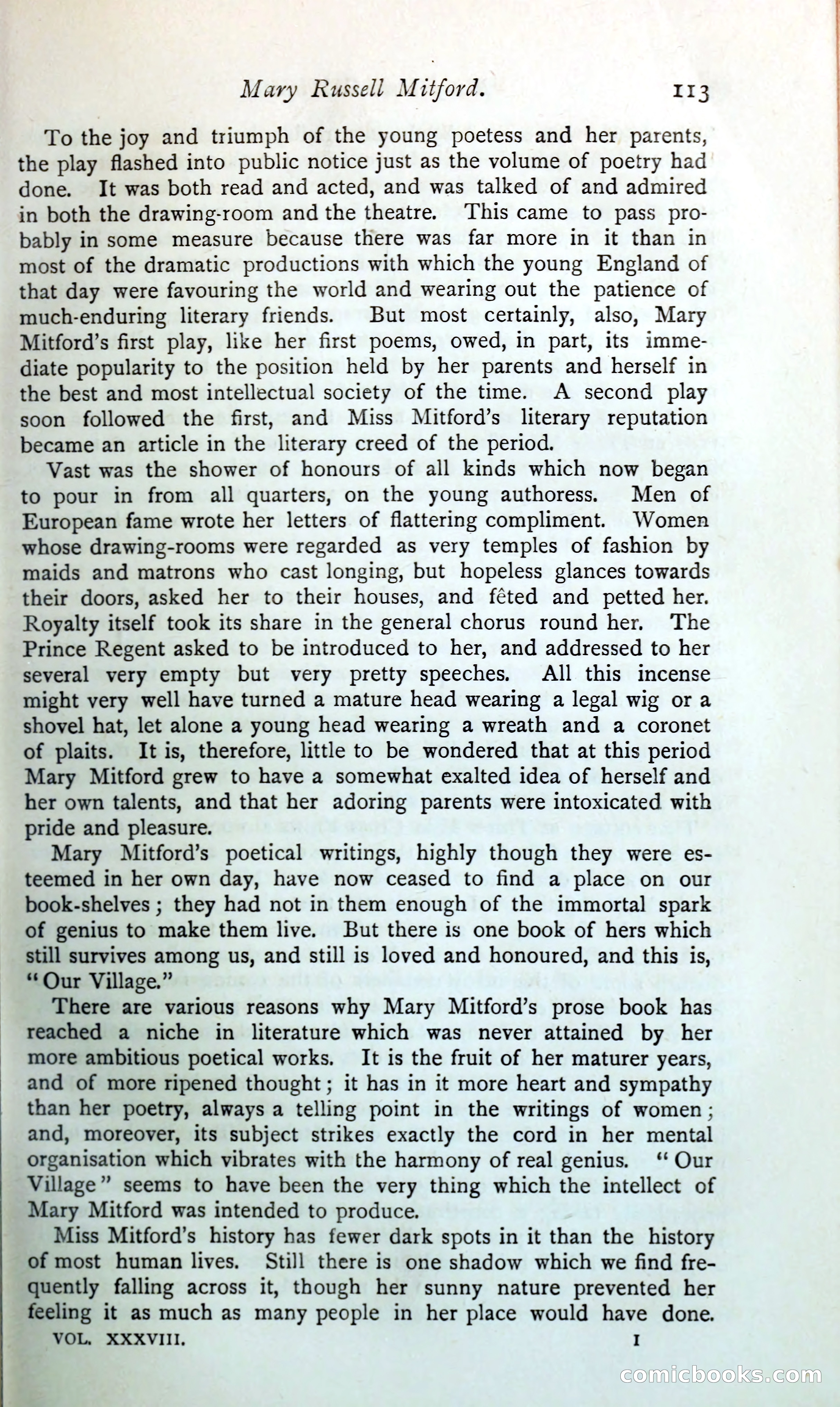
A restored page from Pulp Fiction, 1865. Page through the whole issue in the reader above.
📄 Transcribed text from this page (OCR, searchable)
Machine-transcribed from the original scan — historical spelling and the odd misread are preserved.
Mary Russell Mitford. I13 To the joy and triumph of the young poetess and her parents, the play flashed into public notice just as the volume of poetry had done. It was both read and acted, and was talked of and admired in both the drawing-room and the theatre. This came to pass pro- bably in some measure because there was far more in it than in most of the dramatic productions with which the young England of that day were favouring the world and wearing out the patience of much-enduring literary friends. But most certainly, also, Mary Mitford’s first play, like her first poems, owed, in part, its imme- diate popularity to the position held by her parents and herself in the best and most intellectual society of the time. A second play soon followed the first, and Miss Mitford’s literary reputation became an article in the literary creed of the period. Vast was the shower of honours of all kinds which now began to pour in from all quarters, on the young authoress. Men of European fame wrote her letters of flattering compliment. Women whose drawing-rooms were regarded as very temples of fashion by maids and matrons who cast longing, but hopeless glances towards their doors, asked her to their houses, and féted and petted her. Royalty itself took its share in the general chorus round her. The Prince Regent asked to be introduced to her, and addressed to her several very empty but very pretty speeches. All this incense might very well have turned a mature head wearing a legal wig or a shovel hat, let alone a young head wearing a wreath and a coronet of plaits. It is, therefore, little to be wondered that at this period Mary Mitford grew to have a somewhat exalted idea of herself and her own talents, and that her adoring parents were intoxicated with pride and pleasure. Mary Mitford’s poetical writings, highly though they were es- teemed in her own day, have now ceased to find a place on our book-shelves ; they had not in them enough of the immortal spark of genius to make them live. But there is one book of hers which still survives among us, and still is loved and honoured, and this is, “Our Village.” There are various reasons why Mary Mitford’s prose book has reached a niche in literature which was never attained by her more ambitious poetical works. It is the fruit of her maturer years, and of more ripened thought; it has in it more heart and sympathy than her poetry, always a telling point in the writings of women; and, moreover, its subject strikes exactly the cord in her mental organisation which vibrates with the harmony of real genius. ‘‘ Our Village” seems to have been the very thing which the intellect of Mary Mitford was intended to produce. Miss Mitford’s history has fewer dark spots in it than the history of most human lives. Still there is one shadow which we find fre- quently falling across it, though her sunny nature prevented her feeling it as much as many people in her place would have done. VOL. XXXVIII. I Gomichboo €o