
Pulp Fiction, 1865 · page 65 of 400
The Argosy — page 65: what you’re looking at
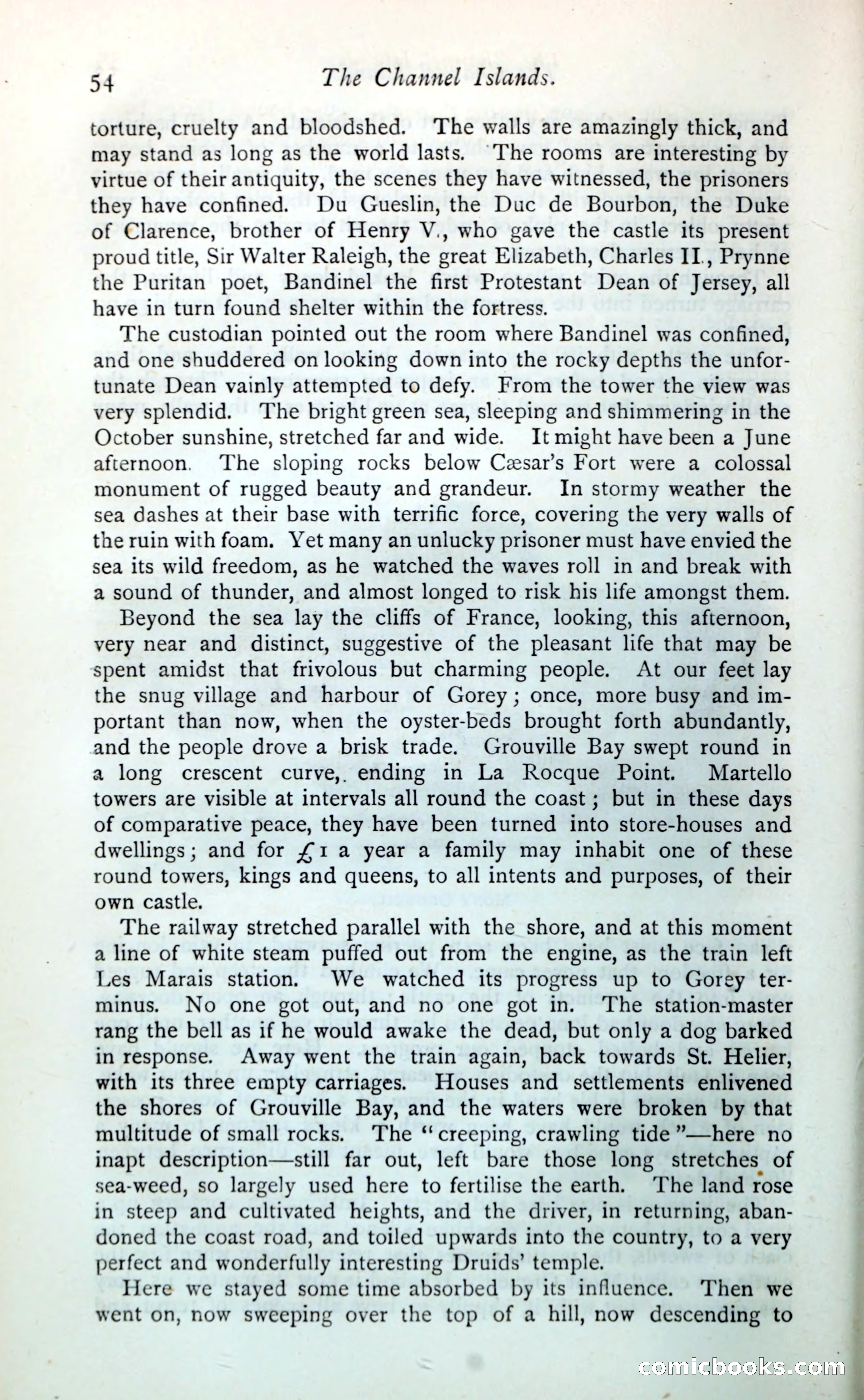
A restored page from Pulp Fiction, 1865. Page through the whole issue in the reader above.
📄 Transcribed text from this page (OCR, searchable)
Machine-transcribed from the original scan — historical spelling and the odd misread are preserved.
54 The Channel Islands. torture, cruelty and bloodshed. The walls are amazingly thick, and may stand as long as the world lasts. ‘The rooms are interesting by virtue of their antiquity, the scenes they have witnessed, the prisoners they have confined. Du Gueslin, the Duc de Bourbon, the Duke of Clarence, brother of Henry V., who gave the castle its present proud title, Sir Walter Raleigh, the great Elizabeth, Charles II., Prynne the Puritan poet, Bandinel the first Protestant Dean of Jersey, all have in turn found shelter within the fortress. The custodian pointed out the room where Bandinel was confined, and one shuddered on looking down into the rocky depths the unfor- tunate Dean vainly attempted to defy. From the tower the view was very splendid. The bright green sea, sleeping and shimmering in the October sunshine, stretched far and wide. It might have been a June afternoon. The sloping rocks below Cesar’s Fort were a colossal monument of rugged beauty and grandeur. In stormy weather the sea dashes at their base with terrific force, covering the very walls of the ruin with foam. Yet many an unlucky prisoner must have envied the sea its wild freedom, as he watched the waves roll in and break with a sound of thunder, and almost longed to risk his life amongst them. Beyond the sea lay the cliffs of France, looking, this afternoon, very near and distinct, suggestive of the pleasant life that may be spent amidst that frivolous but charming people. At our feet lay the snug village and harbour of Gorey; once, more busy and im- portant than now, when the oyster-beds brought forth abundantly, and the people drove a brisk trade. Grouville Bay swept round in a long crescent curve, ending in La Rocque Point. Martello towers are visible at intervals all round the coast; but in these days of comparative peace, they have been turned into store-houses and dwellings; and for £1 a year a family may inhabit one of these round towers, kings and queens, to all intents and purposes, of their own castle. The railway stretched parallel with the shore, and at this moment a line of white steam puffed out from the engine, as the train left Les Marais station. We watched its progress up to Gorey ter- minus. No one got out, and no one got in. ‘The station-master rang the bell as if he would awake the dead, but only a dog barked in response. Away went the train again, back towards St. Helier, with its three empty carriages. Houses and settlements enlivened the shores of Grouville Bay, and the waters were broken by that multitude of small rocks. The ‘creeping, crawling tide ”—here no inapt description—still far out, left bare those long stretches of sea-weed, so largely used here to fertilise the earth. ‘The land rose in steep and cultivated heights, and the driver, in returning, aban- doned the coast road, and toiled upwards into the country, to a very perfect and wonderfully interesting Druids’ temple. Here we stayed some time absorbed by its influence. Then we went on, now sweeping over the top of a hill, now descending to Eomicbooks.coir ‘