
Pulp Fiction, 1865 · page 58 of 400
The Argosy — page 58: what you’re looking at
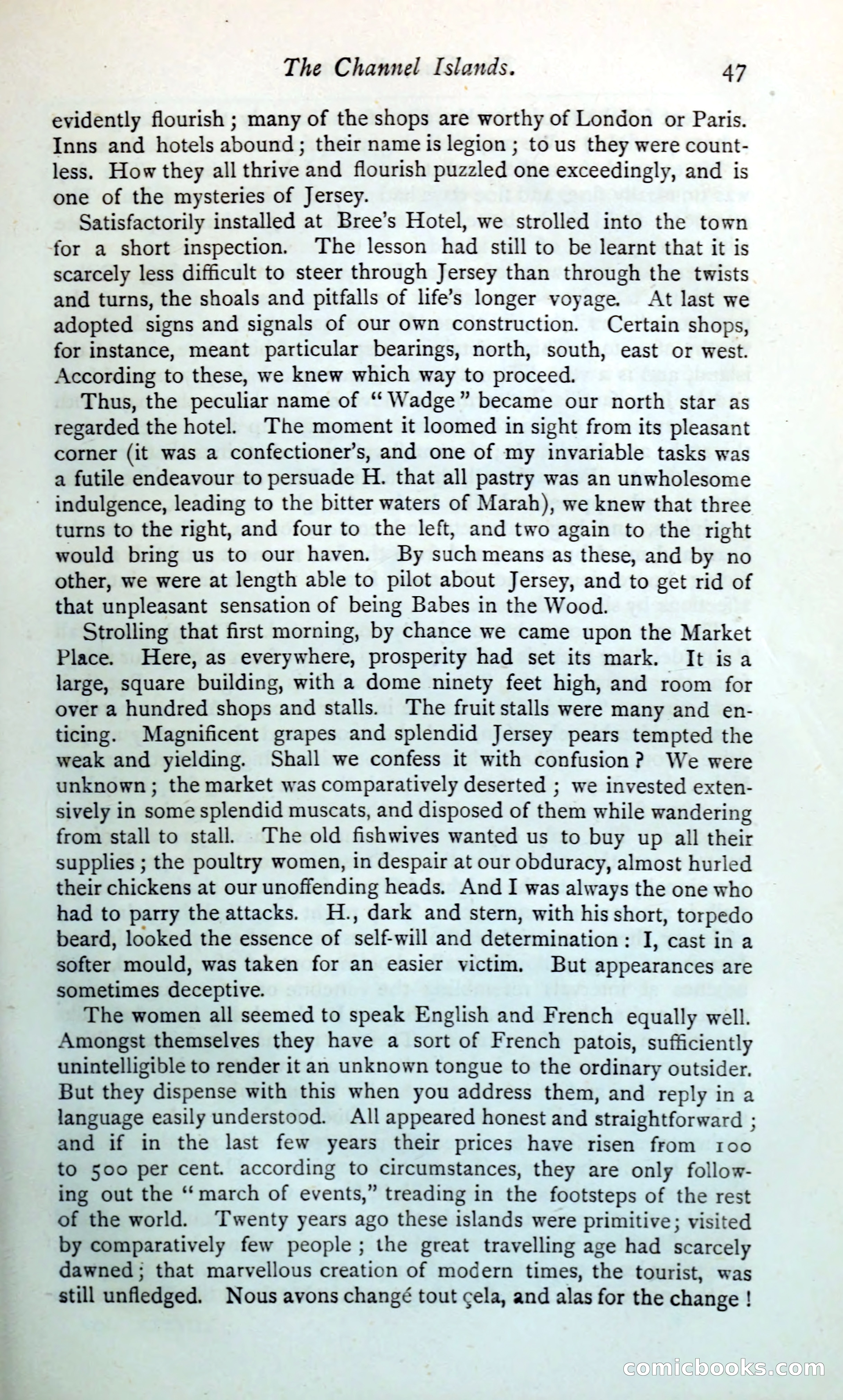
A restored page from Pulp Fiction, 1865. Page through the whole issue in the reader above.
📄 Transcribed text from this page (OCR, searchable)
Machine-transcribed from the original scan — historical spelling and the odd misread are preserved.
The Channel Islands. 47 evidently flourish ; many of the shops are worthy of London or Paris. Inns and hotels abound; their name is legion ; tous they were count- less. How they all thrive and flourish puzzled one exceedingly, and is one of the mysteries of Jersey. Satisfactorily installed at Bree’s Hotel, we strolled into the town for a short inspection. The lesson had still to be learnt that it is scarcely less difficult to steer through Jersey than through the twists and turns, the shoals and pitfalls of life’s longer voyage. At last we adopted signs and signals of our own construction. Certain shops, for instance, meant particular bearings, north, south, east or west. According to these, we knew which way to proceed. Thus, the peculiar name of “ Wadge” became our north star as regarded the hotel. ‘The moment it loomed in sight from its pleasant corner (it was a confectioner’s, and one of my invariable tasks was a futile endeavour to persuade H. that all pastry was an unwholesome - indulgence, leading to the bitter waters of Marah), we knew that three turns to the right, and four to the left, and two again to the right would bring us to our haven. By such means as these, and by no other, we were at length able to pilot about Jersey, and to get rid of that unpleasant sensation of being Babes in the Wood. Strolling that first morning, by chance we came upon the Market Place. Here, as everywhere, prosperity had set its mark. It isa large, square building, with a dome ninety feet high, and room for over a hundred shops and stalls. ‘The fruit stalls were many and en- ticing. Magnificent grapes and splendid Jersey pears tempted the weak and yielding. Shall we confess it with confusion? We were unknown; the market was comparatively deserted ; we invested exten- sively in some splendid muscats, and disposed of them while wandering from stall to stall. The old fishwives wanted us to buy up all their supplies ; the poultry women, in despair at our obduracy, almost hurled their chickens at our unoffending heads. And I was always the one who had to parry the attacks. H., dark and stern, with his short, torpedo beard, looked the essence of self-will and determination: I, cast in a softer mould, was taken for an easier victim. But appearances are sometimes deceptive. The women all seemed to speak English and French equally well. Amongst themselves they have a sort of French patois, sufficiently unintelligible to render it an unknown tongue to the ordinary outsider. But they dispense with this when you address them, and reply in a language easily understood. All appeared honest and straightforward ; and if in the last few years their prices have risen from roo to 500 per cent. according to circumstances, they are only follow- ing out the “march of events,” treading in the footsteps of the rest of the world. ‘Twenty years ago these islands were primitive; visited by comparatively few people; the great travelling age had scarcely dawned ; that marvellous creation of modern times, the tourist, was still unfledged. Nous avons changé tout cela, and alas for the change ! EONNIE OOS