
Pulp Fiction, 1865 · page 380 of 400
The Argosy — page 380: what you’re looking at
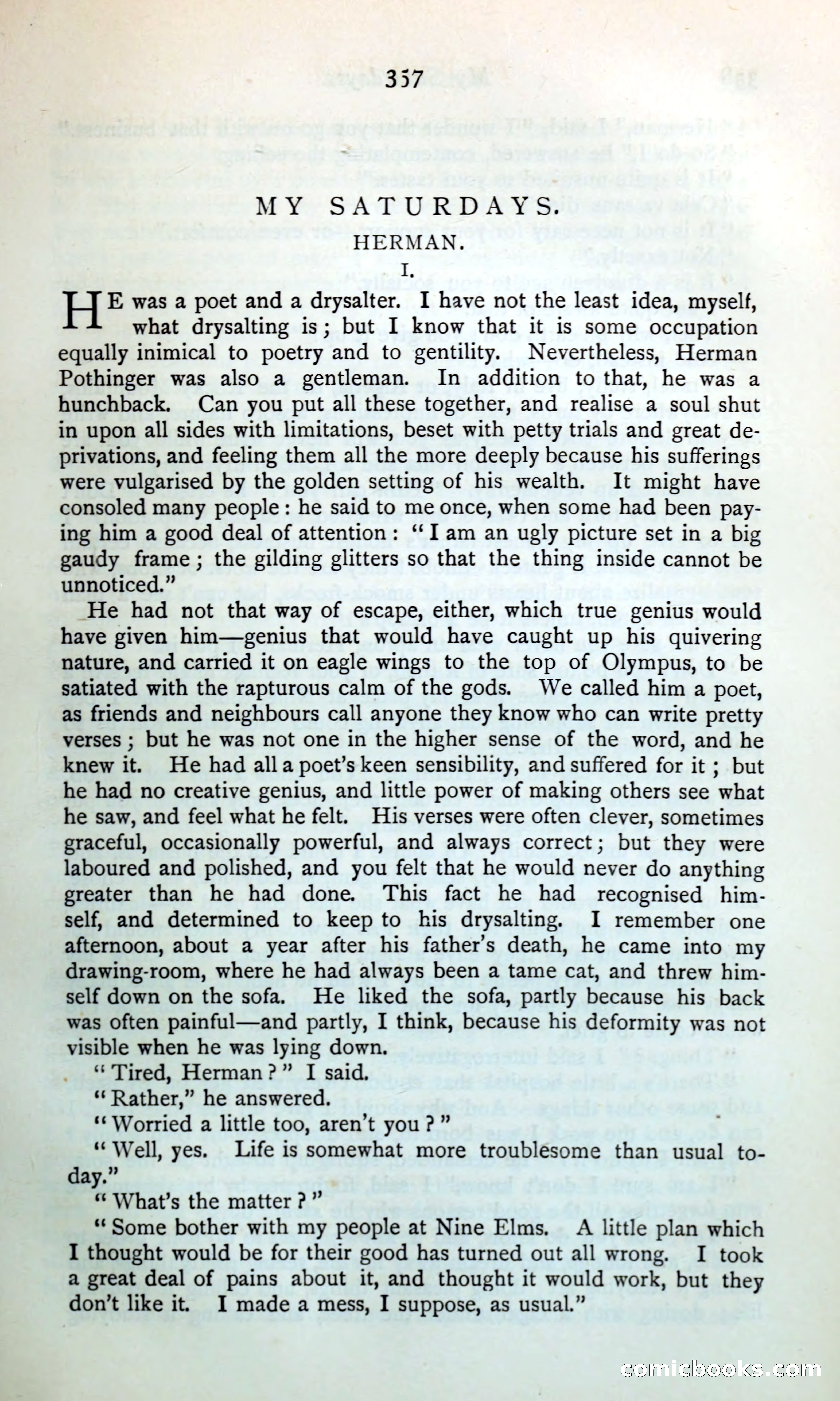
A restored page from Pulp Fiction, 1865. Page through the whole issue in the reader above.
📄 Transcribed text from this page (OCR, searchable)
Machine-transcribed from the original scan — historical spelling and the odd misread are preserved.
357 mY SATORD AY =: HERMAN. I, H® was a poet and a drysalter. I have not the least idea, myself, what drysalting is; but I know that it is some occupation equally inimical to poetry and to gentility. Nevertheless, Herman Pothinger was also a gentleman. In addition to that, he was a hunchback. Can you put all these together, and realise a soul shut in upon all sides with limitations, beset with petty trials and great de- privations, and feeling them all the more deeply because his sufferings were vulgarised by the golden setting of his wealth. It might have consoled many people: he said to me once, when some had been pay- ing him a good deal of attention: ‘‘I am an ugly picture set in a big gaudy frame; the gilding glitters so that the thing inside cannot be unnoticed.” He had not that way of escape, either, which true genius would have given him—genius that would have caught up his quivering nature, and carried it on eagle wings to the top of Olympus, to be satiated with the rapturous calm of the gods. We called him a poet, as friends and neighbours call anyone they know who can write pretty verses ; but he was not one in the higher sense of the word, and he knew it. He had alla poet’s keen sensibility, and suffered for it ; but he had no creative genius, and little power of making others see what he saw, and feel what he felt. His verses were often clever, sometimes graceful, occasionally powerful, and always correct; but they were laboured and polished, and you felt that he would never do anything greater than he had done. This fact he had recognised him- self, and determined to keep to his drysalting. I remember one afternoon, about a year after his father’s death, he came into my drawing-room, where he had always been a tame cat, and threw him- self down on the sofa. He liked the sofa, partly because his back was often painful—and partly, I think, because his deformity was not visible when he was lying down. “ Tired, Herman?” I said. ** Rather,” he answered. *‘ Worried a little too, aren’t you ?” “Well, yes. Life is somewhat more troublesome than usual to- day.” “ What's the matter ?” ** Some bother with my people at Nine Elms, A little plan which I thought would be for their good has turned out all wrong. I took a great deal of pains about it, and thought it would work, but they don’t like it. I made a mess, I suppose, as usual.” EONNIE OOO KS (EO) m