
Pulp Fiction, 1865 · page 360 of 400
The Argosy — page 360: what you’re looking at
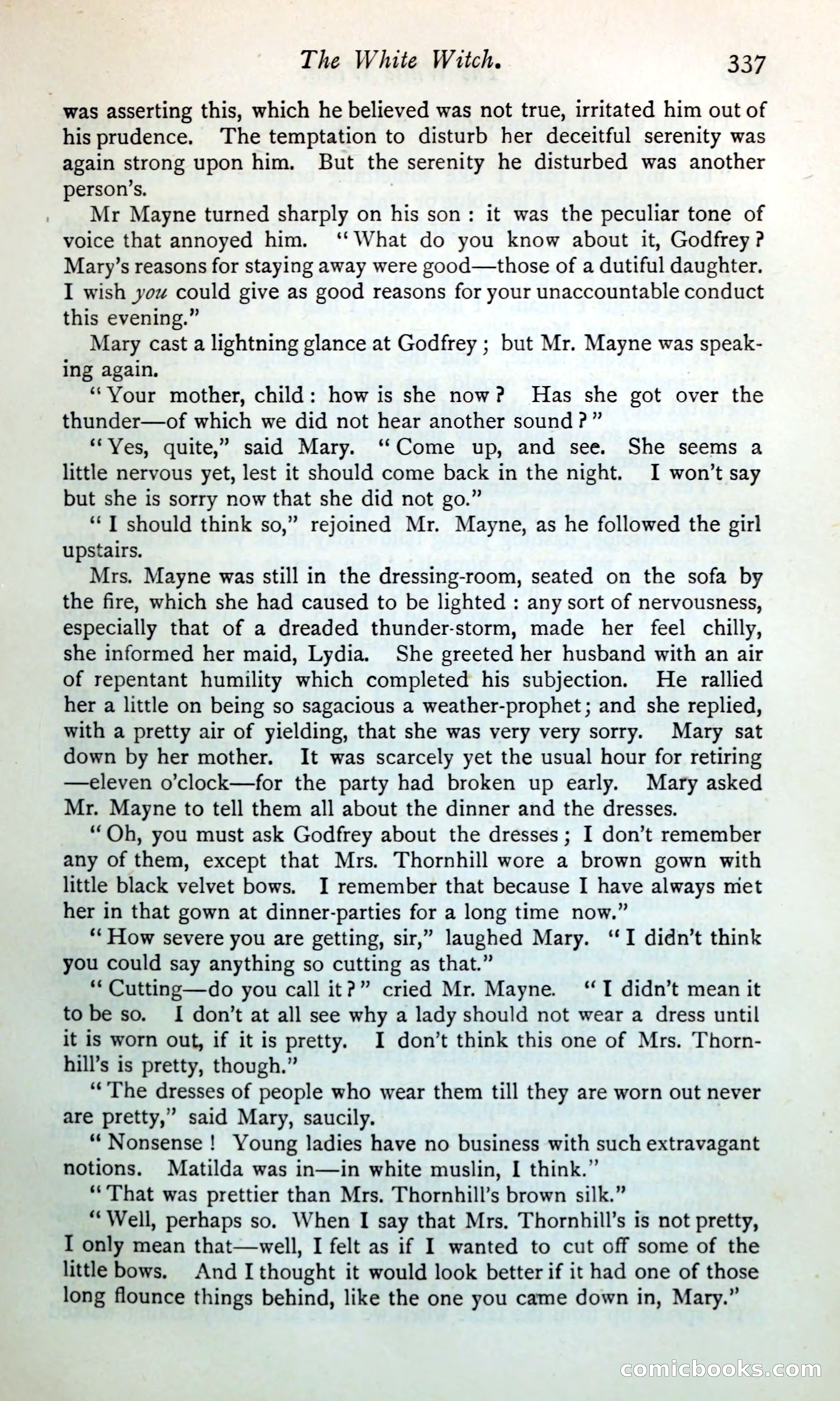
A restored page from Pulp Fiction, 1865. Page through the whole issue in the reader above.
📄 Transcribed text from this page (OCR, searchable)
Machine-transcribed from the original scan — historical spelling and the odd misread are preserved.
The White Witch. 337 was asserting this, which he believed was not true, irritated him out of his prudence. ‘The temptation to disturb her deceitful serenity was again strong upon him. But the serenity he disturbed was another person’s. _ Mr Mayne turned sharply on his son: it was the peculiar tone of voice that annoyed him. ‘‘ What do you know about it, Godfrey ? Mary’s reasons for staying away were good—those of a dutiful daughter. I wish you could give as good reasons for your unaccountable conduct this evening.” Mary cast a lightning glance at Godfrey ; but Mr. Mayne was speak- ing again. “Your mother, child: how is she now? Has she got over the thunder—of which we did not hear another sound ?” “Yes, quite,” said Mary. “Come up, and see. She seems a little nervous yet, lest it should come back in the night. I won’t say but she is sorry now that she did not go.” “I should think so,” rejoined Mr. Mayne, as he followed the girl upstairs. Mrs. Mayne was still in the dressing-room, seated on the sofa by the fire, which she had caused to be lighted : any sort of nervousness, especially that of a dreaded thunder-storm, made her feel chilly, she informed her maid, Lydia. She greeted her husband with an air of repentant humility which completed his subjection. He rallied her a little on being so sagacious a weather-prophet; and she replied, with a pretty air of yielding, that she was very very sorry. Mary sat down by her mother. It was scarcely yet the usual hour for retiring —eleven o’clock—for the party had broken up early. Mary asked Mr. Mayne to tell them all about the dinner and the dresses. ‘““Oh, you must ask Godfrey about the dresses ; I don’t remember any of them, except that Mrs. Thornhill wore a brown gown with little black velvet bows. I remember that because I have always met her in that gown at dinner-parties for a long time now.” “* How severe you are getting, sir,” laughed Mary. ‘I didn’t think you could say anything so cutting as that.” ** Cutting—do you call it?” cried Mr. Mayne. ‘TI didn’t mean it tobe so. I don’t at all see why a lady should not wear a dress until it is worn out, if it is pretty. I don’t think this one of Mrs. Thorn- hill’s is pretty, though.” “The dresses of people who wear them till they are worn out never are pretty,’ said Mary, saucily. “Nonsense! Young ladies have no business with such extravagant notions. Matilda was in—in white muslin, I think.” “That was prettier than Mrs. Thornhill’s brown silk.” “Well, perhaps so. When I say that Mrs. Thornhill’s is not pretty, I only mean that—well, I felt as if I wanted to cut off some of the little bows. And I thought it would look better if it had one of those long flounce things behind, like the one you came down in, Mary.” (EONNIIE MOO KS (E(0)