
Pulp Fiction, 1865 · page 355 of 400
The Argosy — page 355: what you’re looking at
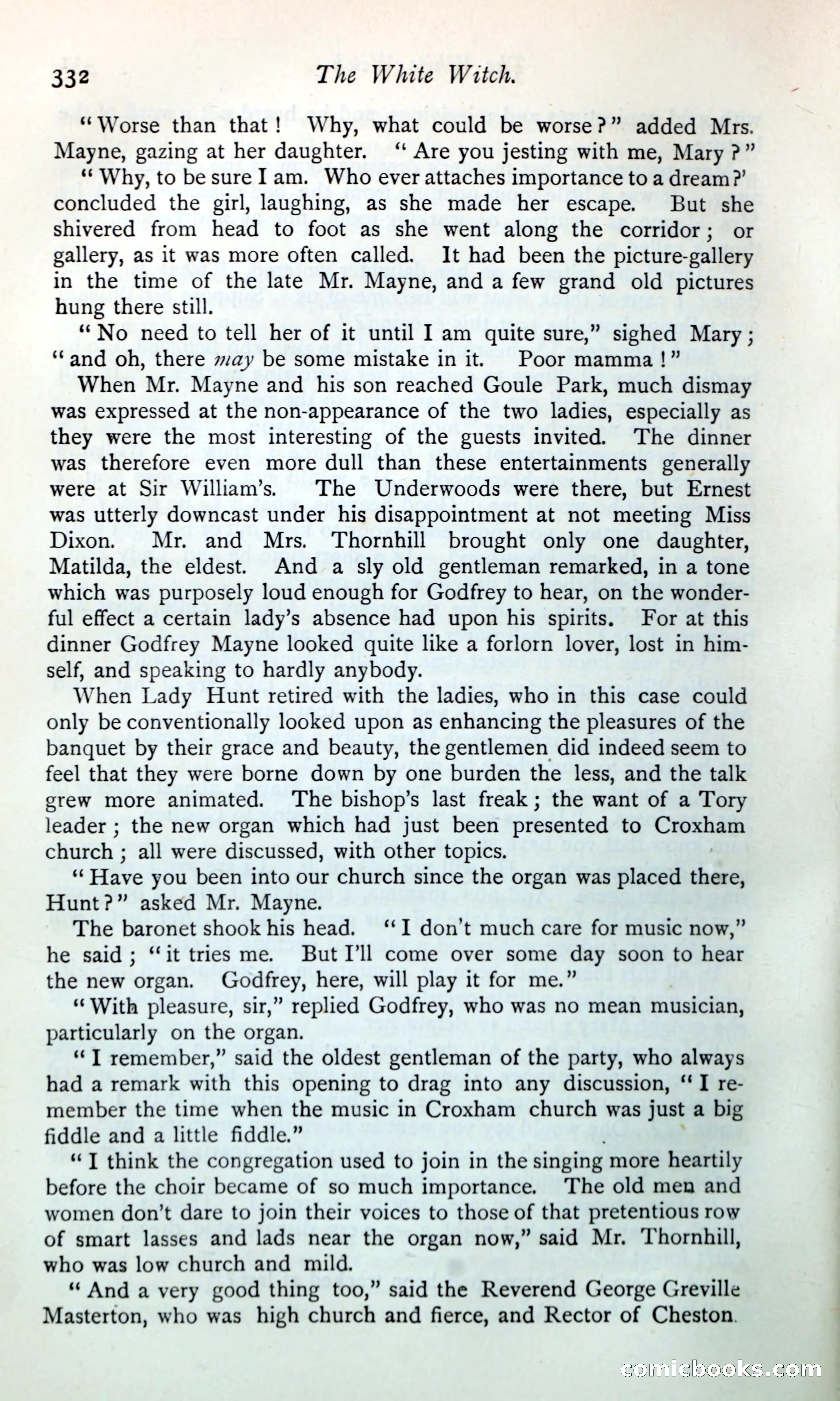
A restored page from Pulp Fiction, 1865. Page through the whole issue in the reader above.
📄 Transcribed text from this page (OCR, searchable)
Machine-transcribed from the original scan — historical spelling and the odd misread are preserved.
332 The White Witch. Worse than that! Why, what could be worse?” added Mrs. Mayne, gazing at her daughter. ‘‘ Are you jesting with me, Mary ?” ‘Why, to besureI am. Who ever attaches importance to a dream ?” concluded the girl, laughing, as she made her escape. But she shivered from head to foot as she went along the corridor; or gallery, as it was more often called. It had been the picture-gallery in the time of the late Mr. Mayne, and a few grand old pictures hung there still. “No need to tell her of it until Iam quite sure,” sighed Mary ; ‘‘and oh, there may be some mistake in it. Poor mamma!” When Mr. Mayne and his son reached Goule Park, much dismay was expressed at the non-appearance of the two ladies, especially as they were the most interesting of the guests invited. The dinner was therefore even more dull than these entertainments generally were at Sir William’s. The Underwoods were there, but Ernest was utterly downcast under his disappointment at not meeting Miss Dixon. Mr. and Mrs. Thornhill brought only one daughter, Matilda, the eldest. And a sly old gentleman remarked, in a tone which was purposely loud enough for Godfrey to hear, on the wonder- ful effect a certain lady’s absence had upon his spirits. For at this dinner Godfrey Mayne looked quite like a forlorn lover, lost in him- self, and speaking to hardly anybody. When Lady Hunt retired with the ladies, who in this case could only be conventionally looked upon as enhancing the pleasures of the banquet by their grace and beauty, the gentlemen did indeed seem to feel that they were borne down by one burden the less, and the talk grew more animated. The bishop’s last freak; the want of a Tory leader ; the new organ which had just been presented to Croxham church ; all were discussed, with other topics. % Have you been into our church since the organ was placed there, Hunt?” asked Mr. Mayne. The baronet shook his head. ‘‘I don’t much care for music now,” he said; “it tries me. But I’ll come over some day soon to hear the new organ. Godfrey, here, will play it for me.” ‘With pleasure, sir,” replied Godfrey, who was no mean musician, particularly on the organ. ‘‘T remember,” said the oldest gentleman of the party, who always had a remark with this opening to drag into any discussion, “I re- member the time when the music in Croxham church was just a big fiddle and a little fiddle.” “‘T think the congregation used to join in the singing more heartily before the choir became of so much importance. The old men and women don’t dare to join their voices to those of that pretentious row of smart lasses and lads near the organ now,” said Mr. Thornhill, who was low church and mild. “ And a very good thing too,” said the Reverend George Greville Masterton, who was high church and fierce, and Rector of Cheston. (EOANIKEl exexe) (e(0)