
Pulp Fiction, 1865 · page 347 of 400
The Argosy — page 347: what you’re looking at
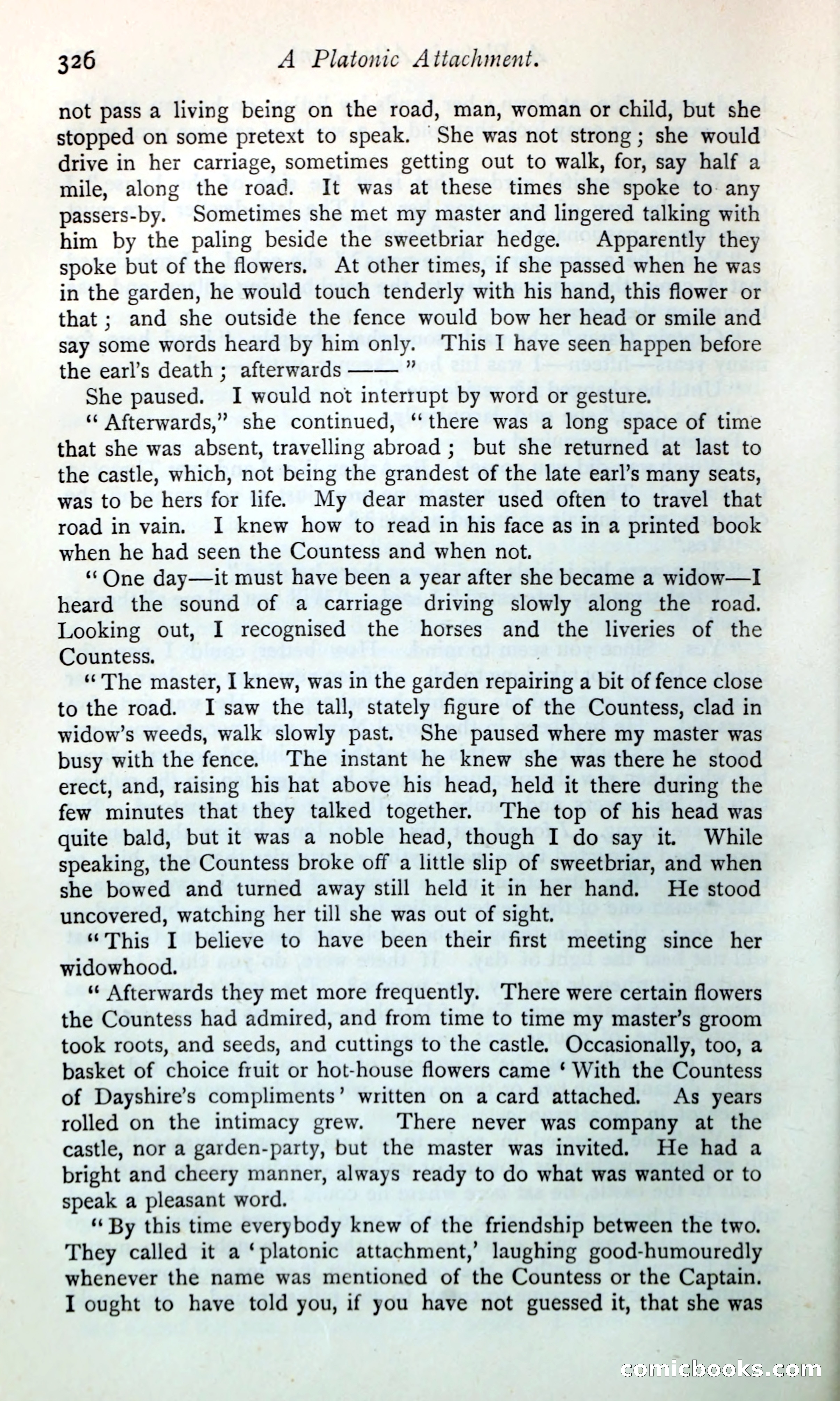
A restored page from Pulp Fiction, 1865. Page through the whole issue in the reader above.
📄 Transcribed text from this page (OCR, searchable)
Machine-transcribed from the original scan — historical spelling and the odd misread are preserved.
326 A Platonic Attachment. not pass a living being on the road, man, woman or child, but she stopped on some pretext to speak. She was not strong; she would drive in her carriage, sometimes getting out to walk, for, say half a mile, along the road. It was at these times she spoke to: any passers-by. Sometimes she met my master and lingered talking with him by the paling beside the sweetbriar hedge. Apparently they spoke but of the flowers. At other times, if she passed when he was in the garden, he would touch tenderly with his hand, this flower or that; and she outside the fence would bow her head or smile and say some words heard by him only. ‘This I have seen happen before the earl’s death ; afterwards —— ” She paused. I would not interrupt by word or gesture. ‘“‘ Afterwards,” she continued, ‘‘there was a long space of time that she was absent, travelling abroad; but she returned at last to the castle, which, not being the grandest of the late earl’s many seats, was to be hers for life. My dear master used often to travel that road in vain. I knew how to read in his face as in a printed book when he had seen the Countess and when not. ‘“One day—it must have been a year after she became a widow—I heard the sound of a carriage driving slowly along the road. Looking out, I recognised the horses and the liveries of the Countess. | ‘The master, I knew, was in the garden repairing a bit of fence close to the road. I saw the tall, stately figure of the Countess, clad in widow’s weeds, walk slowly past. She paused where my master was busy with the fence. The instant he knew she was there he stood erect, and, raising his hat above his head, held it there during the few minutes that they talked together. The top of his head was quite bald, but it was a noble head, though I do say it. While speaking, the Countess broke off a little slip of sweetbriar, and when she bowed and turned away still held it in her hand. He stood uncovered, watching her till she was out of sight. “This I believe to have been their first meeting since her widowhood. “ Afterwards they met more frequently. There were certain flowers the Countess had admired, and from time to time my master’s groom took roots, and seeds, and cuttings to the castle. Occasionally, too, a basket of choice fruit or hot-house flowers came ‘ With the Countess of Dayshire’s compliments’ written on a card attached. As years rolled on the intimacy grew. ‘There never was company at the castle, nor a garden-party, but the master was invited. He had a bright and cheery manner, always ready to do what was wanted or to speak a pleasant word. ‘‘ By this time everybody knew of the friendship between the two. They called it a ‘platonic attachment,’ laughing good-humouredly whenever the name was mentioned of the Countess or the Captain. I ought to have told you, if you have not guessed it, that she was Eomichbooks (elo)