
Pulp Fiction, 1865 · page 228 of 400
The Argosy — page 228: what you’re looking at
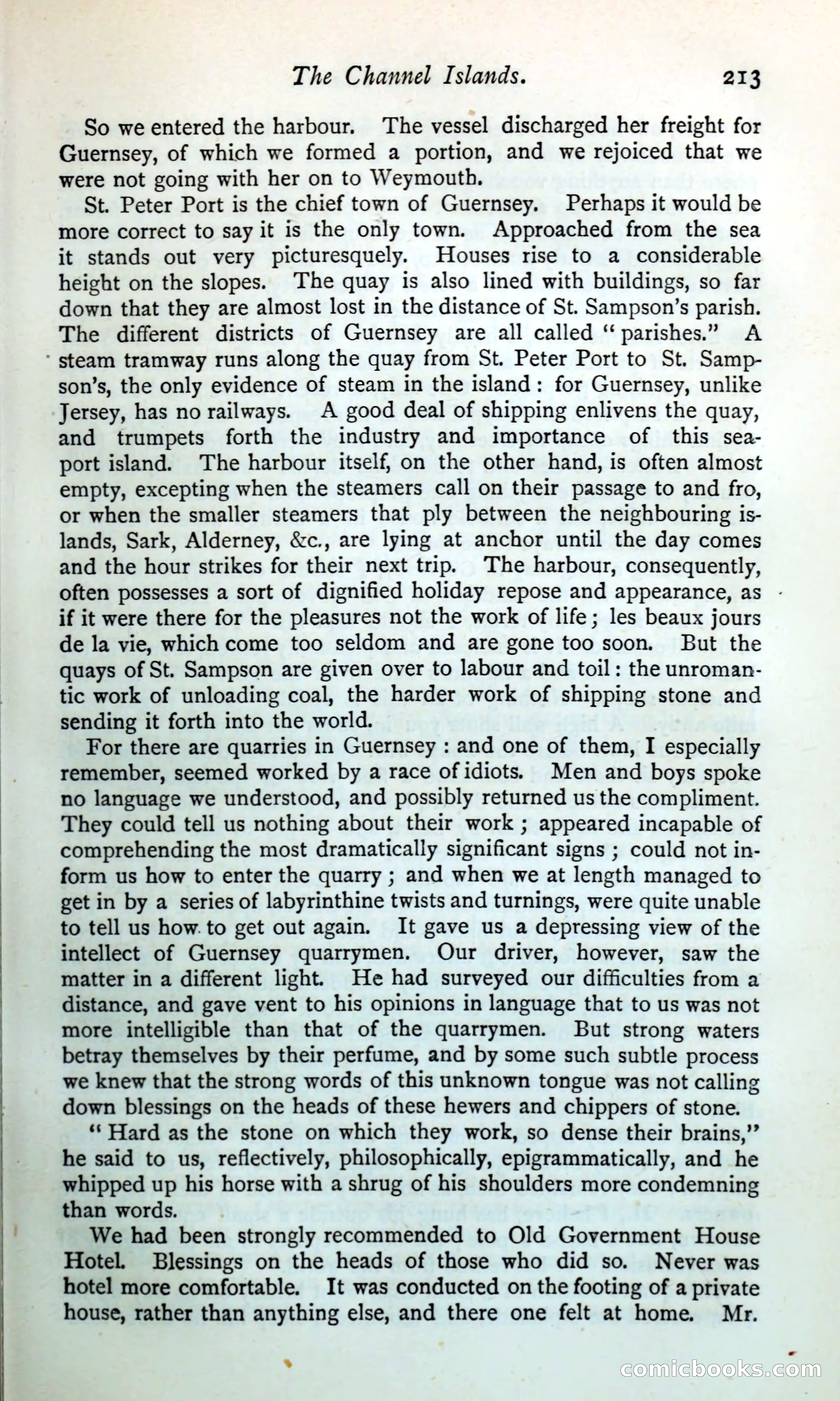
A restored page from Pulp Fiction, 1865. Page through the whole issue in the reader above.
📄 Transcribed text from this page (OCR, searchable)
Machine-transcribed from the original scan — historical spelling and the odd misread are preserved.
The Channel Islands. 213 So we entered the harbour. The vessel discharged her freight for Guernsey, of which we formed a portion, and we rejoiced that we were not going with her on to Weymouth. St. Peter Port is the chief town of Guernsey. Perhaps it would be more correct to say it is the only town. Approached from the sea it stands out very picturesquely. Houses rise to a considerable height on the slopes. The quay is also lined with buildings, so far down that they are almost lost in the distance of St. Sampson’s parish. The different districts of Guernsey are all called “ parishes.” A ‘steam tramway runs along the quay from St. Peter Port to St. Samp- son’s, the only evidence of steam in the island: for Guernsey, unlike Jersey, has no railways. A good deal of shipping enlivens the quay, and trumpets forth the industry and importance of this sea- port island. The harbour itself, on the other hand, is often almost empty, excepting when the steamers call on their passage to and fro, or when the smaller steamers that ply between the neighbouring is- lands, Sark, Alderney, &c., are lying at anchor until the day comes and the hour strikes for their next trip. The harbour, consequently, often possesses a sort of dignified holiday repose and appearance, as - if it were there for the pleasures not the work of life; les beaux jours de la vie, which come too seldom and are gone too soon. But the quays of St. Sampson are given over to labour and toil: the unroman- tic work of unloading coal, the harder work of shipping stone and sending it forth into the world. For there are quarries in Guernsey : and one of them, I especially remember, seemed worked by a race of idiots. Men and boys spoke no language we understood, and possibly returned us the compliment. They could tell us nothing about their work ; appeared incapable of comprehending the most dramatically significant signs ; could not in- form us how to enter the quarry ; and when we at length managed to get in by a series of labyrinthine twists and turnings, were quite unable to tell us how. to get out again. It gave us a depressing view of the intellect of Guernsey quarrymen. Our driver, however, saw the matter in a different light. He had surveyed our difficulties from a distance, and gave vent to his opinions in language that to us was not more intelligible than that of the quarrymen. But strong waters betray themselves by their perfume, and by some such subtle process we knew that the strong words of this unknown tongue was not calling down blessings on the heads of these hewers and chippers of stone. ‘‘ Hard as the stone on which they work, so dense their brains,” he said to us, reflectively, philosophically, epigrammatically, and he whipped up his horse with a shrug of his shoulders more condemning than words. We had been strongly recommended to Old Government House Hotel. Blessings on the heads of those who did so. Never was hotel more comfortable. It was conducted on the footing of a private house, rather than anything else, and there one felt at home. Mr. . CONNIE DOO KS (EO) m