
Pulp Fiction, 1865 · page 225 of 400
The Argosy — page 225: what you’re looking at
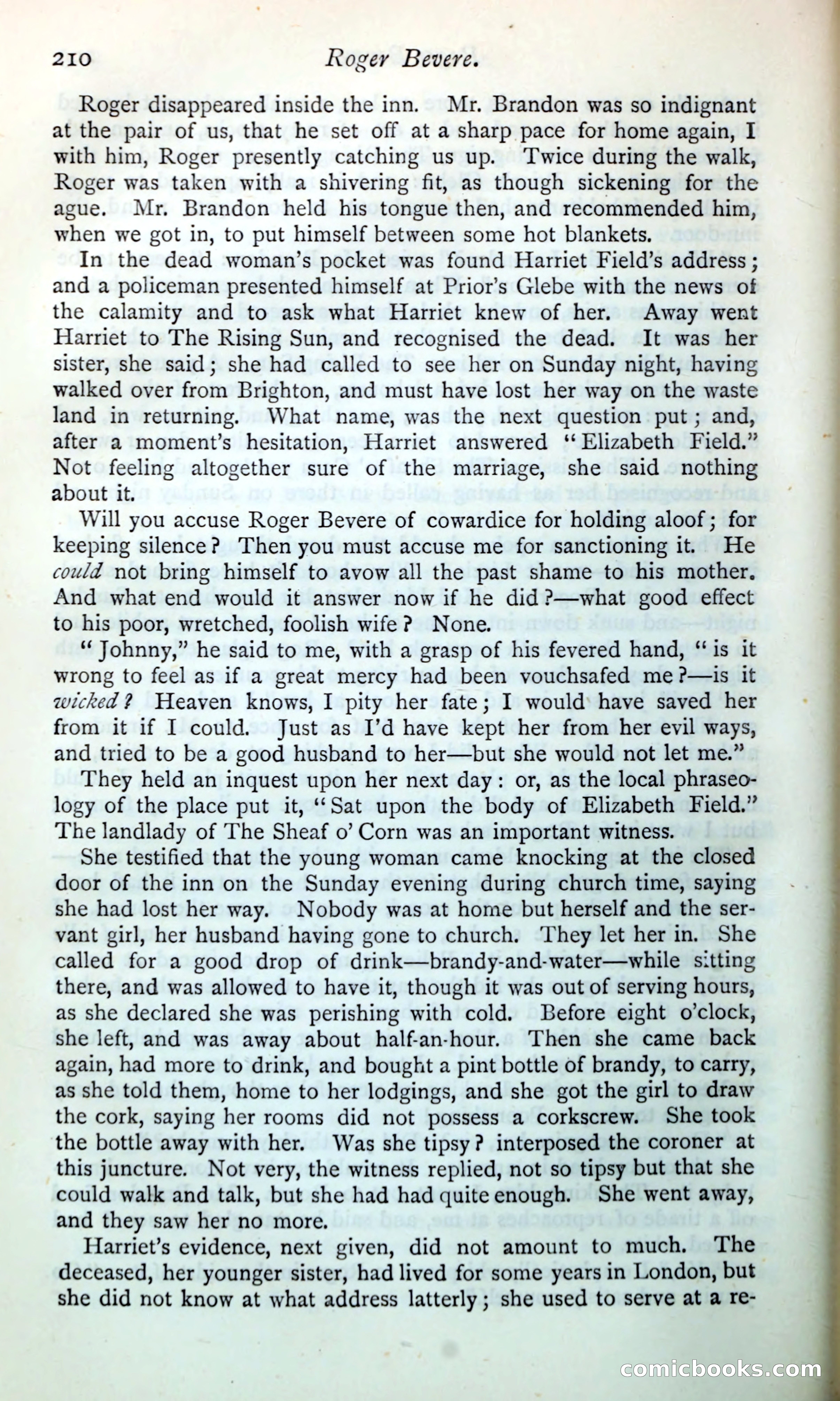
A restored page from Pulp Fiction, 1865. Page through the whole issue in the reader above.
📄 Transcribed text from this page (OCR, searchable)
Machine-transcribed from the original scan — historical spelling and the odd misread are preserved.
210 Roger Bevere. Roger disappeared inside the inn. Mr. Brandon was so indignant at the pair of us, that he set off at a sharp pace for home again, I with him, Roger presently catching us up. ‘Twice during the walk, Roger was taken with a shivering fit, as though sickening for the ague. Mr. Brandon held his tongue then, and recommended him, when we got in, to put himself between some hot blankets. In the dead woman’s pocket was found Harriet Field’s address ; and a policeman presented himself at Prior’s Glebe with the news of the calamity and to ask what Harriet knew of her. Away went Harriet to The Rising Sun, and recognised the dead. It was her sister, she said; she had called to see her on Sunday night, having walked over from Brighton, and must have lost her way on the waste land in returning. What name, was the next question put; and, after a moment’s hesitation, Harriet answered ‘Elizabeth Field.” Not feeling altogether sure of the marriage, she said nothing about it. Will you accuse Roger Bevere of cowardice for holding aloof; for keeping silence? Then you must accuse me for sanctioning it. He coudd not bring himself to avow all the past shame to his mother. And what end would it answer now if he did ?—what good effect to his poor, wretched, foolish wife? None. “Johnny,” he said to me, with a grasp of his fevered hand, ‘“‘is it wrong to feel as if a great mercy had been vouchsafed me ?—is it wicked #? Heaven knows, I pity her fate; I would’ have saved her from it if I could. Just as I’d have kept her from her evil ways, and tried to be a good husband to her—but she would not let me.” They held an inquest upon her next day: or, as the local phraseo- logy of the place put it, ‘Sat upon the body of Elizabeth Field.” The landlady of The Sheaf o’ Corn was an important witness. She testified that the young woman came knocking at the closed door of the inn on the Sunday evening during church time, saying she had lost her way. Nobody was at home but herself and the ser- vant girl, her husband having gone to church. They let her in. She called for a good drop of drink—brandy-and-water—while sitting there, and was allowed to have it, though it was out of serving hours, as she declared she was perishing with cold. Before eight o'clock, she left, and was away about half-an-hour. Then she came back again, had more to drink, and bought a pint bottle of brandy, to carry, as she told them, home to her lodgings, and she got the girl to draw the cork, saying her rooms did not possess a corkscrew. She took the bottle away with her. Was she tipsy? interposed the coroner at this juncture. Not very, the witness replied, not so tipsy but that she could walk and talk, but she had had quite enough. She went away, and they saw her no more. Harriet’s evidence, next given, did not amount to much. The deceased, her younger sister, had lived for some years in London, but she did not know at what address latterly ; she used to serve at a re- Gomicbooks €om