
Pulp Fiction, 1865 · page 176 of 400
The Argosy — page 176: what you’re looking at
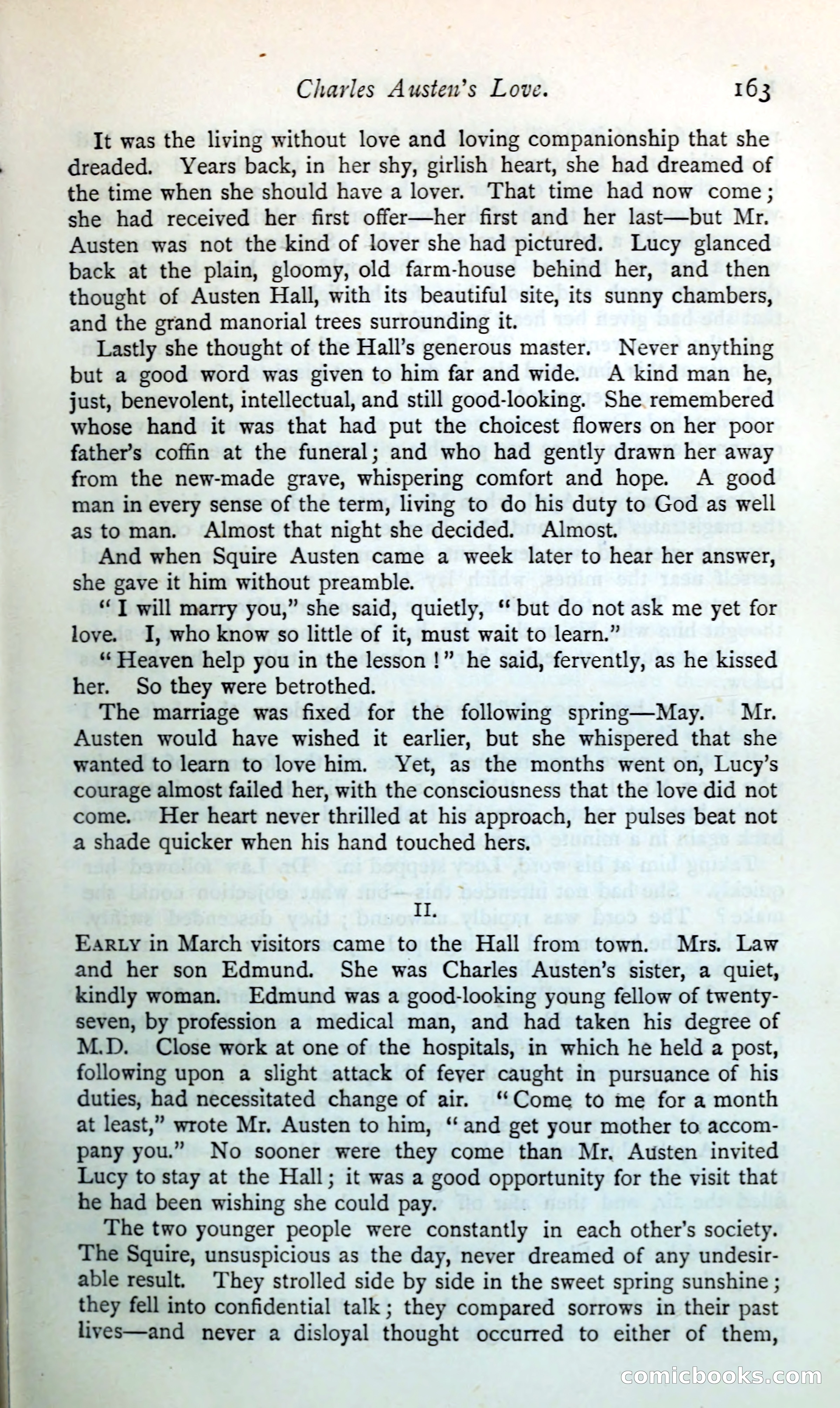
A restored page from Pulp Fiction, 1865. Page through the whole issue in the reader above.
📄 Transcribed text from this page (OCR, searchable)
Machine-transcribed from the original scan — historical spelling and the odd misread are preserved.
Charles Austen’s Love. 163 It was the living without love and loving companionship that she dreaded. Years back, in her shy, girlish heart, she had dreamed of the time when she should have a lover. That time had now come; she had received her first offer—her first and her last—but Mr. Austen was not the kind of lover she had pictured. Lucy glanced back at the plain, gloomy, old farm-house behind her, and then thought of Austen Hall, with its beautiful site, its sunny chambers, and the grand manorial trees surrounding it. Lastly she thought of the Hall’s generous master. Never anything but a good word was given to him far and wide. A kind man he, just, benevolent, intellectual, and still good-looking. She remembered whose hand it was that had put the choicest flowers on her poor father’s coffin at the funeral; and who had gently drawn her away from the new-made grave, whispering comfort and hope. A good man in every sense of the term, living to do his duty to God as well as to man. Almost that night she decided. Almost. And when Squire Austen came a week later to hear her answer, she gave it him without preamble. “T will marry you,” she said, quietly, ‘‘ but do not ask me yet for love. I, who know so little of it, must wait to learn.” “Heaven help you in the lesson!” he said, fervently, as he kissed her. So they were betrothed. The marriage was fixed for the following spring—May. Mr. Austen would have wished it earlier, but she whispered that she wanted to learn to love him. Yet, as the months went on, Lucy’s courage almost failed her, with the consciousness that the love did not come. Her heart never thrilled at his approach, her pulses beat not a shade quicker when his hand touched hers. Il. EARLY in March visitors came to the Hall from town. Mrs. Law and her son Edmund. She was Charles Austen’s sister, a quiet, kindly woman. Edmund was a good-looking young fellow of twenty- seven, by profession a medical man, and had taken his degree of M.D. Close work at one of the hospitals, in which he held a post, following upon a slight attack of feyer caught in pursuance of his duties, had necessitated change of air. ‘Come to me for a month at least,” wrote Mr. Austen to him, “and get your mother to accom- pany you.” No sooner were they come than Mr. Austen invited Lucy to stay at the Hall; it was a good opportunity for the visit that he had been wishing she could pay. The two younger people were constantly in each other’s society. The Squire, unsuspicious as the day, never dreamed of any undesir- able result. They strolled side by side in the sweet spring sunshine ; they fell into confidential talk; they compared sorrows in their past lives—and never a disloyal thought occurred to either of them, Gomichooks.co m