
Pulp Fiction, 1865 · page 155 of 400
The Argosy — page 155: what you’re looking at
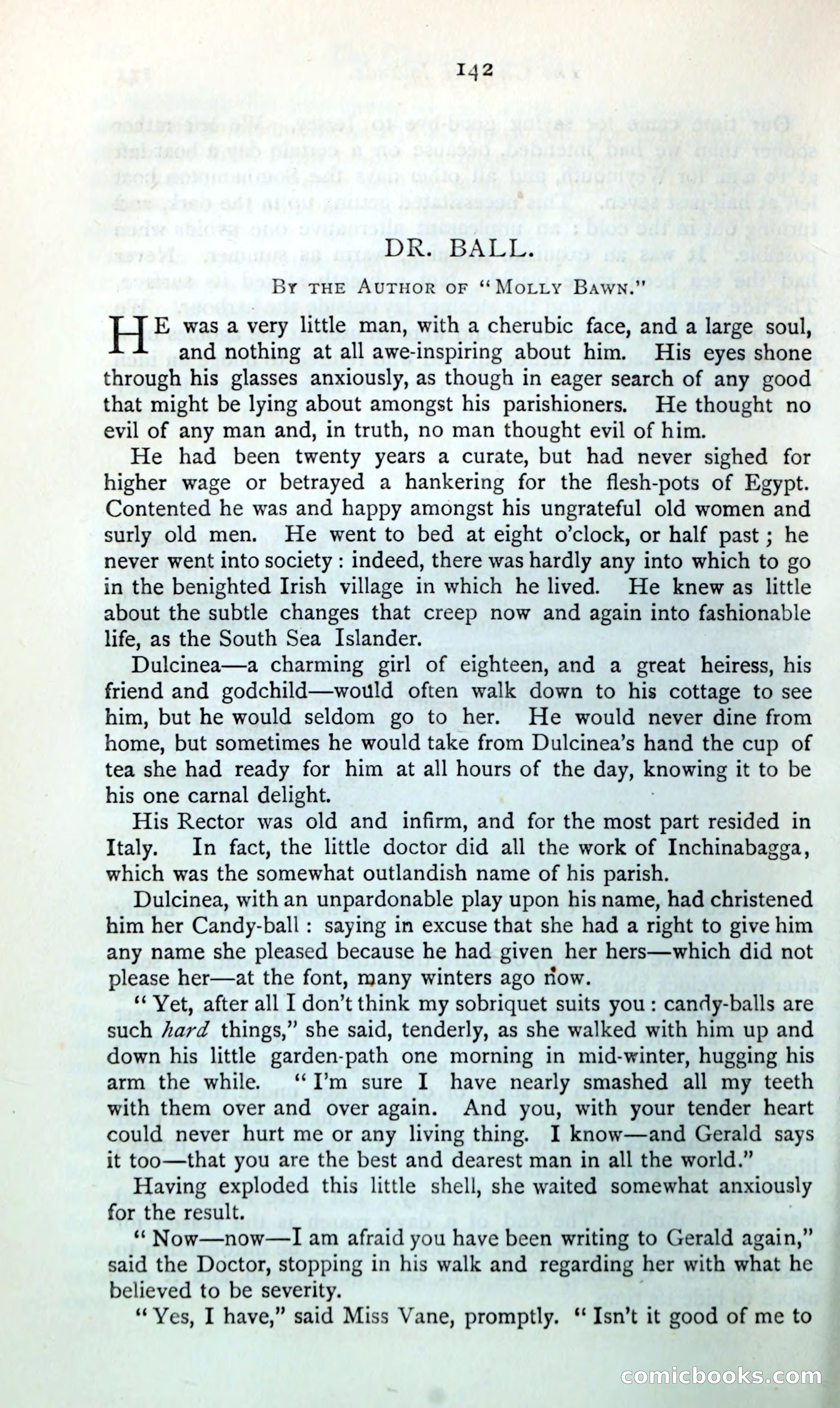
A restored page from Pulp Fiction, 1865. Page through the whole issue in the reader above.
📄 Transcribed text from this page (OCR, searchable)
Machine-transcribed from the original scan — historical spelling and the odd misread are preserved.
142 DR. BALL. By THE AUTHOR oF ‘**MoLttrty Bawn.”’ H E was a very little man, with a cherubic face, and a large soul, and nothing at all awe-inspiring about him. His eyes shone through his glasses anxiously, as though in eager search of any good that might be lying about amongst his parishioners. He thought no evil of any man and, in truth, no man thought evil of him. He had been twenty years a curate, but had never sighed for higher wage or betrayed a hankering for the flesh-pots of Egypt. Contented he was and happy amongst his ungrateful old women and surly old men. He went to bed at eight o’clock, or half past; he never went into society : indeed, there was hardly any into which to go in the benighted Irish village in which he lived. He knew as little about the subtle changes that creep now and again into fashionable life, as the South Sea Islander. Dulcinea—a charming girl of eighteen, and a great heiress, his friend and godchild—would often walk down to his cottage to see him, but he would seldom go to her. He would never dine from home, but sometimes he would take from Dulcinea’s hand the cup of tea she had ready for him at all hours of the day, KNOWING it to be his one carnal delight. His Rector was old and infirm, and for the most part resided in Italy. In fact, the little doctor did all the work of Inchinabagga, which was the somewhat outlandish name of his parish. Dulcinea, with an unpardonable play upon his name, had christened him her Candy-ball: saying in excuse that she had a right to give him any name she pleased because he had given her hers—which did not please her—at the font, many winters ago now. Yet, after all | don’t think my sobriquet suits you: candy-balls are such hard things,” she said, tenderly, as she walked with him up and down his little garden-path one morning in mid-winter, hugging his arm the while. ‘I’m sure I have nearly smashed all my teeth with them over and over again. And you, with your tender heart could never hurt me or any living thing. I know—and Gerald says it too—that you are the best and dearest man in all the world.” Having exploded this little shell, she waited somewhat anxiously for the result. “ Now—now—lI am afraid you have been writing to Gerald again,” said the Doctor, stopping in his walk and regarding her with what he believed to be severity. ‘Ves, I have,” said Miss Vane, promptly. *‘ Isn’t it good of me to Gomicbooks.com