
Pulp Fiction, 1865 · page 139 of 400
The Argosy — page 139: what you’re looking at
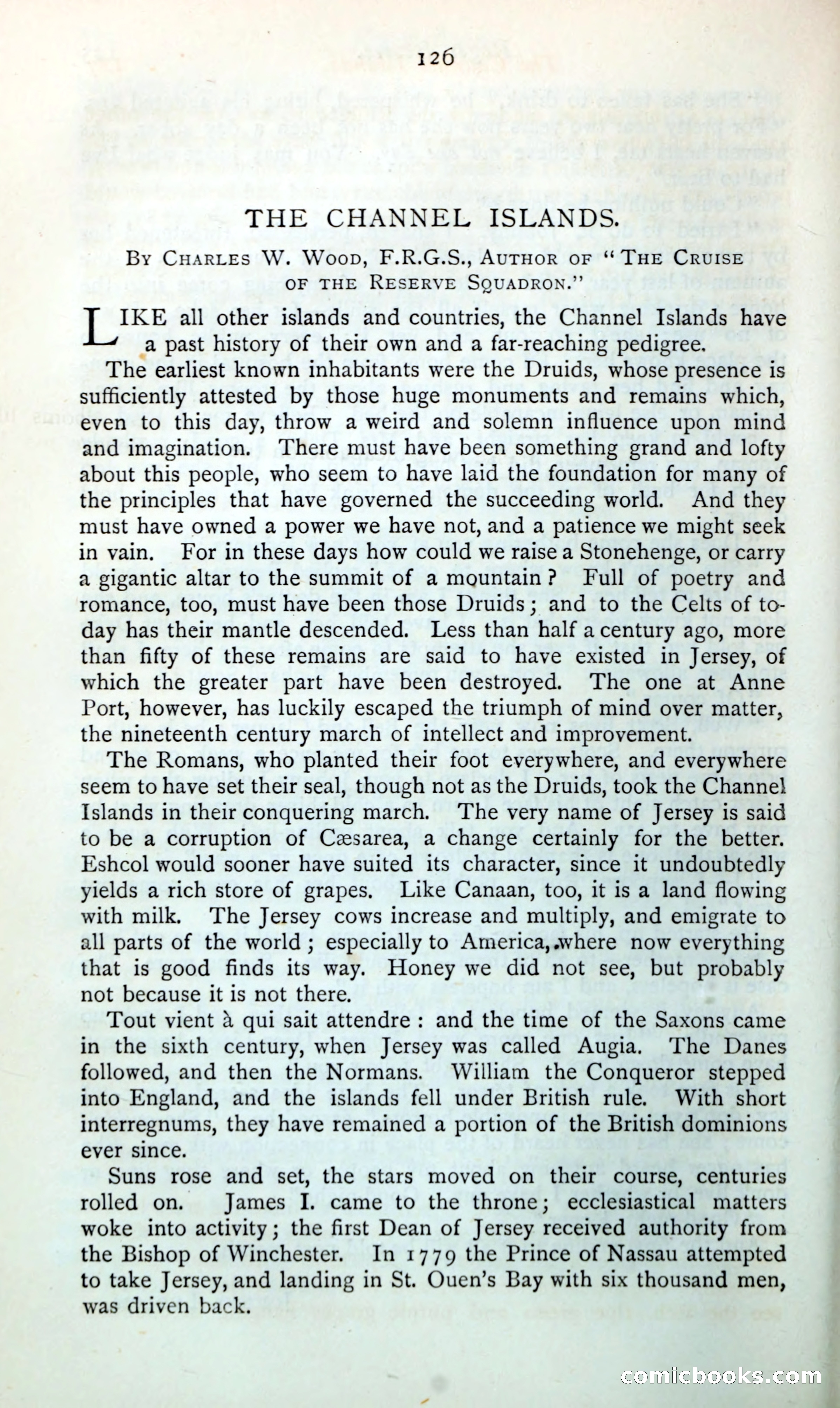
A restored page from Pulp Fiction, 1865. Page through the whole issue in the reader above.
📄 Transcribed text from this page (OCR, searchable)
Machine-transcribed from the original scan — historical spelling and the odd misread are preserved.
120 THE CHANNEL ISLANDS. By CHARLES W. Woop, F.R.G.S., AUTHOR oF ‘*‘ THE CRUISE OF THE RESERVE SQUADRON.”’ IKE all other islands and countries, the Channel Islands have a past history of their own and a far-reaching pedigree. The earliest known inhabitants were the Druids, whose presence is sufficiently attested by those huge monuments and remains which, even to this day, throw a weird and solemn influence upon mind and imagination. There must have been something grand and lofty about this people, who seem to have laid the foundation for many of the principles that have governed the succeeding world. And they must have owned a power we have not, and a patience we might seek in vain. For in these days how could we raise a Stonehenge, or carry a gigantic altar to the summit of a mountain? Full of poetry and romance, too, must have been those Druids; and to the Celts of to- day has their mantle descended. Less than half acentury ago, more than fifty of these remains are said to have existed in Jersey, of which the greater part have been destroyed. ‘The one at Anne Port, however, has luckily escaped the triumph of mind over matter, the nineteenth century march of intellect and improvement. The Romans, who planted their foot everywhere, and everywhere seem to have set their seal, though not as the Druids, took the Channel} Islands in their conquering march. ‘The very name of Jersey is said to be a corruption of Czesarea, a change certainly for the better. Eshcol would sooner have suited its character, since it undoubtedly yields a rich store of grapes. Like Canaan, too, it isa land flowing with milk. The Jersey cows increase and multiply, and emigrate to all parts of the world ; especially to America, where now everything that is good finds its way. Honey we did not see, but probably not because it is not there. Tout vient 4 qui sait attendre: and the time of the Saxons came in the sixth century, when Jersey was called Augia. ‘The Danes followed, and then the Normans. William the Conqueror stepped into England, and the islands fell under British rule. With short interregnums, they have remained a portion of the British dominions ever since. Suns rose and set, the stars moved on their course, centuries rolled on. James J. came to the throne; ecclesiastical matters woke into activity; the first Dean of Jersey received authority from the Bishop of Winchester. In 1779 the Prince of Nassau attempted to take Jersey, and landing in St. Ouen’s Bay with six thousand men, was driven back. Gomicbooks.com >