
Pulp Fiction, 1865 · page 125 of 400
The Argosy — page 125: what you’re looking at
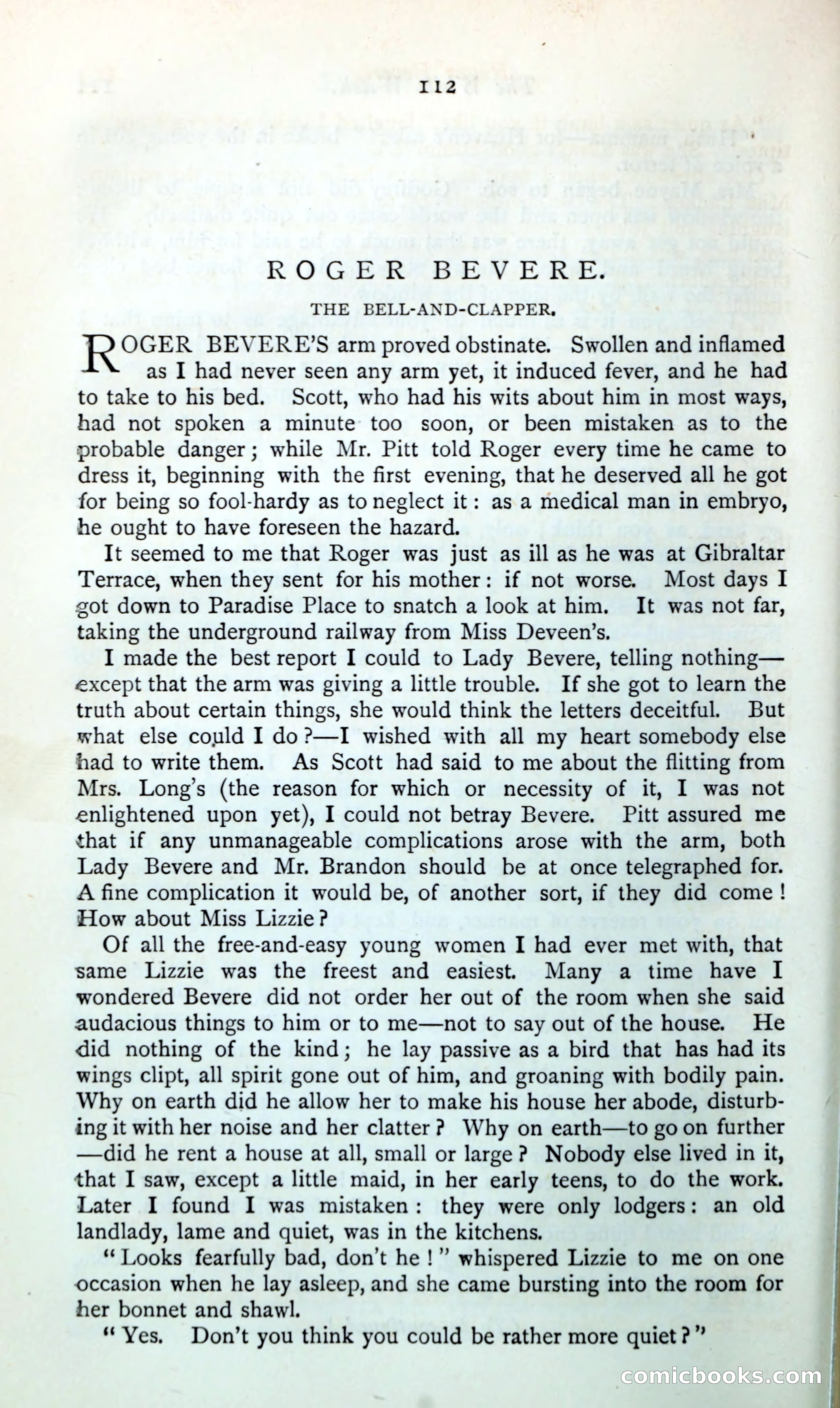
A restored page from Pulp Fiction, 1865. Page through the whole issue in the reader above.
📄 Transcribed text from this page (OCR, searchable)
Machine-transcribed from the original scan — historical spelling and the odd misread are preserved.
I1l2 ROGER BV BE Ra. THE BELL-AND-CLAPPER, | P cbregeter=s BEVERE’S arm proved obstinate. Swollen and inflamed as I had never seen any arm yet, it induced fever, and he had to take to his bed. Scott, who had his wits about him in most ways, had not spoken a minute too soon, or been mistaken as to the probable danger; while Mr. Pitt told Roger every time he came to dress it, beginning with the first evening, that he deserved all he got for being so fool-hardy as to neglect it: as a medical man in embryo, he ought to have foreseen the hazard. It seemed to me that Roger was just as ill as he was at Gibraltar Terrace, when they sent for his mother: if not worse. Most days I got down to Paradise Place to snatch a look at him. It was not far, taking the underground railway from Miss Deveen’s. I made the best report I could to Lady Bevere, telling nothing— except that the arm was giving a little trouble. If she got to learn the truth about certain things, she would think the letters deceitful. But what else could I do ?—I wished with all my heart somebody else had to write them. As Scott had said to me about the flitting from Mrs. Long’s (the reason for which or necessity of it, I was not enlightened upon yet), I could not betray Bevere. Pitt assured me that if any unmanageable complications arose with the arm, both Lady Bevere and Mr. Brandon should be at once telegraphed for. A fine complication it would be, of another sort, if they did come! How about Miss Lizzie? Of all the free-and-easy young women I had ever met with, that same Lizzie was the freest and easiest. Many a time have I wondered Bevere did not order her out of the room when she said audacious things to him or to me—not to say out of the house. He did nothing of the kind; he lay passive as a bird that has had its wings clipt, all spirit gone out of him, and groaning with bodily pain. Why on earth did he allow her to make his house her abode, disturb- ing it with her noise and her clatter? Why on earth—to go on further —did he rent a house at all, small or large? Nobody else lived in it, that I saw, except a little maid, in her early teens, to do the work. Later I found I was mistaken: they were only lodgers: an old landlady, lame and quiet, was in the kitchens. “Looks fearfully bad, don’t he!” whispered Lizzie to me on one occasion when he lay asleep, and she came bursting into the room for her bonnet and shawl. Yes, Don’t you think you could be rather more quiet?” GEomichbooks.co