
Pulp Fiction, 1865 · page 116 of 400
The Argosy — page 116: what you’re looking at
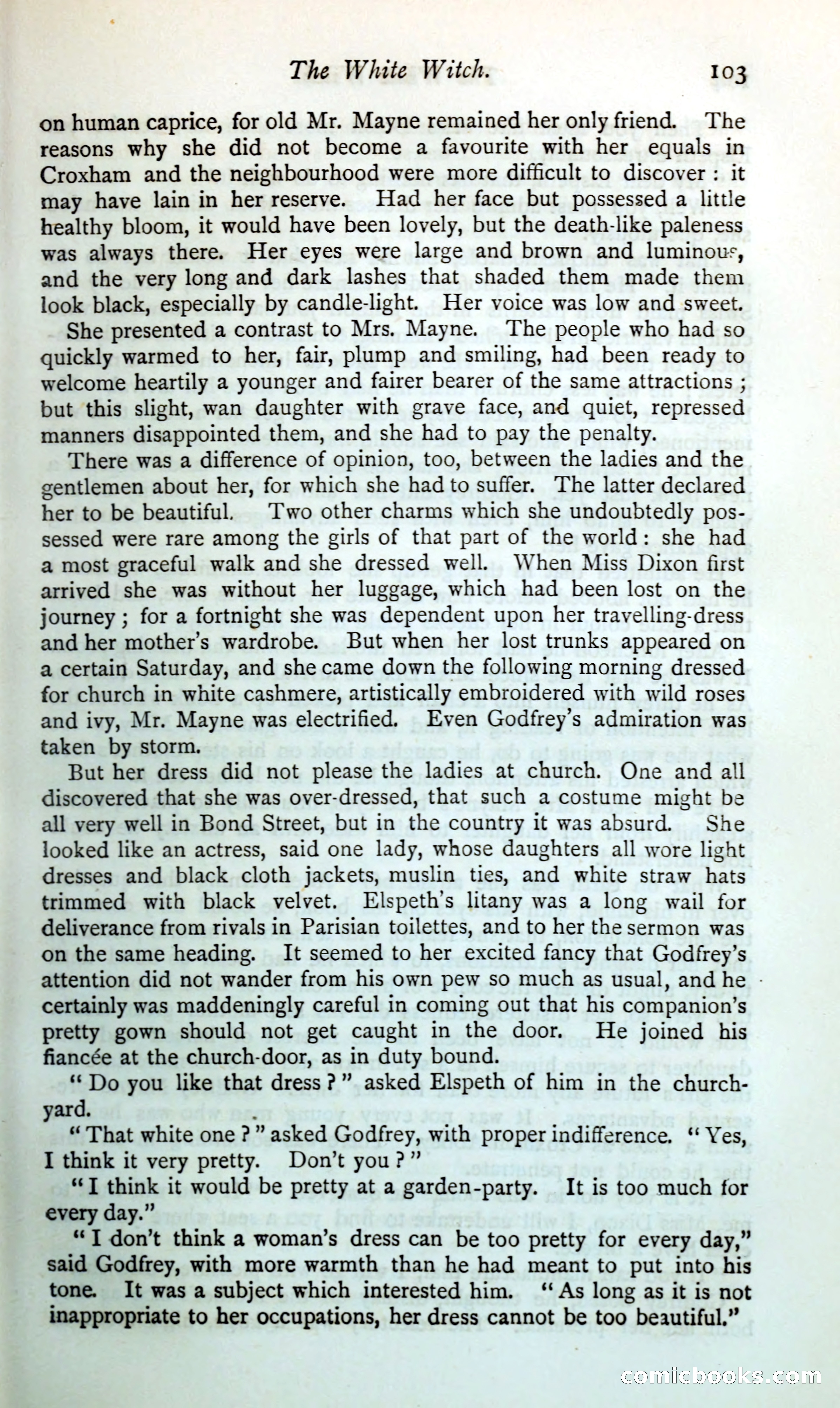
A restored page from Pulp Fiction, 1865. Page through the whole issue in the reader above.
📄 Transcribed text from this page (OCR, searchable)
Machine-transcribed from the original scan — historical spelling and the odd misread are preserved.
The White Witch. 103 on human caprice, for old Mr. Mayne remained her only friend. The reasons why she did not become a favourite with her equals in Croxham and the neighbourhood were more difficult to discover : it may have lain in her reserve. Had her face but possessed a little healthy bloom, it would have been lovely, but the death-like paleness was always there. Her eyes were large and brown and luminou;, and the very long and dark lashes that shaded them made them look black, especially by candle-light. Her voice was low and sweet. She presented a contrast to Mrs. Mayne. The people who had so quickly warmed to her, fair, plump and smiling, had been ready to welcome heartily a younger and fairer bearer of the same attractions ; but this slight, wan daughter with grave face, and quiet, repressed manners disappointed them, and she had to pay the penalty. There was a difference of opinion, too, between the ladies and the gentlemen about her, for which she had to suffer. The latter declared her to be beautiful. Two other charms which she undoubtedly pos- sessed were rare among the girls of that part of the world: she had a most graceful walk and she dressed well. When Miss Dixon first arrived she was without her luggage, which had been lost on the journey ; for a fortnight she was dependent upon her travelling-dress and her mother’s wardrobe. But when her lost trunks appeared on a certain Saturday, and she came down the following morning dressed for church in white cashmere, artistically embroidered with wild roses and ivy, Mr. Mayne was electrified. Even Godfrey’s admiration was taken by storm. But her dress did not please the ladies at church. One and all discovered that she was over-dressed, that such a costume might be all very well in Bond Street, but in the country it was absurd. She looked like an actress, said one lady, whose daughters all wore light dresses and black cloth jackets, muslin ties, and white straw hats trimmed with black velvet. Elspeth’s litany was a long wail for deliverance from rivals in Parisian toilettes, and to her the sermon was on the same heading. It seemed to her excited fancy that Godfrey’s attention did not wander from his own pew so much as usual, and he - certainly was maddeningly careful in coming out that his companion’s pretty gown should not get caught in the door. He joined his fiancée at the church-door, as in duty bound. ‘Do you like that dress?” asked Elspeth of him in the church- yard. “ That white one ?” asked Godfrey, with proper indifference. ‘ Yes, I think it very pretty. Don’t you?” *T think it would be pretty at a garden-party. It is too much for every day.” “1 don’t think a woman’s dress can be too pretty for every day,” said Godfrey, with more warmth than he had meant to put into his tone. It was a subject which interested him. “As long as it is not inappropriate to her occupations, her dress cannot be too beautiful.” CONMIEIOOKS (E@) m