
Pulp Fiction, 1865 · page 400 of 399
The Argosy — page 400: what you’re looking at
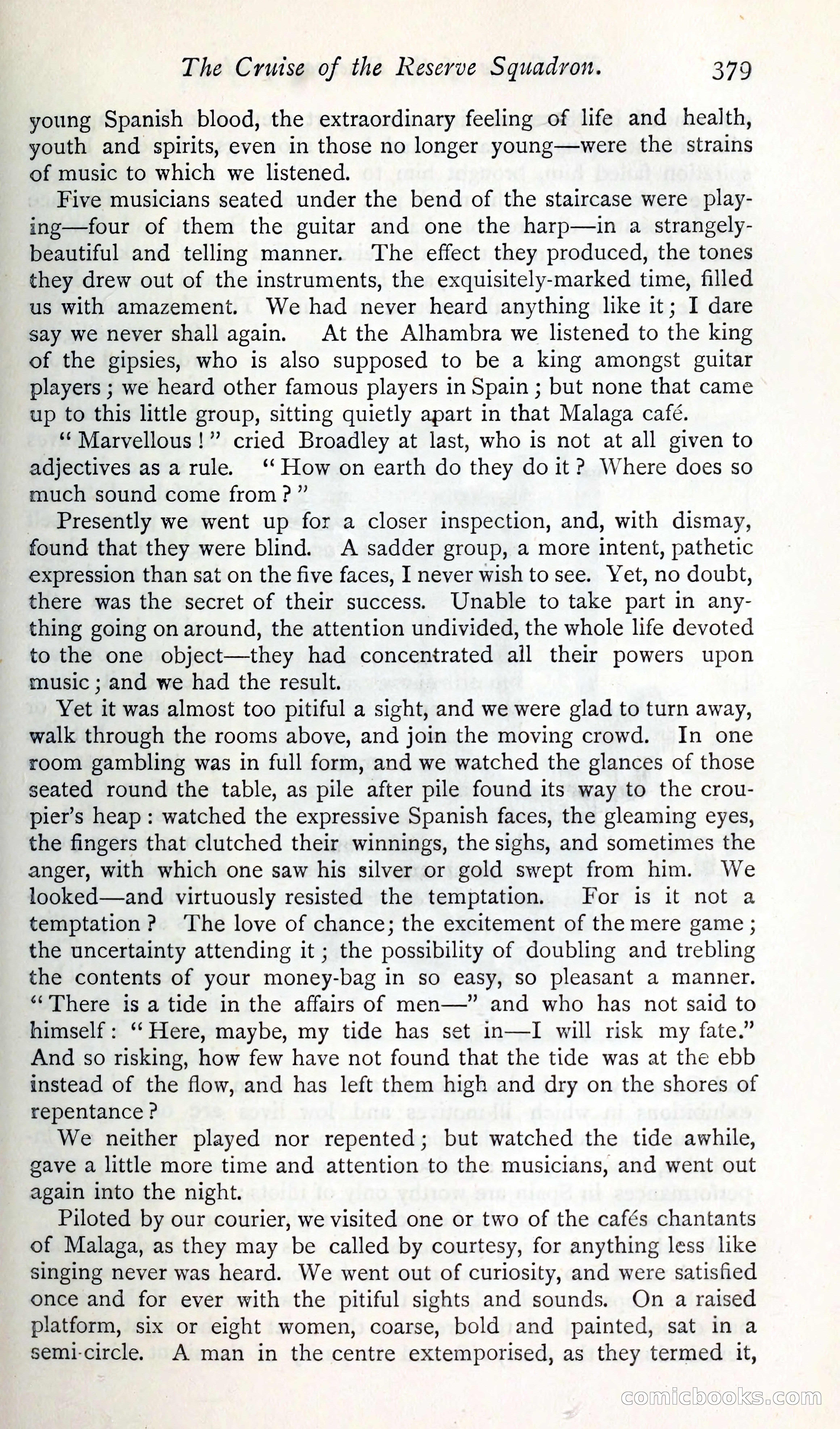
A restored page from Pulp Fiction, 1865. Page through the whole issue in the reader above.
📄 Transcribed text from this page (OCR, searchable)
Machine-transcribed from the original scan — historical spelling and the odd misread are preserved.
The Cruse of the Reserve Squadron. 379 young Spanish blood, the extraordinary feeling of life and health, youth and spirits, even in those no longer young—were the strains of music to which we listened. Five musicians seated under the bend of the staircase were play- ing—four of them the guitar and one the harp—in a strangely- beautiful and telling manner. The effect they produced, the tones they drew out of the instruments, the exquisitely-marked time, filled us with amazement. We had never heard anything like it; I dare say we never shall again. At the Alhambra we listened to the king of the gipsies, who is also supposed to be a king amongst guitar players ; we heard other famous players in Spain ; but none that came up to this little group, sitting quietly apart in that Malaga café. “Marvellous!” cried Broadley at last, who is not at all given to adjectives asarule. ‘‘ How on earth do they doit ? Where does so much sound come from ?” Presently we went up for a closer inspection, and, with dismay, found that they were blind. A sadder group, a more intent, pathetic expression than sat on the five faces, I never wish to see. Yet, no doubt, there was the secret of their success. Unable to take part in any- thing going on around, the attention undivided, the whole life devoted to the one object—they had concentrated all their powers upon music ; and we had the result. Yet it was almost too pitiful a sight, and we were glad to turn away, walk through the rooms above, and join the moving crowd. In one room gambling was in full form, and we watched the glances of those seated round the table, as pile after pile found its way to the crou- pier’s heap : watched the expressive Spanish faces, the gleaming eyes, the fingers that clutched their winnings, the sighs, and sometimes the anger, with which one saw his silver or gold swept from him. We looked—and virtuously resisted the temptation. For is it not a temptation? The love of chance; the excitement of the mere game ; the uncertainty attending it ; the possibility of doubling and trebling the contents of your money-bag in so easy, so pleasant a manner. ‘‘ There is a tide in the affairs of men—” and who has not said to himself: ‘‘ Here, maybe, my tide has set in—I will risk my fate.” And so risking, how few have not found that the tide was at the ebb instead of the flow, and has left them high and dry on the shores of repentance? We neither played nor repented; but watched the tide awhile, gave a little more time and attention to the musicians, and went out again into the night. Piloted by our courier, we visited one or two of the cafés sindieisiee of Malaga, as they may be called by courtesy, for anything less like singing never was heard. We went out of curiosity, and were satisfied once and for ever with the pitiful sights and sounds. On a raised platform, six or eight women, coarse, bold and painted, sat in a semi-circle. A man in the centre extemporised, as they termed it, EORnNIClOOkkS (GO