
Pulp Fiction, 1865 · page 97 of 399
The Argosy — page 97: what you’re looking at
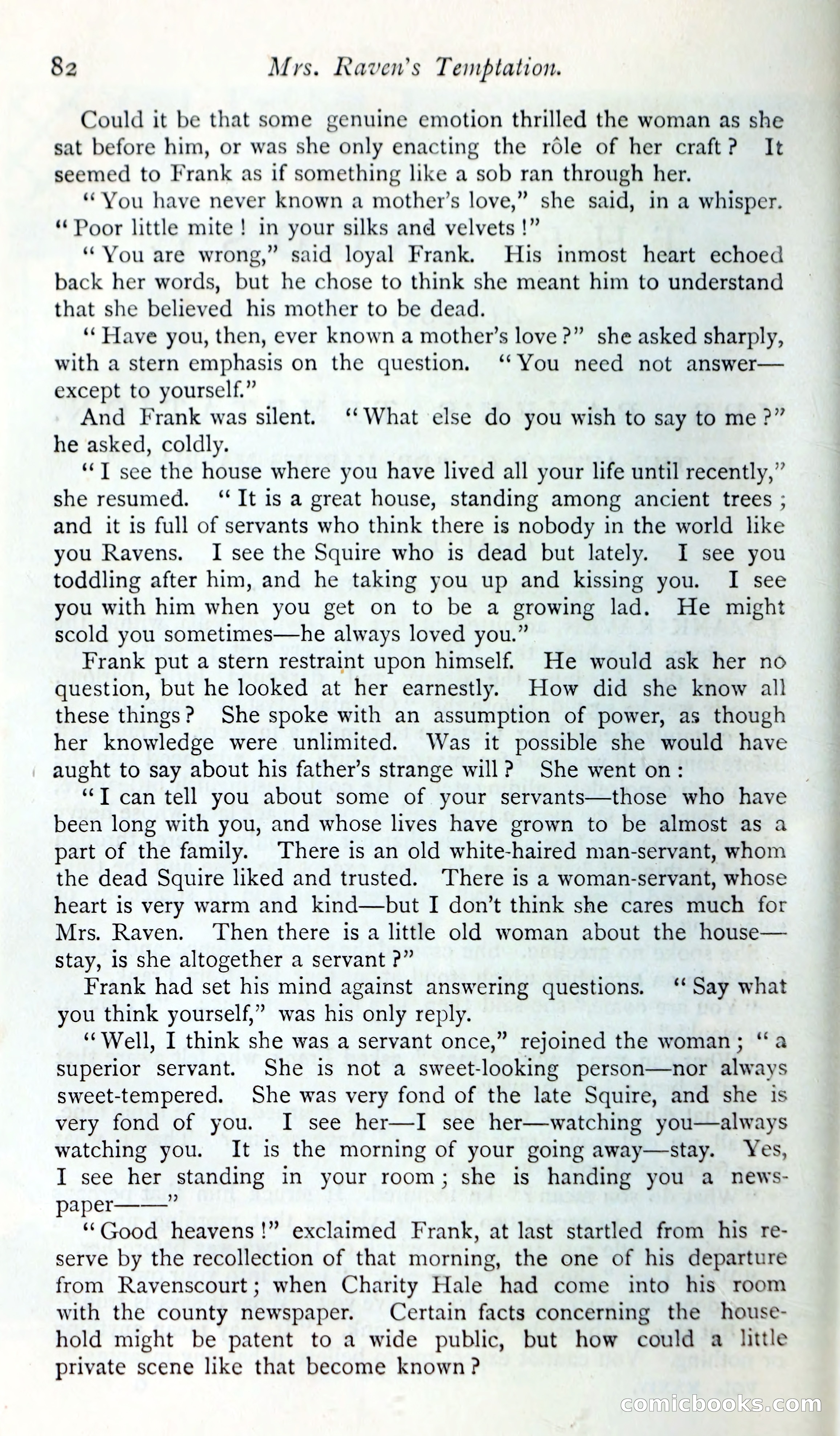
A restored page from Pulp Fiction, 1865. Page through the whole issue in the reader above.
📄 Transcribed text from this page (OCR, searchable)
Machine-transcribed from the original scan — historical spelling and the odd misread are preserved.
82 Mrs. Raven's Temptation. Could it be that some genuine emotion thrilled the woman as she sat before him, or was she only enacting the role of her craft? It seemed to Frank as if something like a sob ran through her. “You have never known a mother’s love,” she said, in a whisper. “Poor little mite! in your silks and velvets !” ‘You are wrong,” said loyal Frank. His inmost heart echoed back her words, but he chose to think she meant him to understand that she believed his mother to be dead. ‘‘ Have you, then, ever known a mother’s love ?” she asked sharply, with a stern emphasis on the question. ‘‘ You need not answer— except to yourself.” And Frank was silent. ‘‘What else do you wish to say to me ?” he asked, coldly. ‘“‘T see the house where you have lived all your life until recently,” she resumed. ‘It is a great house, standing among ancient trees ; and it is full of servants who think there is nobody in the world like you Ravens. I see the Squire who is dead but lately. I see you toddling after him, and he taking you up and kissing you. I see you with him when you get on to be a growing lad. He might scold you sometimes—he always loved you.” Frank put a stern restraint upon himself. He would ask her no question, but he looked at her earnestly. How did she know all these things? She spoke with an assumption of power, as though her knowledge were unlimited. Was it possible she would have aught to say about his father’s strange will? She went on: “T can tell you about some of your servants—those who have been long with you, and whose lives have grown to be almost as a part of the family. There is an old white-haired man-servant, whom the dead Squire liked and trusted. ‘There 1s a woman-servant, whose heart is very warm and kind—but I don’t think she cares much for Mrs. Raven. ‘Then there 1s a little old woman about the house— stay, 1s she altogether a servant P” Frank had set his mind against answering questions. ‘‘ Say what you think yourself,” was his only reply. ‘Well, I think she was a servant once,” rejoined the woman; “a superior servant. She is not a sweet-looking person—nor always sweet-tempered. She was very fond of the late Squire, and she is very fond of you. I see her—I see her—watching you—always watching you. It is the morning of your going away—stay. Yes, I see her standing in your room; she is handing you a news- paper——” ‘“Good heavens!” exclaimed Frank, at last startled from his re- serve by the recollection of that morning, the one of his departure from Ravenscourt; when Charity Hale had come into his room with the county newspaper. Certain facts concerning the house- hold might be patent to a wide public, but how could a little private scene like that become known ? ECOPMICLIOO; KS, EO)