
Pulp Fiction, 1865 · page 92 of 399
The Argosy — page 92: what you’re looking at
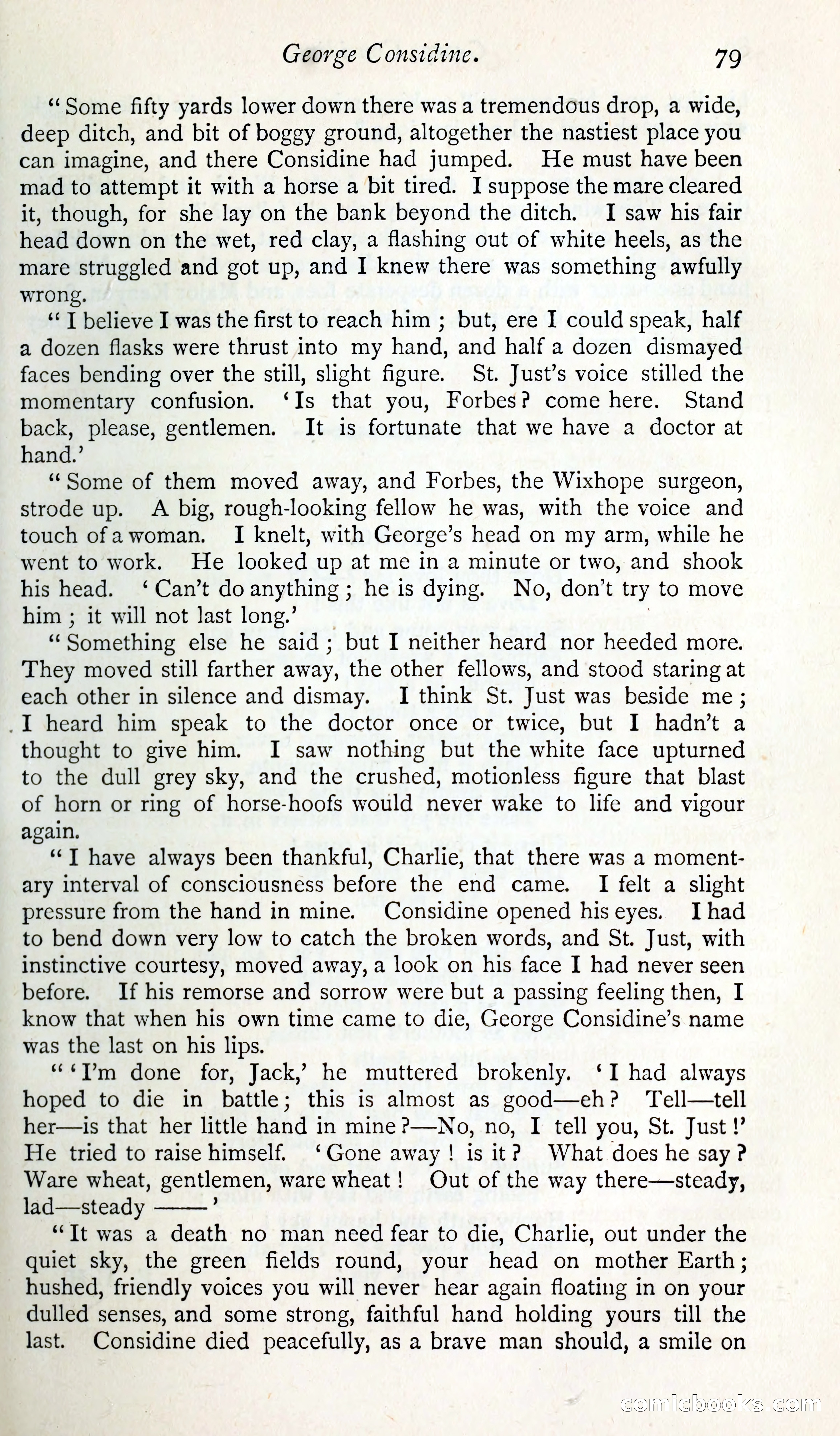
A restored page from Pulp Fiction, 1865. Page through the whole issue in the reader above.
📄 Transcribed text from this page (OCR, searchable)
Machine-transcribed from the original scan — historical spelling and the odd misread are preserved.
George Considine. 79 ‘Some fifty yards lower down there was a tremendous drop, a wide, deep ditch, and bit of boggy ground, altogether the nastiest place you can imagine, and there Considine had jumped. He must have been mad to attempt it with a horse a bit tired. I suppose the mare cleared it, though, for she lay on the bank beyond the ditch. I saw his fair head down on the wet, red clay, a flashing out of white heels, as the mare struggled and got up, and I knew there was something awfully wrong. ‘‘ T believe I was the first to reach him ; but, ere I could speak, half a dozen flasks were thrust into my hand, and half a dozen dismayed faces bending over the still, slight figure. St. Just’s voice stilled the momentary confusion. ‘Is that you, Forbes? come here. Stand back, please, gentlemen. It is fortunate that we have a doctor at hand.’ ‘Some of them moved away, and Forbes, the Wixhope surgeon, strode up. A big, rough-looking fellow he was, with the voice and touch ofawoman. I knelt, with George’s head on my arm, while he went to work. He looked up at me in a minute or two, and shook his head. ‘Can’t doanything; he is dying. No, don’t try to move him ; it will not last long.’ 3 ‘Something else he said; but I neither heard nor heeded more. They moved still farther away, the other fellows, and stood staring at each other in silence and dismay. I think St. Just was beside me; _I heard him speak to the doctor once or twice, but I hadn’t a thought to give him. I saw nothing but the white face upturned to the dull grey sky, and the crushed, motionless figure that blast of horn or ring of horse-hoofs would never wake to life and vigour again. ‘‘T have always been thankful, Charlie, that there was a moment- ary interval of consciousness before the end came. I felt a slight pressure from the hand in mine. Considine opened hiseyes. I had to bend down very low to catch the broken words, and St. Just, with instinctive courtesy, moved away, a look on his face I had never seen before. If his remorse and sorrow were but a passing feeling then, I know that when his own time came to die, George Considine’s name was the last on his lips. **¢1’m done for, Jack,’ he muttered brokenly. ‘I had always hoped to die in battle; this is almost as good—eh? Tell—tell her—is that her little hand in mine ?>—No, no, I tell you, St. Just !’ He tried to raise himself. ‘Gone away! is it? What does he say? Ware wheat, gentlemen, ware wheat! Out of the way there—steady, lad—steady “It was a death no man need fear to die, Charlie, out under the quiet sky, the green fields round, your head on mother Earth; hushed, friendly voices you will never hear again floating in on your dulled senses, and some strong, faithful hand holding yours till the last. Considine died peacefully, as a brave man should, a smile on GOnnlGdoolks (GO mn