
Pulp Fiction, 1865 · page 75 of 399
The Argosy — page 75: what you’re looking at
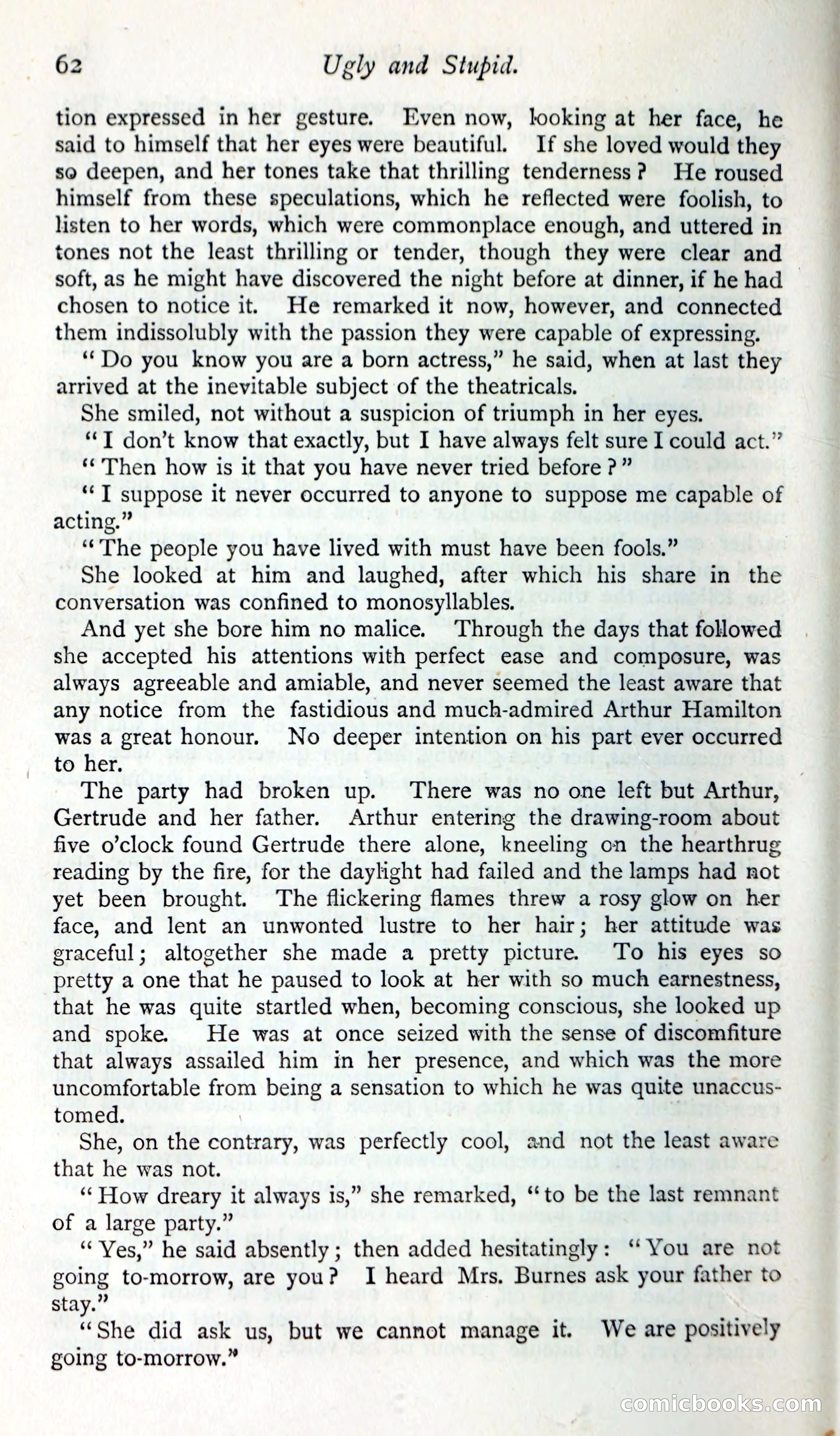
A restored page from Pulp Fiction, 1865. Page through the whole issue in the reader above.
📄 Transcribed text from this page (OCR, searchable)
Machine-transcribed from the original scan — historical spelling and the odd misread are preserved.
62 Ugly and Stupid. tion expressed in her gesture. Even now, looking at her face, he said to himself that her eyes were beautiful. If she loved would they so deepen, and her tones take that thrilling tenderness? He roused himself from these speculations, which he reflected were foolish, to listen to her words, which were commonplace enough, and uttered in tones not the least thrilling or tender, though they were clear and soft, as he might have discovered the night before at dinner, if he had — chosen to notice it. He remarked it now, however, and connected them indissolubly with the passion they were capable of expressing. ‘“Do you know you are a born actress,” he said, when at last they arrived at the inevitable subject of the theatricals. She smiled, not without a suspicion of triumph in her eyes. “T don’t know that exactly, but I have always felt sure I could act.” ‘Then how is it that you have never tried before ?” ‘“‘T suppose it never occurred to anyone to suppose me capable of acting.” “The people you have lived with must have been fools.” She looked at him and laughed, after which his share in the conversation was confined to monosyllables. And yet she bore him no malice. Through the days that followed she accepted his attentions with perfect ease and composure, was always agreeable and amiable, and never seemed the least aware that any notice from the fastidious and much-admired Arthur Hamilton was a great honour. No deeper intention on his part ever occurred to her. The party had broken up. There was no one left but Arthur, Gertrude and her father. Arthur entering the drawing-room about five o’clock found Gertrude there alone, kneeling on the hearthrug reading by the fire, for the dayhght had failed and the lamps had not yet been brought. The flickering flames threw a rosy glow on her face, and lent an unwonted lustre to her hair; her attitude was graceful; altogether she made a pretty picture. To his eyes so pretty a one that he paused to look at her with so much earnestness, that he was quite startled when, becoming conscious, she looked up and spoke. He was at once seized with the sense of discomfiture that always assailed him in her presence, and which was the more uncomfortable from being a sensation to which he was quite unaccus- tomed. She, on the contrary, was perfectly cool, and not the least aware that he was not. ‘How dreary it always is,” she remarked, “to be the last remnant of a large party.” “Ves,” he said absently ; then added hesitatingly: “ You are not going to-morrow, are you? I heard Mrs. Burnes ask your father to stay.” “She did ask us, but we cannot manage it. We are positively going to-morrow.” ECOLPMICLOO KS, (EO) er — -