
Pulp Fiction, 1865 · page 128 of 399
The Argosy — page 128: what you’re looking at
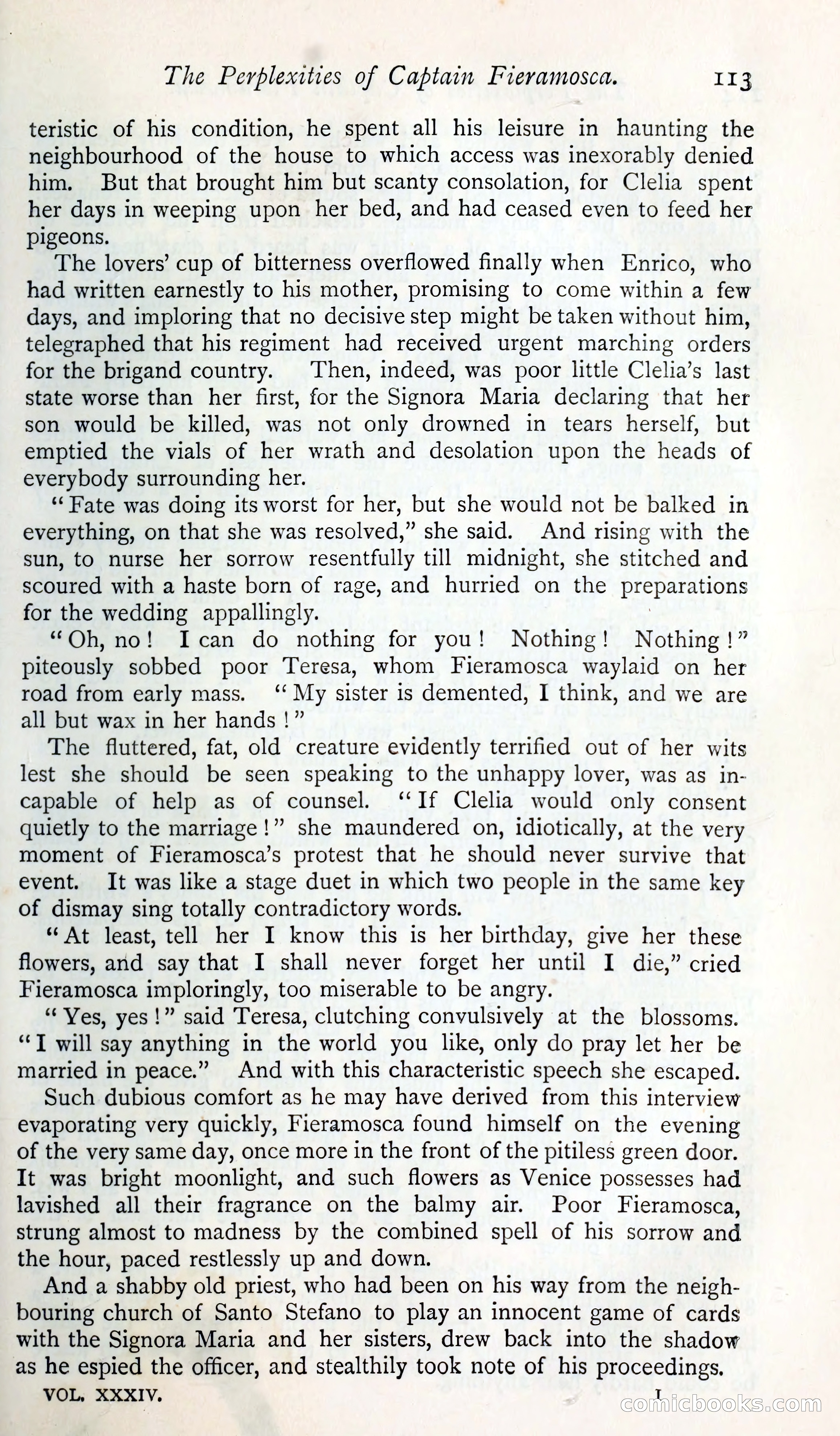
A restored page from Pulp Fiction, 1865. Page through the whole issue in the reader above.
📄 Transcribed text from this page (OCR, searchable)
Machine-transcribed from the original scan — historical spelling and the odd misread are preserved.
The Perplexities of Captain Fieramosca. II3 teristic of his condition, he spent all his leisure in haunting the neighbourhood of the house to which access was inexorably denied him. But that brought him but scanty consolation, for Clelia spent her days in weeping upon her bed, and had ceased even to feed her pigeons. The lovers’ cup of bitterness overflowed finally when Enrico, who had written earnestly to his mother, promising to come within a few days, and imploring that no decisive step might be taken without him, telegraphed that his regiment had received urgent marching orders for the brigand country. Then, indeed, was poor little Clelia’s last state worse than her first, for the Signora Maria declaring that her son would be killed, was not only drowned in tears herself, but emptied the vials of her wrath and desolation upon the heads of everybody surrounding her. ‘Fate was doing its worst for her, but she would not be balked in everything, on that she was resolved,” she said. And rising with the sun, to nurse her sorrow resentfully till midnight, she stitched and scoured with a haste born of rage, and hurried on the preparations for the wedding appallingly. “Oh, no! Ican do nothing for you! Nothing! Nothing!” piteously sobbed poor Teresa, whom Fieramosca waylaid on her road from early mass. ‘‘ My sister is demented, I think, and we are all but wax in her hands !” The fluttered, fat, old creature evidently terrified out of her wits lest she should be seen speaking to the unhappy lover, was as in- capable of help as of counsel. “If Clelia would only consent quietly to the marriage!” she maundered on, idiotically, at the very moment of Fieramosca’s protest that he should never survive that event. It was like a stage duet in which two people in the same key of dismay sing totally contradictory words. “ At least, tell her I know this is her birthday, give her these flowers, arid say that I shall never forget her until I die,” cried Fieramosca imploringly, too miserable to be angry. “Ves, yes!” said Teresa, clutching convulsively at the blossoms. “‘T will say anything in the world you like, only do pray let her be married in peace.” And with this characteristic speech she escaped. Such dubious comfort as he may have derived from this interview evaporating very quickly, Fieramosca found himself on the evening of the very same day, once more in the front of the pitiless green door. It was bright moonlight, and such flowers as Venice possesses had lavished all their fragrance on the balmy air. Poor Fieramosca, strung almost to madness by the combined spell of his sorrow and the hour, paced restlessly up and down. And a shabby old priest, who had been on his way from the neigh- bouring church of Santo Stefano to play an innocent game of cards with the Signora Maria and her sisters, drew back into the shadow as he espied the officer, and stealthily took note of his proceedings, VOL, XXXIV. Cormnicbhoo SS (CO)