
Pulp Fiction, 1865 · page 125 of 399
The Argosy — page 125: what you’re looking at
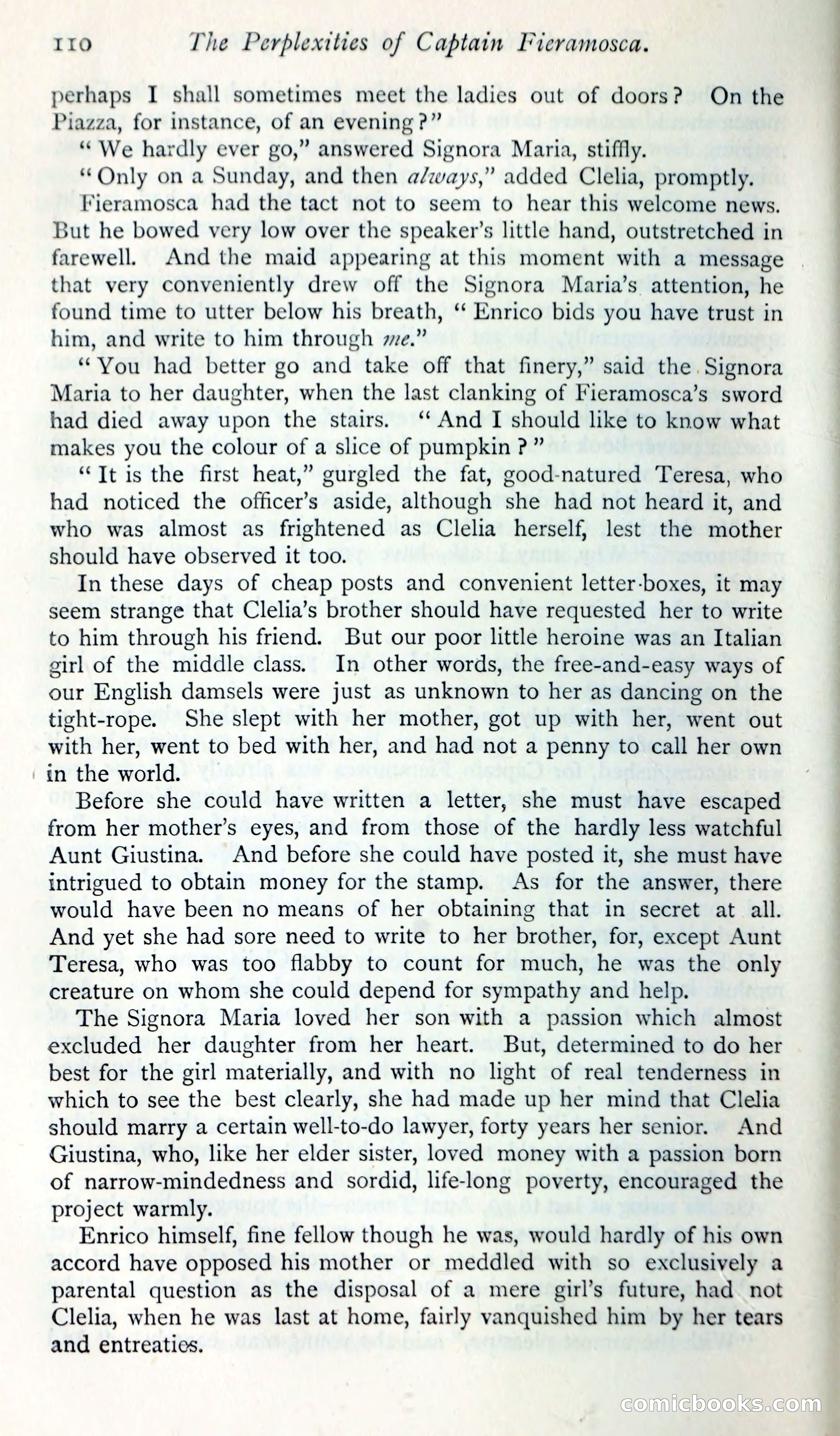
A restored page from Pulp Fiction, 1865. Page through the whole issue in the reader above.
📄 Transcribed text from this page (OCR, searchable)
Machine-transcribed from the original scan — historical spelling and the odd misread are preserved.
IIo The Perplexities of Captain Fieramosca. perhaps I shall sometimes meet the ladies out of doors? On the Piazza, for instance, of an evening ?” ‘We hardly ever go,” answered Signora Maria, stiffly. “Only on a Sunday, and then a/ways,” added Clelia, promptly. Fieramosca had the tact not to seem to hear this welcome news. But he bowed very low over the speaker’s little hand, outstretched in farewell. And the maid appearing at this moment with a message that very conveniently drew off the Signora Maria’s attention, he found time to utter below his breath, “ Enrico bids you have trust in him, and write to him through me.” “You had better go and take off that finery,” said the Signora Maria to her daughter, when the last clanking of Fieramosca’s sword had died away upon the stairs. ‘‘ And I should like to know what makes you the colour of a slice of pumpkin ?” “Tt is the first heat,” gurgled the fat, good-natured Teresa, who had noticed the officer’s aside, although she had not heard it, and who was almost as frightened as Clelia herself, lest the mother should have observed it too. In these days of cheap posts and convenient letter-boxes, it may seem strange that Clelia’s brother should have requested her to write to him through his friend. But our poor little heroine was an Italian girl of the middle class. In other words, the free-and-easy ways of our English damsels were just as unknown to her as dancing on the tight-rope. She slept with her mother, got up with her, went out with her, went to bed with her, and had not a penny to call her own in the world. Before she could have written a letter, she must have escaped from her mother’s eyes, and from those of the hardly less watchful Aunt Giustina. And before she could have posted it, she must have intrigued to obtain money for the stamp. As for the answer, there would have been no means of her obtaining that in secret at all. And yet she had sore need to write to her brother, for, except Aunt Teresa, who was too flabby to count for much, he was the only creature on whom she could depend for sympathy and help. The Signora Maria loved her son with a passion which almost excluded her daughter from her heart. But, determined to do her best for the girl materially, and with no light of real tenderness in which to see the best clearly, she had made up her mind that Clelia should marry a certain well-to-do lawyer, forty years her senior. And Giustina, who, like her elder sister, loved money with a passion born of narrow-mindedness and sordid, life-long poverty, encouraged the project warmly. Enrico himself, fine fellow though he was, would hardly of his own accord have opposed his mother or meddled with so exclusively a parental question as the disposal of a mere girl’s future, had not Clelia, when he was last at home, fairly vanquished him by her tears and entreaties. EOPMIC LOOKS, (EC)