
Pulp Fiction, 1865 · page 64 of 400
The Argosy — page 64: what you’re looking at
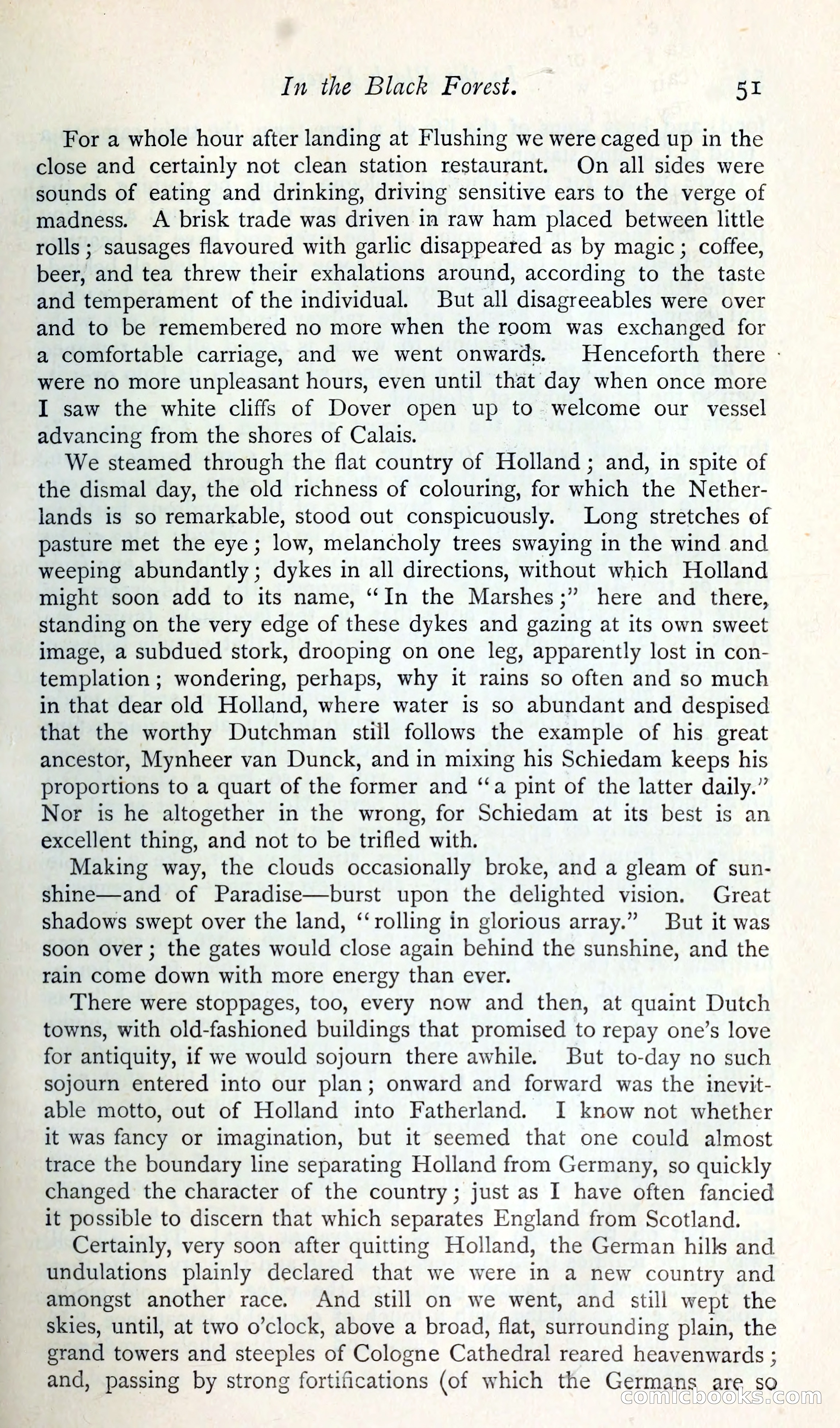
A restored page from Pulp Fiction, 1865. Page through the whole issue in the reader above.
📄 Transcribed text from this page (OCR, searchable)
Machine-transcribed from the original scan — historical spelling and the odd misread are preserved.
In the Black Forest. 51 For a whole hour after landing at Flushing we were caged up in the close and certainly not clean station restaurant. On all sides were sounds of eating and drinking, driving sensitive ears to the verge of madness. A brisk trade was driven in raw ham placed between little rolls ; sausages flavoured with garlic disappeared as by magic; coffee, beer, and tea threw their exhalations around, according to the taste and temperament of the individual. But all disagreeables were over and to be remembered no more when the room was exchanged for a comfortable carriage, and we went onwards. Henceforth there - were no more unpleasant hours, even until that day when once more I saw the white cliffs of Dover open up to welcome our vessel advancing from the shores of Calais. We steamed through the flat country of Holland; and, in spite of the dismal day, the old richness of colouring, for which the Nether- lands is so remarkable, stood out conspicuously. Long stretches of pasture met the eye; low, melancholy trees swaying in the wind and weeping abundantly; dykes in all directions, without which Holland might soon add to its name, ‘In the Marshes;” here and there, standing on the very edge of these dykes and gazing at its own sweet image, a subdued stork, drooping on one leg, apparently lost in con- templation ; wondering, perhaps, why it rains so often and so much in that dear old Holland, where water is so abundant and despised that the worthy Dutchman still follows the example of his great ancestor, Mynheer van Dunck, and in mixing his Schiedam keeps his proportions to a quart of the former and ‘‘a pint of the latter daily.” Nor is he altogether in the wrong, for Schiedam at its best is an excellent thing, and not to be trifled with. Making way, the clouds occasionally broke, and a gleam of sun- shine—and of Paradise—burst upon the delighted vision. Great shadows swept over the land, ‘‘rolling in glorious array.” But it was soon over; the gates would close again behind the sunshine, and the rain come down with more energy than ever. There were stoppages, too, every now and then, at quaint Dutch towns, with old-fashioned buildings that promised to repay one’s love for antiquity, if we would sojourn there awhile. But to-day no such sojourn entered into our plan; onward and forward was the inevit- able motto, out of Holland into Fatherland. I know not whether it was fancy or imagination, but it seemed that one could almost trace the boundary line separating Holland from Germany, so quickly changed the character of the country; just as I have often fancied it possible to discern that which separates England from Scotland. Certainly, very soon after quitting Holland, the German hills and undulations plainly declared that we were in a new country and amongst another race. And still on we went, and still wept the skies, until, at two o’clock, above a broad, flat, surrounding plain, the grand towers and steeples of Cologne Cathedral reared heavenwards ; and, passing by strong fortifications (of which the German O)}| f| are SOQ IANICLOOMKS aC