
Pulp Fiction, 1865 · page 63 of 400
The Argosy — page 63: what you’re looking at
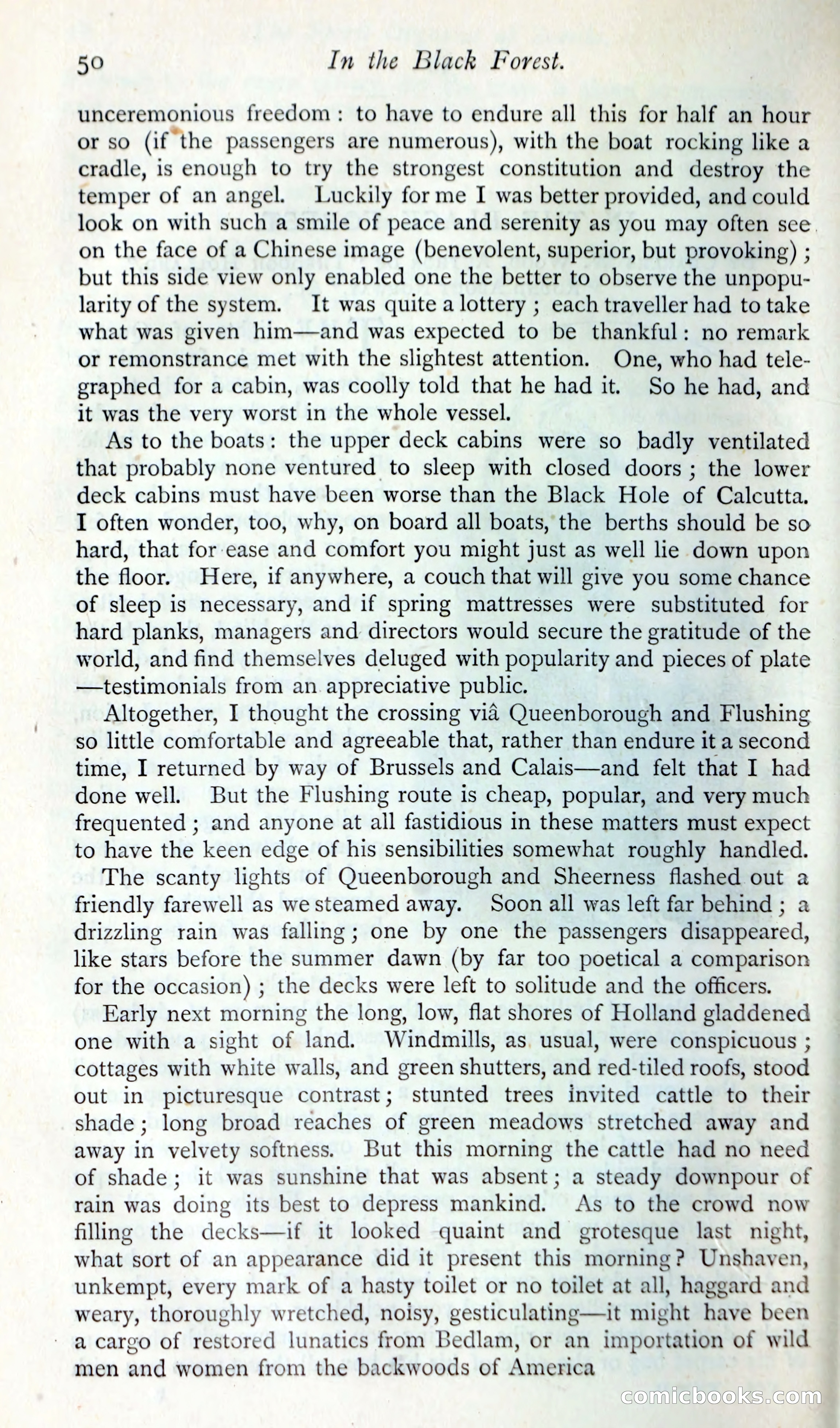
A restored page from Pulp Fiction, 1865. Page through the whole issue in the reader above.
📄 Transcribed text from this page (OCR, searchable)
Machine-transcribed from the original scan — historical spelling and the odd misread are preserved.
50 In the Black Forest. unceremonious freedom: to have to endure all this for half an hour or so (if the passengers are numerous), with the boat rocking like a cradle, is enough to try the strongest constitution and destroy the temper of an angel. Luckily forme I was better provided, and could look on with such a smile of peace and serenity as you may often see. on the face of a Chinese image (benevolent, superior, but provoking) ; but this side view only enabled one the better to observe the unpopu- larity of the system. It was quite a lottery ; each traveller had to take what was given him—and was expected to be thankful: no remark or remonstrance met with the slightest attention. One, who had tele- graphed for a cabin, was coolly told that he had it. So he had, and it was the very worst in the whole vessel. As to the boats: the upper deck cabins were so badly ventilated that probably none ventured to sleep with closed doors ; the lower deck cabins must have been worse than the Black Hole of Calcutta. I often wonder, too, why, on board all boats, the berths should be so hard, that for ease and comfort you might just as well lie down upon the floor. Here, if anywhere, a couch that will give you some chance of sleep is necessary, and if spring mattresses were substituted for hard planks, managers and directors would secure the gratitude of the world, and find themselves deluged with popularity and pieces of plate —testimonials from an appreciative public. Altogether, I thought the crossing via Queenborough and Flushing so little comfortable and agreeable that, rather than endure it a second time, I returned by way of Brussels and Calais—and felt that I had done well. But the Flushing route is cheap, popular, and very much frequented ; and anyone at all fastidious in these matters must expect to have the keen edge of his sensibilities somewhat roughly handled. The scanty lights of Queenborough and Sheerness flashed out a friendly farewell as we steamed away. Soon all was left far behind; a drizzling rain was falling; one by one the passengers disappeared, like stars before the summer dawn (by far too poetical a comparison for the occasion) ; the decks were left to solitude and the officers. Early next morning the long, low, flat shores of Holland gladdened one with a sight of land. Windmills, as. usual, were conspicuous ; cottages with white walls, and green shutters, and red-tiled roofs, stood out in picturesque contrast; stunted trees invited cattle to their shade; long broad reaches of green meadows stretched away and away in velvety softness. But this morning the cattle had no need of shade; it was sunshine that was absent; a steady downpour of rain was doing its best to depress mankind. As to the crowd now filling the decks—if it looked quaint and grotesque last night, what sort of an appearance did it present this morning? Unshaven, unkempt, every mark of a hasty toilet or no toilet at all, haggard and weary, thoroughly wretched, noisy, gesticulating—it might have been a cargo of restored lunatics from Bedlam, or an importation of wild men and women from the backwoods of America Gomichbooksrcom