
Pulp Fiction, 1865 · page 321 of 400
The Argosy — page 321: what you’re looking at
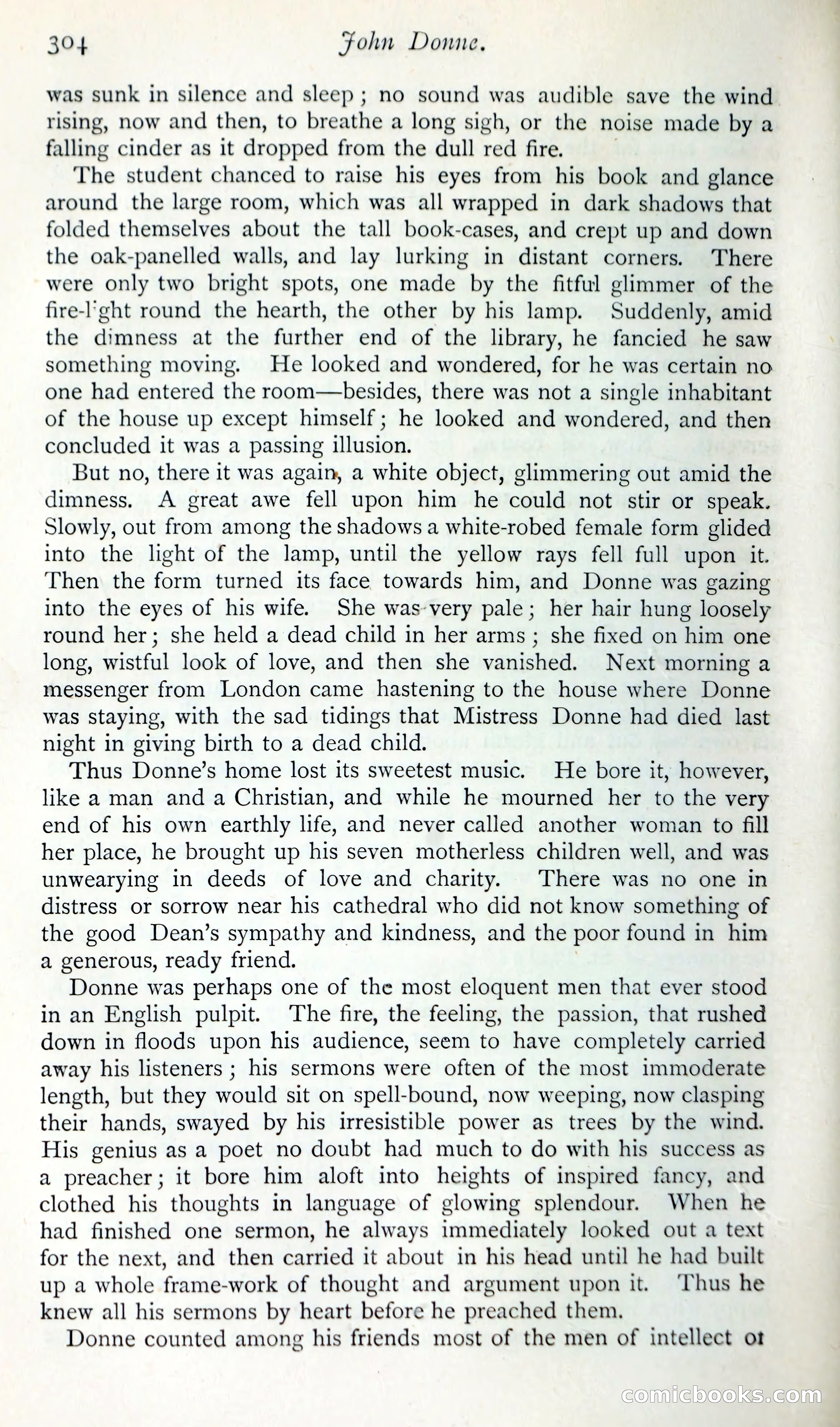
A restored page from Pulp Fiction, 1865. Page through the whole issue in the reader above.
📄 Transcribed text from this page (OCR, searchable)
Machine-transcribed from the original scan — historical spelling and the odd misread are preserved.
304 Fohn Donne. was sunk in silence and sleep; no sound was audible save the wind rising, now and then, to breathe a long sigh, or the noise made by a falling cinder as it dropped from the dull red fire. The student chanced to raise his eyes from his book and glance around the large room, which was all wrapped in dark shadows that folded themselves about the tall book-cases, and crept up and down the oak-panelled walls, and lay lurking in distant corners. There were only two bright spots, one made by the fitful glimmer of the fire-l'ght round the hearth, the other by his lamp. Suddenly, amid the dimness at the further end of the library, he fancied he saw something moving. He looked and wondered, for he was certain no one had entered the room—besides, there was not a single inhabitant of the house up except himself; he looked and wondered, and then concluded it was a passing illusion. But no, there it was again, a white object, glimmering out amid the dimness. A great awe fell upon him he could not stir or speak. Slowly, out from among the shadows a white-robed female form glided into the light of the lamp, until the yellow rays fell full upon it. Then the form turned its face towards him, and Donne was gazing into the eyes of his wife. She was-very pale; her hair hung loosely round her; she held a dead child in her arms ; she fixed on him one long, wistful look of love, and then she vanished. Next morning a messenger from London came hastening to the house where Donne was staying, with the sad tidings that Mistress Donne had died last night in giving birth to a dead child. Thus Donne’s home lost its sweetest music. He bore it, however, like a man and a Christian, and while he mourned her to the very end of his own earthly life, and never called another woman to fill her place, he brought up his seven motherless children well, and was unwearying in deeds of love and charity. There was no one in distress or sorrow near his cathedral who did not know something of the good Dean’s sympathy and kindness, and the poor found in him a generous, ready friend. Donne was perhaps one of the most eloquent men that ever stood in an English pulpit. The fire, the feeling, the passion, that rushed down in floods upon his audience, seem to have completely carried away his listeners ; his sermons were often of the most immoderate length, but they would sit on spell-bound, now weeping, now clasping their hands, swayed by his irresistible power as trees by the wind. His genius as a poet no doubt had much to do with his success as a preacher; it bore him aloft into heights of inspired fancy, and clothed his thoughts in language of glowing splendour. When he had finished one sermon, he always immediately looked out a text for the next, and then carried it about in his head until he had built up a whole frame-work of thought and argument upon it. ‘Thus he knew all his sermons by heart before he preached them. Donne counted among his friends most of the men of intellect ot CORNICE OOO KS (E(0)