
Pulp Fiction, 1865 · page 318 of 400
The Argosy — page 318: what you’re looking at
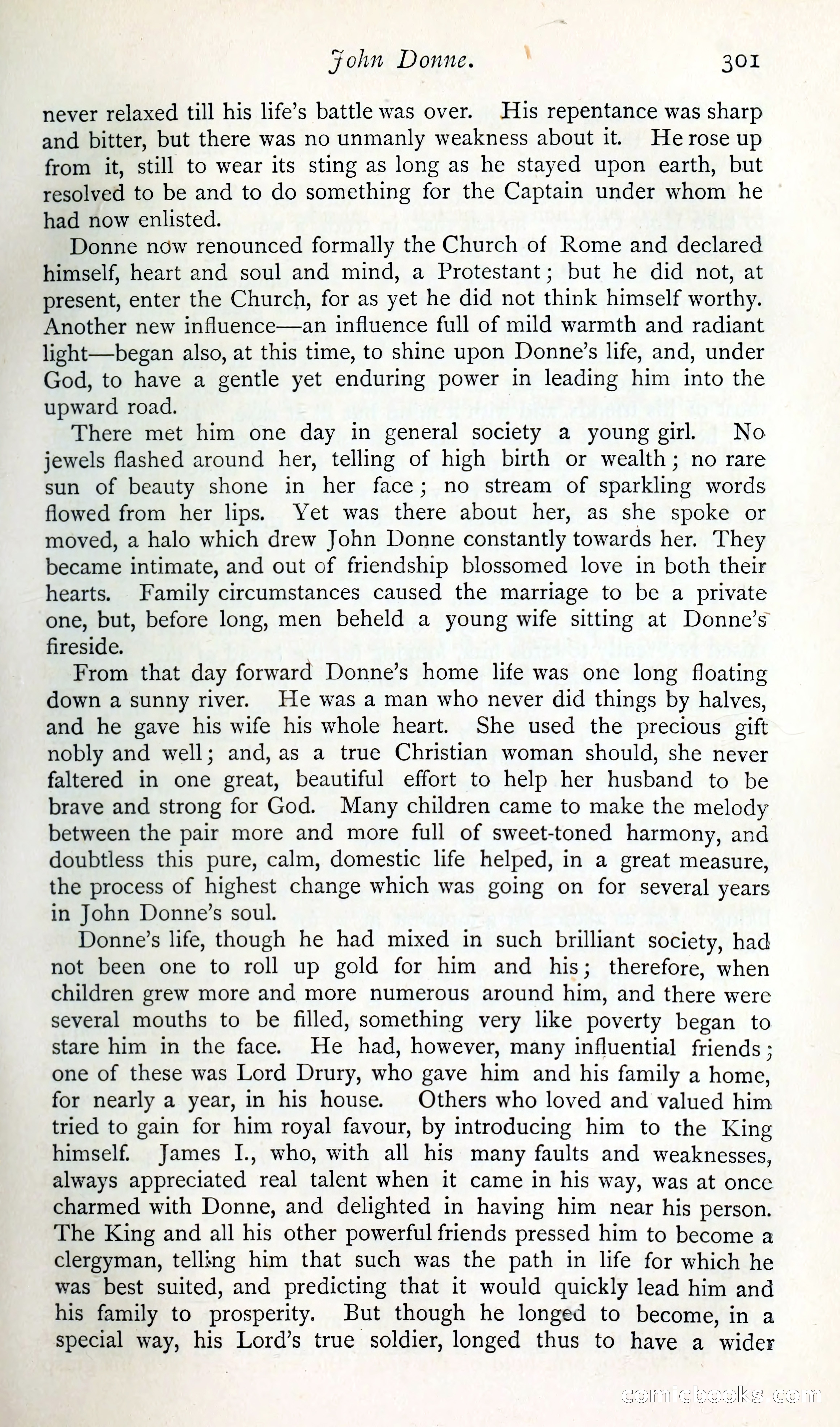
A restored page from Pulp Fiction, 1865. Page through the whole issue in the reader above.
📄 Transcribed text from this page (OCR, searchable)
Machine-transcribed from the original scan — historical spelling and the odd misread are preserved.
Folhn Donne. | 301 never relaxed till his life’s battle was over. Huis repentance was sharp and bitter, but there was no unmanly weakness about it. Herose up from it, still to wear its sting as long as he stayed upon earth, but resolved to be and to do something for the Captain under whom he had now enlisted. Donne now renounced formally the Church of Rome and declared himself, heart and soul and mind, a Protestant; but he did not, at present, enter the Church, for as yet he did not think himself worthy. Another new influence—an influence full of mild warmth and radiant light—began also, at this time, to shine upon Donne’s life, and, under God, to have a gentle yet enduring power in leading him into the upward road. There met him one day in general society a young girl. No jewels flashed around her, telling of high birth or wealth; no rare sun of beauty shone in her face; no stream of sparkling words flowed from her lips. Yet was there about her, as she spoke or moved, a halo which drew John Donne constantly towards her. They became intimate, and out of friendship blossomed love in both their hearts. Family circumstances caused the marriage to be a private one, but, before long, men beheld a young wife sitting at Donne’s fireside. From that day forward Donne’s home life was one long floating down a sunny river. He was a man who never did things by halves, and he gave his wife his whole heart. She used the precious gift nobly and well; and, as a true Christian woman should, she never faltered in one great, beautiful effort to help her husband to be brave and strong for God. Many children came to make the melody between the pair more and more full of sweet-toned harmony, and doubtless this pure, calm, domestic life helped, in a great measure, the process of highest change which was going on for several years in John Donne’s soul. Donne’s life, though he had mixed in such brilliant society, had not been one to roll up gold for him and his; therefore, when children grew more and more numerous around him, and there were several mouths to be filled, something very like poverty began to stare him in the face. He had, however, many influential friends ; one of these was Lord Drury, who gave him and his family a home, for nearly a year, in his house. Others who loved and valued him tried to gain for him royal favour, by introducing him to the King himself. James I., who, with all his many faults and weaknesses, always appreciated real talent when it came in his way, was at once charmed with Donne, and delighted in having him near his person. The King and all his other powerful friends pressed him to become a clergyman, telling him that such was the path in life for which he was best suited, and predicting that it would quickly lead him and his family to prosperity. But though he longed to become, in a special way, his Lord’s true soldier, longed thus to have a wider CONnRICLOOOKS.EO