
Pulp Fiction, 1865 · page 296 of 400
The Argosy — page 296: what you’re looking at
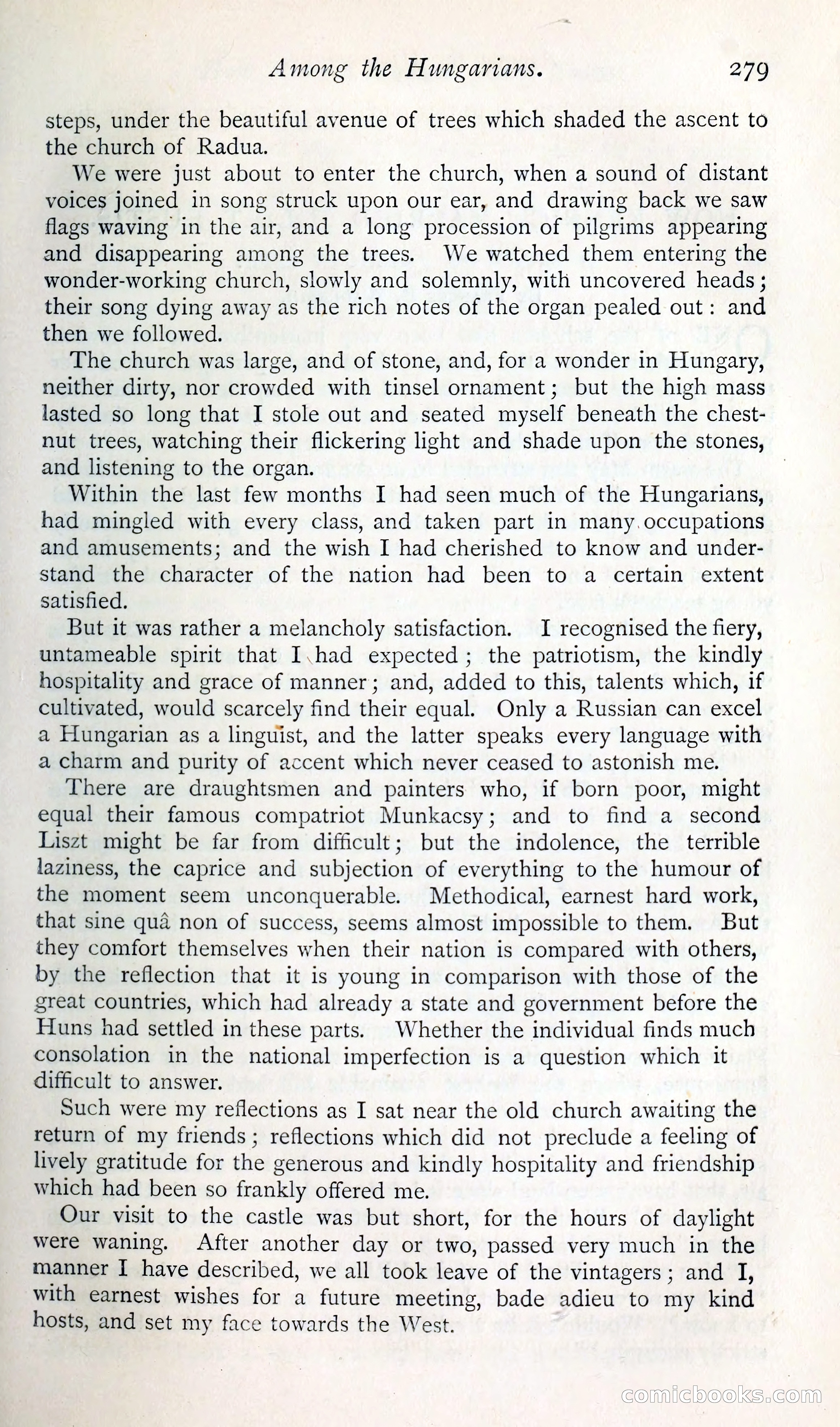
A restored page from Pulp Fiction, 1865. Page through the whole issue in the reader above.
📄 Transcribed text from this page (OCR, searchable)
Machine-transcribed from the original scan — historical spelling and the odd misread are preserved.
Among the Hungarians. 279 steps, under the beautiful avenue of trees which shaded the ascent to the church of Radua. We were just about to enter the church, when a sound of distant voices joined in song struck upon our ear, and drawing back we saw flags waving in the air, and a long procession of pilgrims appearing and disappearing among the trees. We watched them entering the wonder-working church, slowly and solemnly, with uncovered heads; their song dying away as the rich notes of the organ pealed out: and then we followed. The church was large, and of stone, and, for a wonder in Hungary, neither dirty, nor crowded with tinsel ornament; but the high mass lasted so long that I stole out and seated myself beneath the chest- nut trees, watching their flickering light and shade upon the stones, and listening to the organ. Within the last few months I had seen much of the Hungarians, had mingled with every class, and taken part in many.occupations and amusements; and the wish I had cherished to know and under- stand the character of the nation had been to a certain extent satisfied. But it was rather a melancholy satisfaction. I recognised the fiery, untameable spirit that I.had expected; the patriotism, the kindly hospitality and grace of manner; and, added to this, talents which, if cultivated, would scarcely find their equal. Only a Russian can excel a Hungarian as a linguist, and the latter speaks every language with a charm and purity of accent which never ceased to astonish me. There are draughtsmen and painters who, if born poor, might equal their famous compatriot Munkacsy; and to find a second Liszt might be far from difficult; but the indolence, the terrible laziness, the caprice and subjection of everything to the humour of the moment seem unconquerable. Methodical, earnest hard work, that sine qua non of success, seems almost impossible to them. But they comfort themselves when their nation is compared with others, by the reflection that it is young in comparison with those of the great countries, which had already a state and government before the Huns nad settled in these parts. Whether the individual finds much consolation in the national imperfection is a question which it difficult to answer. | Such were my reflections as I sat near the old church awaiting the return of my friends; reflections which did not preclude a feeling of lively gratitude for the generous and kindly hospitality and friendship which had been so frankly offered me. Our visit to the castle was but short, for the hours of daylight were waning. After another day or two, passed very much in the manner I have described, we all took leave of the vintagers; and I, with earnest wishes for a future meeting, bade adieu to my kind hosts, and set my face towards the West. GOnlGaooks (CO)