
Pulp Fiction, 1865 · page 285 of 400
The Argosy — page 285: what you’re looking at
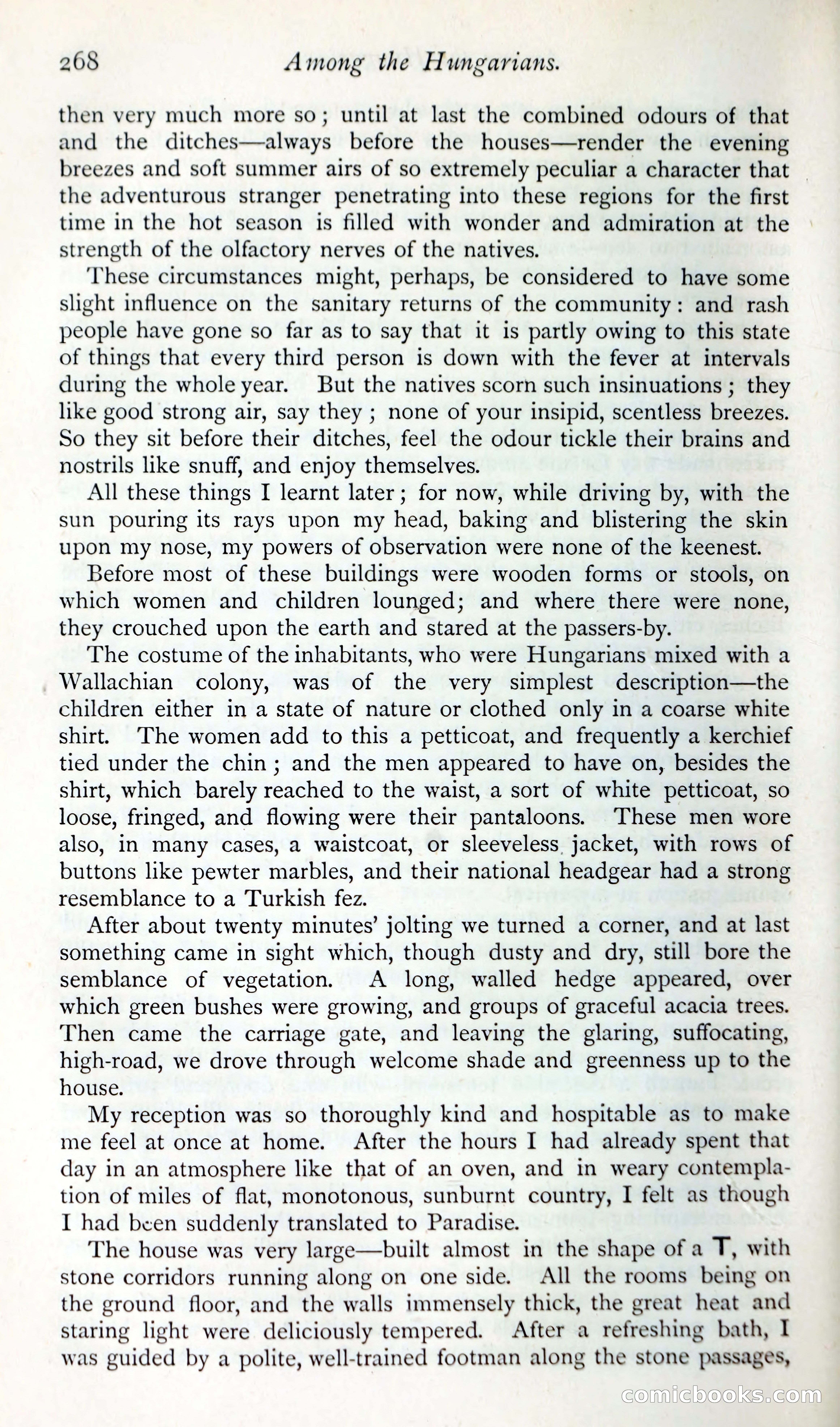
A restored page from Pulp Fiction, 1865. Page through the whole issue in the reader above.
📄 Transcribed text from this page (OCR, searchable)
Machine-transcribed from the original scan — historical spelling and the odd misread are preserved.
268 Among the Hungarians. then very much more so; until at last the combined odours of that and the ditches—always before the houses—render the evening breezes and soft summer airs of so extremely peculiar a character that — the adventurous stranger penetrating into these regions for the first time in the hot season is filled with wonder and admiration at the strength of the olfactory nerves of the natives. ‘These circumstances might, perhaps, be considered to have some slight influence on the sanitary returns of the community: and rash people have gone so far as to say that it is partly owing to this state of things that every third person is down with the fever at intervals during the whole year. But the natives scorn such insinuations ; they like good strong air, say they ; none of your insipid, scentless breezes. So they sit before their ditches, feel the odour tickle their brains and nostrils like snuff, and enjoy themselves. All these things I learnt later; for now, while driving by, with the sun pouring its rays upon my head, baking and blistering the skin upon my nose, my powers of observation were none of the keenest. Before most of these buildings were wooden forms or stools, on which women and children lounged; and where there were none, they crouched upon the earth and stared at the passers-by. The costume of the inhabitants, who were Hungarians mixed with a Wallachian colony, was of the very simplest description—the children either in a state of nature or clothed only in a coarse white shirt. ‘The women add to this a petticoat, and frequently a kerchief tied under the chin; and the men appeared to have on, besides the shirt, which barely reached to the waist, a sort of white petticoat, so loose, fringed, and flowing were their pantaloons. ‘These men wore also, In many cases, a waistcoat, or sleeveless, jacket, with rows of buttons like pewter marbles, and their national headgear had a strong resemblance to a Turkish fez. After about twenty minutes’ jolting we turned a corner, and at last something came in sight which, though dusty and dry, still bore the semblance of vegetation. A long, walled hedge appeared, over which green bushes were growing, and groups of graceful acacia trees. Then came the carriage gate, and leaving the glaring, suffocating, high-road, we drove through welcome shade and greenness up to the house. My reception was so thoroughly kind and hospitable as to make me feel at once at home. After the hours I had already spent that day in an atmosphere like that of an oven, and in weary contempla- tion of miles of flat, monotonous, sunburnt country, I felt as though I had been suddenly translated to Paradise. The house was very large—built almost in the shape of a T, with stone corridors running along on one side. All the rooms being on the ground floor, and the walls immensely thick, the great heat and staring light were deliciously tempered. After a refreshing bath, I was guided by a polite, well-trained footman along the stone passages, COMIECMDOO; KS, Eo)