
Pulp Fiction, 1865 · page 221 of 400
The Argosy — page 221: what you’re looking at
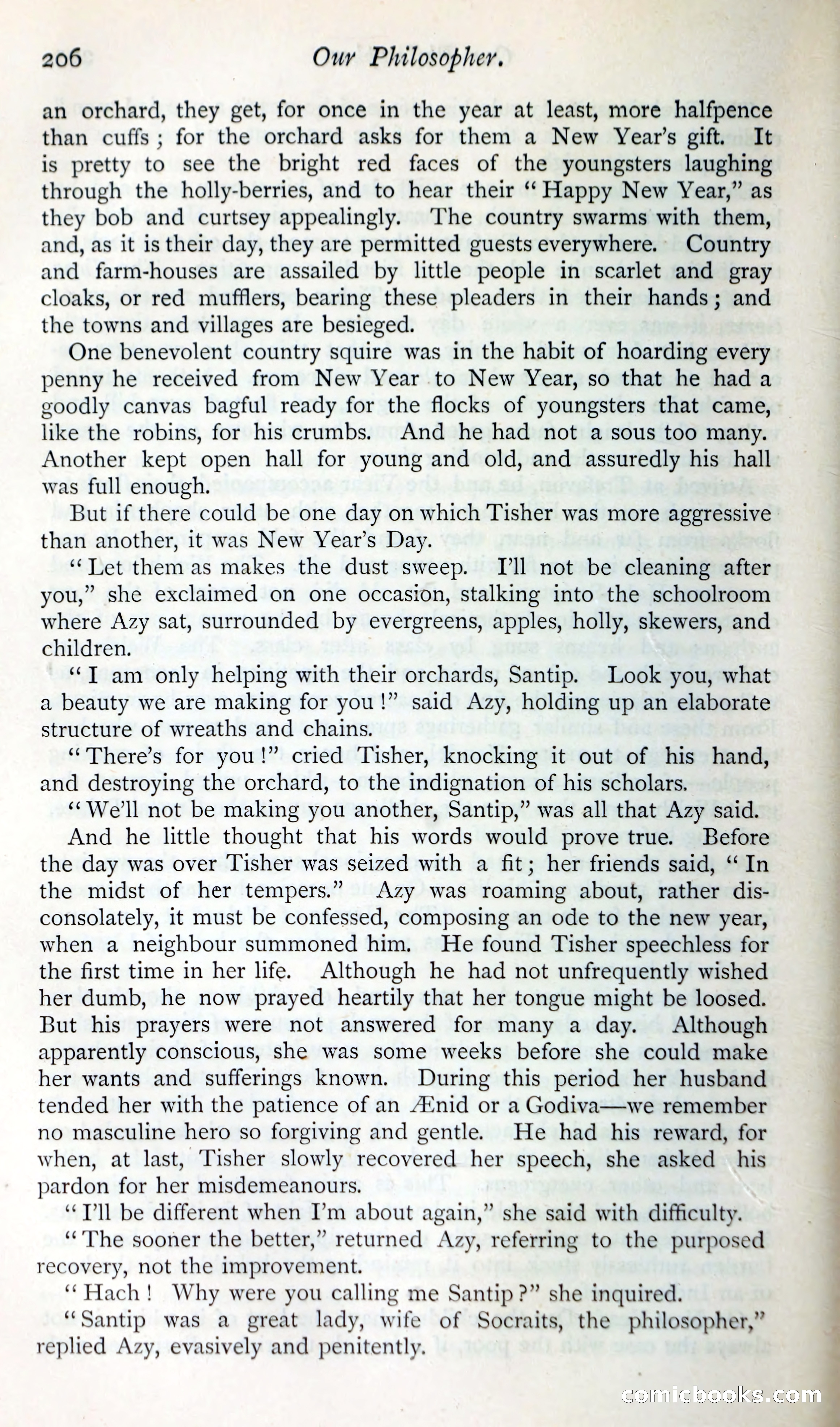
A restored page from Pulp Fiction, 1865. Page through the whole issue in the reader above.
📄 Transcribed text from this page (OCR, searchable)
Machine-transcribed from the original scan — historical spelling and the odd misread are preserved.
206 Our Philosopher. an orchard, they get, for once in the year at least, more halfpence than cuffs ; for the orchard asks for them a New Year’s gift. It is pretty to see the bright red faces of the youngsters laughing through the holly-berries, and to hear their “‘ Happy New Year,” as they bob and curtsey appealingly. ‘The country swarms with them, and, as it is their day, they are permitted guests everywhere. Country and farm-houses are assailed by little people in scarlet and gray cloaks, or red mufflers, bearing these pleaders in their hands; and the towns and villages are besieged. One benevolent country squire was in the habit of hoarding every penny he received from New Year to New Year, so that he hada goodly canvas bagful ready for the flocks of youngsters that came, like the robins, for his crumbs. And he had not a sous too many. Another kept open hall for young and old, and assuredly his hall was full enough. But if there could be one day on which Tisher was more aggressive than another, it was New Year’s Day. ‘Let them as makes the dust sweep. Ill not be cleaning after you,” she exclaimed on one occasion, stalking into the schoolroom where Azy sat, surrounded by evergreens, apples, holly, skewers, and children. ‘“T am only helping with their orchards, Santip. Look you, what a beauty we are making for you!” said Azy, holding up an elaborate structure of wreaths and chains. ‘“There’s for you!” cried Tisher, knocking it out of his hand, and destroying the orchard, to the indignation of his scholars. “We'll not be making you another, Santip,” was all that Azy said. And he little thought that his words would prove true. Before — the day was over Tisher was seized with a fit; her friends said, ‘‘ In the midst of her tempers.” Azy was roaming about, rather dis- consolately, it must be confessed, composing an ode to the new year, when a neighbour summoned him. He found Tisher speechless for the first time in her life. Although he had not unfrequently wished her dumb, he now prayed heartily that her tongue might be loosed. But his prayers were not answered for many a day. Although apparently conscious, she was some weeks before she could make her wants and sufferings known. During this period her husband tended her with the patience of an Atnid or a Godiva—we remember no masculine hero so forgiving and gentle. He had his reward, for when, at last, ‘Tisher slowly recovered her speech, she asked his pardon for her misdemeanours. “Tl be different when I’m about again,” she said with difficulty. ‘The sooner the better,” returned Azy, referring to the purposed recovery, not the improvement. “Hach! Why were you calling me Santip ?” she inquired. ‘“Santip was a great lady, wife of Socraits, the philosopher,” replied Azy, evasively and penitently. CEONNIE OO KS (E(@)